Mexico’s New Money Map: Big Banks, Fintech, and the Pulse of Financial Inclusion
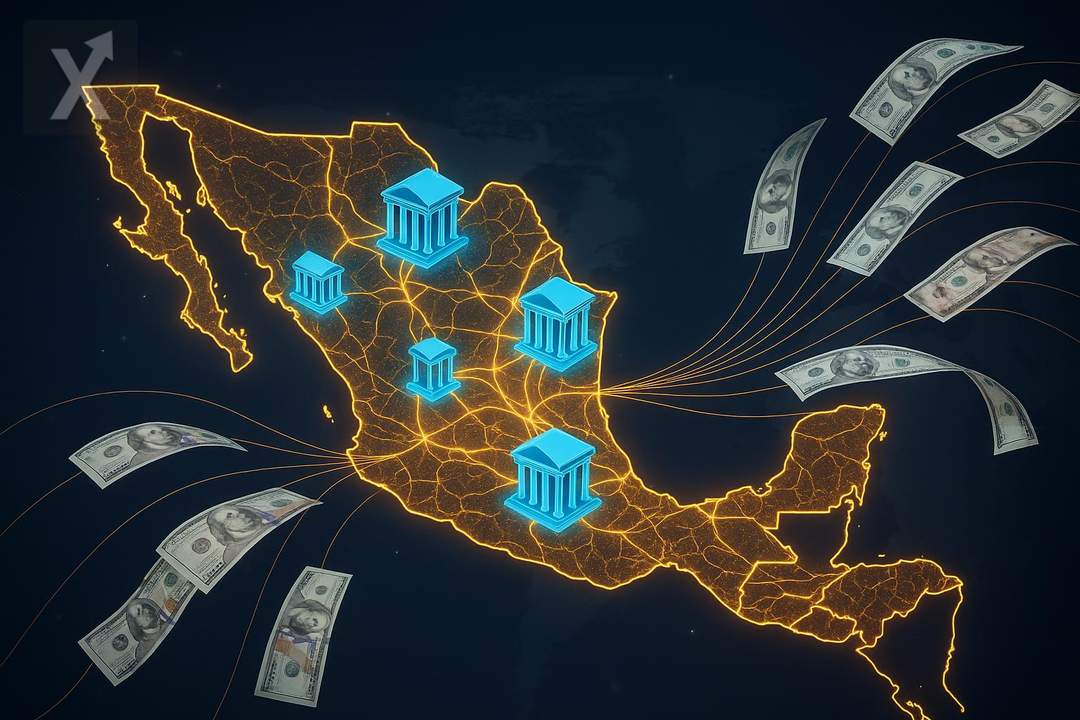
Mexico’s financial system combines the weight of traditional banking with the rise of fintech, while public development banks aim to close gaps in access and cost.
Mexico is undergoing a quiet—but profound—reconfiguration in how families and businesses store, move, and finance their money. The ecosystem can no longer be understood only through branches and “old-school” banking: today, large financial groups, niche banks, public institutions, and digital platforms coexist, competing for deposits, credit, and payments. This mix—amid interest rates that remain high by historical standards and an economy growing at moderate rates—is reshaping competition and the user experience.
At the top of the system remains commercial banking, which concentrates a significant share of deposits, payroll accounts, consumer credit, and business financing. In practice, these institutions are the day-to-day infrastructure of the economy: they process transfers, manage cards, intermediate savings, and serve as the channel for getting paid and making payments in the formal market. In the latest corporate rankings, standouts by revenue and employment include players such as BBVA Mexico and Banorte Financial Group, followed by Banco Santander Mexico, HSBC Mexico, Banco Azteca, and Scotiabank Inverlat, along with regionally rooted participants such as BanBajío, Afirme, Banregio, and BanCoppel.
The snapshot of the sector also shows that size doesn’t always translate into the same strategy. While some banks prioritize retail banking and consumer lending, others have doubled down on specialization in corporate clients, supply chains, or auto and mortgage financing. At the same time, the accelerated digitization of the past decade has increased investment in technology, cybersecurity, and analytics, putting pressure on costs and pushing many intermediaries to redesign their service models.
One factor that remains key is employment. Commercial banking continues to be one of the largest sources of jobs in the formal financial sector—with tens of thousands of positions—though the workforce profile is shifting: roles tied to data, regulatory compliance, fraud prevention, software engineering, and customer experience are growing, while operational tasks are increasingly automated.
Fintech and Digital Banking: Competition for Users, Cost Pressure, and Regulatory Challenges
The growth of digital banking and fintech has become one of the system’s main structural shifts. Platforms such as Nu Mexico and Klar have expanded the offering of accounts and cards managed from a smartphone, with faster onboarding and aggressive strategies to attract customers. Their momentum is driven by a combination of factors: demand for simple processes, smartphone penetration, preference for digital interfaces, and a generation of users that can compare fees and benefits more easily.
However, scaling up brings challenges. As these companies grow, they face higher capital requirements, stricter risk controls, liquidity management demands, complaint-handling obligations, and regulatory compliance. Their sustainability also depends on balancing customer acquisition costs with prudent credit origination—especially in an environment where delinquency could rise if consumption cools or job growth slows. Regulation, for its part, has sought to bring order through the framework applicable to financial technology, while supervision emphasizes transparency, security, and anti–money laundering prevention.
For traditional banks, fintech expansion creates competitive pressure on fees, response times, and the digital experience. The reaction has been visible: more app functionality, remote account opening, improved transfers, and greater product personalization. In the coming years, the market will likely see partnerships, acquisitions, or hybrid models in which banks and platforms complement each other to reduce costs and expand reach.
From the user’s perspective, the potential benefit is a broader offering and better terms; the risk is overexposure to short-term credit and confusion among products with different cost structures. Financial education and clear disclosure of fees, rates, and penalties will remain decisive in ensuring digitization translates into well-being rather than over-indebtedness.
Beyond commercial competition, the payments and transfers infrastructure—increasingly instant—has changed habits. Money moves with less friction, boosting e-commerce, on-demand services, and person-to-person payments. That dynamism, however, heightens the importance of technological resilience: an operational outage or cyber incident can have broad impacts in an economy where digital payments are already part of daily life.
This map also includes an actor with different objectives: development banking. Institutions such as Infonavit, Banobras, Bancomext, Nafin, and Fovissste operate as the state’s financial arm to promote housing, infrastructure, exports, and small and medium-sized businesses, serving segments where private credit does not always reach at sufficient scale or at an affordable cost. Their role becomes more relevant when the goal is to catalyze productive investment and reduce regional gaps.
Alongside them, Banco del Bienestar has functioned primarily as a channel for distributing public benefits and payments, becoming an operational gear in social policy. The economic debate focuses on how quickly that territorial reach can translate into more complete financial services—savings, payments, agent networks—and whether it can help reduce the use of cash, which still dominates many everyday transactions.
Another part of the system is brokerage firms and securities dealers such as Actinver, Finamex, Vector, and Monex, which connect savings to capital markets and offer vehicles for investment and financing. In a country where retail participation in the stock market remains low compared with peer economies, these institutions compete to attract investors with more accessible products and digital platforms, while also navigating a volatile global environment and portfolio shifts driven by inflation and interest-rate expectations.
Mexico’s financial system today is being shaped by three simultaneous forces: more intense competition for users (especially digital), the need to deepen productive credit without weakening asset quality, and the challenge of expanding financial inclusion with transparent, sustainable products. If the economy continues to grow at a moderate pace, the differentiators will be operational efficiency, risk management, and the ability to innovate without sacrificing trust.
In perspective, the sector’s “X-ray” suggests a market where large banks retain muscle and scale, fintech pushes innovation and pricing, and public banking tries to address market failures. The balance among competition, stability, and access will determine whether the system can finance more investment and improve services for millions of users.






