Mexico looks to speed up Canadian investment with pharmaceutical projects, industrial housing, and value chains
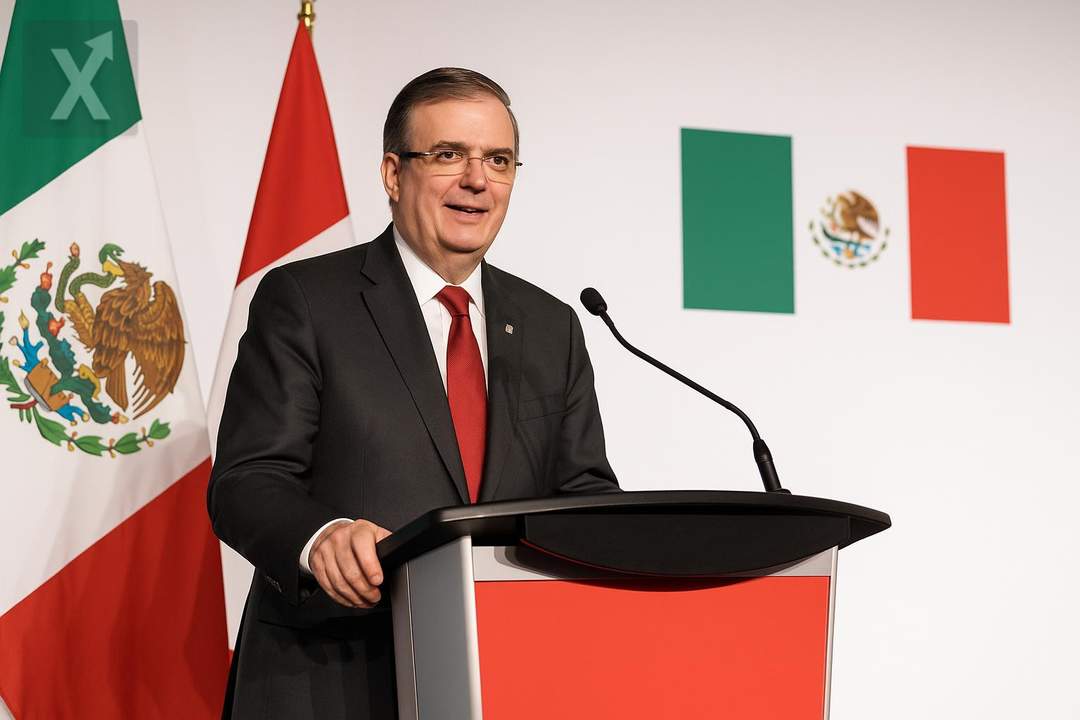
A business mission to Canada produced announcements and letters of intent worth billions of USD, with a focus on advanced manufacturing and health.
The economic relationship between Mexico and Canada gained momentum again with a trade mission that brought together hundreds of business leaders and government officials, resulting in investment announcements, industrial projects under review, and academic and cultural cooperation agreements. At a time when Mexico is competing for productive capital amid supply-chain reshoring (nearshoring) and a global slowdown, the central message of the tour was to strengthen regional integration and attract projects with higher technological content.
The largest announcement was made in Toronto: the government of Hidalgo reported an agreement for an estimated $2 billion (USD) investment to build an active pharmaceutical ingredient (API) plant. The project would be led by Solar International Core Canada and located at the Zapotlán Economic Development Hub, with a first stage that includes $70 million for land acquisition and to kick off development.
The memorandum of understanding was signed by company executives and state officials, with participation from Mexico’s Ministry of Economy. For Mexico, the appeal of these kinds of plants lies not only in the size of the investment, but also in their potential to strengthen industrial capabilities in a segment—pharmaceutical inputs—that the country has sought to reinforce following recent years’ logistics disruptions and the heightened focus on supply security in North America.
Beyond the Hidalgo case, the mission broadened the pipeline so other states could move forward with projects at different stages. In Chiapas, a letter of intent was signed with INTE Modular to assess a modular housing plant, with potential investment of up to $360 million. In Puebla, Process Research Ortech Inc. proposed evaluating the development of a plant to process minerals and materials for batteries, with a possible $380 million investment. Jalisco, for its part, reported preliminary agreements with Sustainable Agave Holdings Ltd. to assess a facility to process agave and produce agave pulp, with an estimated $100 million investment.
On the institutional front, the agenda included educational cooperation agreements—between Mexican institutions and Colleges and Institutes Canada—aimed at exchange and training, as well as understandings in the cultural sphere to promote co-productions and audiovisual collaboration. While these are not direct investments, such agreements often strengthen human capital and technology linkages—two critical variables for nearshoring to translate into productivity and not just an expansion of installed capacity.
Pharma and nearshoring: why active ingredients matter
Building an API plant in Mexico fits into a broader discussion: the need to shorten supply chains in strategic sectors and reduce vulnerabilities tied to external shocks. For the Mexican economy, the value added of a project like this depends on the level of local integration (supplier base, specialized services, engineering), access to energy and water at competitive costs, and regulatory certainty to operate under international health standards. In the short run, the most visible benefits tend to be concentrated in construction and direct employment; in the medium term, the challenge is to build an ecosystem of suppliers and talent that allows the investment to “anchor” locally and connect to exports as well as the domestic market.
In parallel, the strategy of attracting projects tied to batteries or materials processing reflects an intent to capture opportunities linked to the energy transition and the regional auto industry. However, landing these investments runs into familiar bottlenecks: logistics and customs infrastructure, availability of industrial parks, financing costs, and—more and more—the reliability of the power supply. These factors affect how quickly announcements turn into construction and, later, production.
For state governments, the challenge is turning memorandums and letters of intent into final investment decisions. That requires facilitation packages—permits, industrial land, training—and coordination across levels of government. It also demands clarity around incentives and obligations, particularly in resource-intensive projects where social and environmental scrutiny tends to increase.
At a deeper level, Canadian interest is explained by North America’s productive integration and Mexico’s appeal as a manufacturing platform, although the country is competing with other jurisdictions for similar projects. In this environment, industrial policy and local execution capacity can be just as decisive as labor costs.
In sum, the mission to Canada delivered signals of a project pipeline across diverse sectors and a large-scale pharmaceutical announcement in Hidalgo; the ultimate impact will depend on whether commitments materialize and whether Mexico addresses bottlenecks to raise domestic content and productivity.