Mexico Bets on Reviving Canadian Investment at a Pivotal Moment for North America
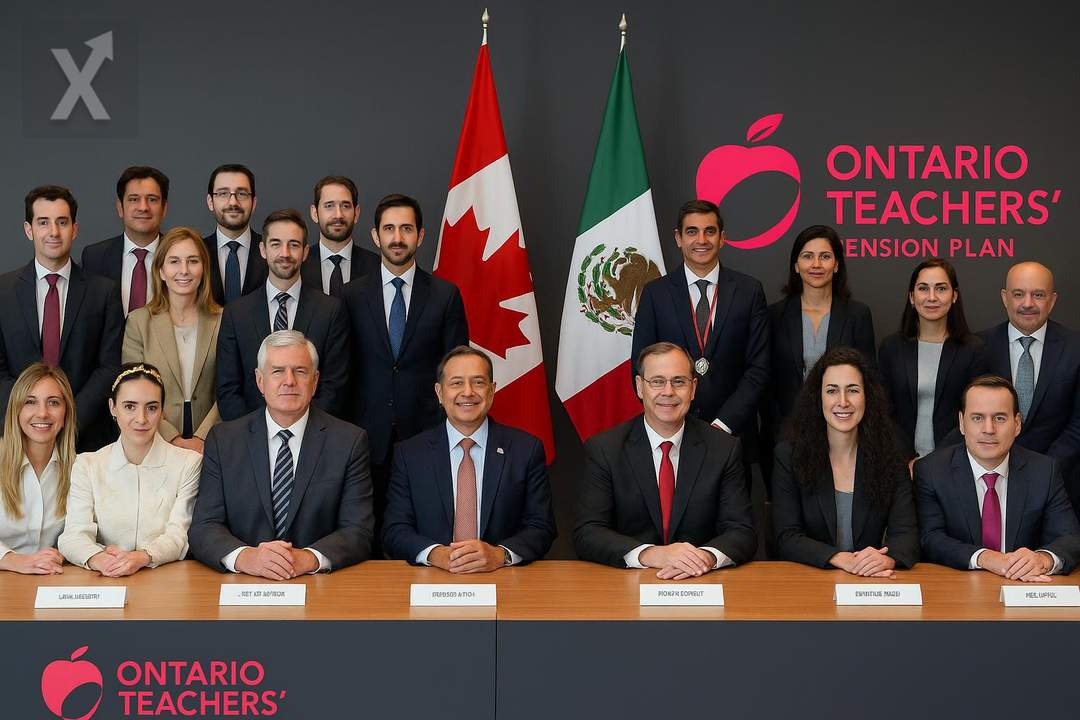
The Economy Ministry-led trade mission aims to turn Canadian interest into new projects, amid the USMCA review and regulatory uncertainty.
The economic relationship between Mexico and Canada is going through a period of strategic reassessment: as the USMCA review approaches and global competition for productive capital intensifies, Mexico’s government and private sector are looking to break a pattern of stagnation in Canadian investment, which in recent years has hovered around $3 billion a year.
Against that backdrop, the Ministry of Economy organized one of Mexico’s largest business missions to Canada. Led by Economy Secretary Marcelo Ebrard, the trip brought together 240 Mexican companies for an agenda of more than 1,800 business meetings with nearly 200 Canadian firms. The delegation included companies and organizations tied to agribusiness, manufacturing, pharmaceuticals, e-mobility, creative industries, education, innovation, logistics, and investment funds, in talks with corporations such as Air Canada, Bombardier, Brookfield, CN Rail, and TC Energy, as well as institutional investors like the Ontario Teachers’ Pension Plan.
Official data show why the issue is on the table. Canadian foreign direct investment (FDI) in Mexico totaled $3.323 billion in 2025, below the $3.609 billion recorded in 2024, and far from the peak reached in 2018. Cumulatively from 2006 to 2025, Canadian capital amounts to $52.279 billion—equivalent to 8.2% of all FDI Mexico attracted over that period—a meaningful share that, however, has not translated into a sustained wave of new projects.
The composition of those flows also underscores the nature of the moment: intercompany accounts and reinvested earnings predominate, while new investment represents a smaller share. For Mexico, the challenge is moving from a “mature” relationship to one of expansion, in an environment where supply-chain relocation (nearshoring) remains an opportunity, but competes against infrastructure constraints, logistics costs, and a perception of risk that varies by region and sector.
From the Canadian side, interest has not disappeared. Business representatives have said there is appetite for energy, infrastructure, and logistics, along with ongoing monitoring of factors such as security and regulatory clarity. In recent years, some sectors’ experience with regulatory changes, permits, and administrative criteria has raised the cost of making long-term decisions, particularly in capital-intensive industries.
For Mexico, the outreach carries added relevance given the country’s domestic economic moment: it is seeking to keep total investment at levels that allow growth above its historical average, while facing public spending pressures, an agenda of public works and infrastructure that requires private-sector complementarity, and an interest-rate environment that—though trending toward normalization—still demands financial selectivity. In that scenario, Canadian capital is viewed as a natural partner given its historical presence, experience in large-scale projects, and fit with North American production chains.
Sectors and “Bottlenecks”: Where the Breakthrough Could Happen
The sectors with the largest Canadian footprint in Mexico define both the potential and the sensitive points on the agenda. Transportation, financial services, mining, manufacturing, and energy account for most of the accumulated capital. That matters because these industries depend on clear rules, physical and legal security, and coordination with authorities on permits, rights-of-way, and operations. In energy and infrastructure, for example, project viability often rests on multi-decade horizons; in mining, on regulatory certainty and social management; and in logistics, on the ability to connect industrial regions with ports, borders, and consumption centers. If Mexico can reduce friction—approval timelines, consistency in criteria, and security conditions along strategic corridors—Canadian capital could shift from reinvesting in what already exists to funding expansions, upgrades, and new export-linked plants.
The bilateral conversation also intersects with North America’s evolving trade landscape. Canada has faced tensions with Washington in industries such as metals, while Mexico is seeking to preserve its manufacturing edge versus Asia—especially in areas where regional integration and USMCA rules of origin are decisive. In that context, Mexico’s strategy includes identifying products with the potential to gain market share in Canada, diversifying destinations and reducing dependence on a single regional buyer.
At the same time, the USMCA review adds a layer of urgency: for Mexico, maintaining certainty around the trade framework is crucial for investment decisions, particularly in export sectors. The signal North America sends on continuity, regional content rules, and dispute-settlement mechanisms can speed up or slow down capital announcements. That is why high-level meetings with Canadian authorities are intended to align priorities before the trilateral negotiation picks up pace.
Geographically, Canadian presence has concentrated in key jurisdictions, including Mexico City as a corporate and financial hub, and northern states with a manufacturing and logistics orientation. That distribution matches the reality of nearshoring: electric-power infrastructure, water availability, industrial park capacity, and rail and highway connectivity now carry as much weight as traditional investment incentives.
In perspective, Mexico is trying to turn the current moment—trade tensions, supply-chain reconfiguration, and the USMCA review—into leverage to lift Canadian investment beyond the range seen in recent years. The key will be translating missions and meetings into projects with timelines, financing, and regulatory and operating conditions stable enough to support long-term capital.
Overall, the relaunch of the agenda with Canada aims to strengthen the North American axis in a period of intense competition for investment; its success will hinge on certainty, security, and infrastructure that turn interest into new productive investment.






