Mexico Watches the Dollarization Debate in the Region: Exchange-Rate Stability Without Giving Up the Peso
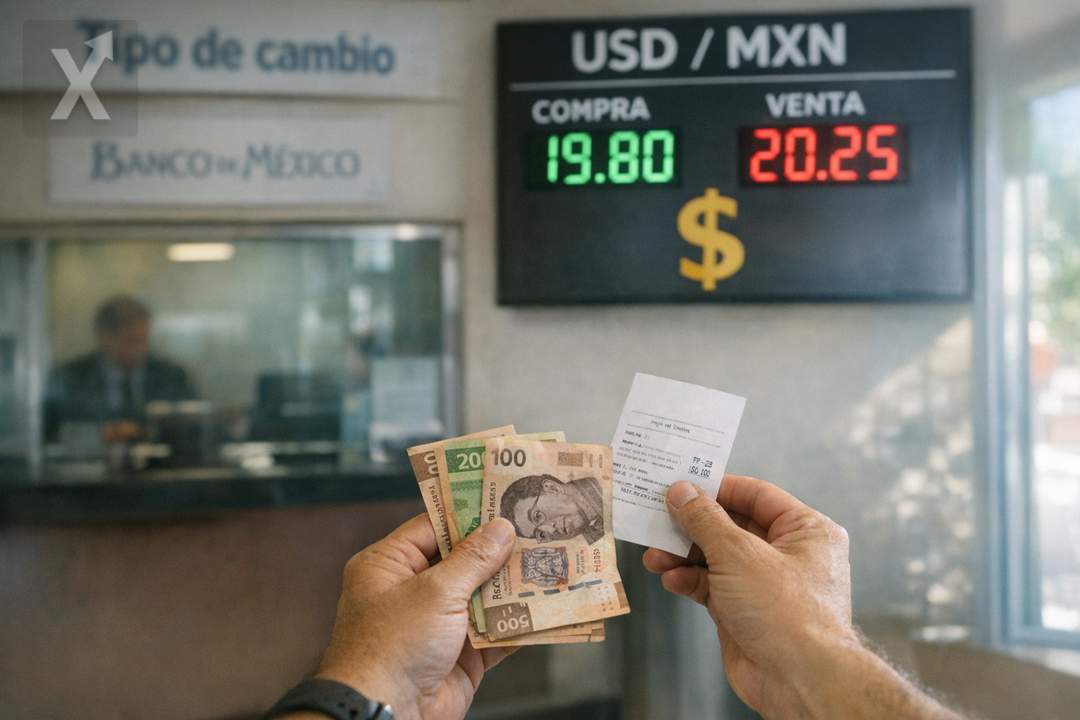
Venezuela’s case rekindles the debate, but in Mexico the anchor has been Banxico: a floating currency, reserves, and fiscal discipline as the first line of defense.
The discussion around adopting the U.S. dollar as legal tender resurfaces cyclically in countries facing prolonged inflation crises and institutional collapse—such as what is happening today in Venezuela after an abrupt political shift. The idea is often presented as a “quick fix” to curb price increases and stabilize expectations. In Mexico, even though the topic is not on the formal agenda, the debate offers a useful mirror: it helps explain why the country has prioritized an autonomous monetary-policy framework—led by the Bank of Mexico (Banxico)—a flexible exchange-rate regime, and the prudent accumulation of reserves to withstand external shocks without giving up the peso.
In Latin America, official dollarization cases (such as Ecuador, Panama, and El Salvador) are often cited as examples of nominal stability, but they also illustrate the cost of losing the ability to adjust monetary policy and to act as a lender of last resort during banking crises. Mexico, by contrast, has built credibility around an explicit inflation target, a deeper financial system, and operating rules that—despite ups and downs—have avoided hyperinflation episodes like those seen in other economies across the region.
The regional backdrop matters because Mexico is an economy deeply integrated into North American value chains, with a significant export sector and a financial market closely tied to U.S. monetary conditions. When global inflation picks up or the Federal Reserve tightens policy, the transmission channel arrives through interest rates, the exchange rate, and risk premiums. In that context, keeping the peso flexible works as a shock absorber: it allows gradual adjustments, avoids “tightening” the entire economy through a single currency, and preserves tools to respond to domestic shocks.
Even so, the dollarization conversation tends to gain traction where there is an acute loss of confidence: repeated devaluations, currency controls, gaps between official and parallel exchange rates, and fiscal deterioration that ends up pressuring the central bank. In Mexico, the historical experience of currency crises led to stronger institutions: Banxico’s autonomy, tighter bank supervision, and public-debt management with longer maturities and a relatively liquid local market. That architecture does not eliminate risks, but it reduces the likelihood of extreme scenarios.
Exchange Rate and Prices in Mexico: A Shock Absorber, Not a Rigid Anchor
In Mexico’s case, a flexible exchange rate functions as a “shock absorber” in the face of external volatility: when risk aversion rises or international rates increase, the peso can depreciate and absorb part of the impact without forcing an immediate—and more painful—adjustment in employment or output. The flip side is that depreciation can pass through to prices, especially for imported goods; that is why Banxico has kept policy restrictive in recent years, aiming for inflation to converge to its target. The central bank’s credibility and the way it communicates its decisions become key: if households and businesses believe inflation will come down, they tend to moderate price and wage adjustments, reducing inflation inertia.
Dollarization, by contrast, eliminates domestic exchange-rate risk but introduces another dependency: monetary policy is set by the Federal Reserve, even when the local business cycle is different. For an economy like Mexico—with substantial regional disparities, high informality, and varied financing needs—losing policy tools can make crisis management more costly. In addition, access to physical dollars and to a dollar-based financial system is not automatically guaranteed: it requires sufficient reserves, a conversion framework, and—above all—confidence in fiscal sustainability.
In practice, Mexico does live with “partial dollarization” in certain transactions: tourism, some corporate contracts, prices for imported goods, and parts of the real estate market in specific destinations. However, the core of the economy—wages, taxes, public spending, consumer credit—runs in pesos. The preference for the peso also reflects that the payments system and financial intermediation are built around the national currency, and that Mexico’s public debt is mostly denominated in local currency, which reduces vulnerability to depreciation.
Looking ahead, the regional debate over dollarization leaves a lesson for Mexico: stability is not purchased simply by switching currencies, but through institutions, credible fiscal rules, an autonomous central bank, and a sound financial system. The domestic challenge is to lock in disinflation without choking off growth, maintain investor confidence in an environment of still-elevated rates, and leverage productive integration with North America without creating internal imbalances—such as wage pressures not matched by productivity or infrastructure bottlenecks.
Overall, while countries facing severe crises see the U.S. dollar as a way out of lost confidence, Mexico has bet on strengthening its macroeconomic framework to protect the peso’s purchasing power. The discussion serves as a reminder: a currency reflects institutional credibility, and sustaining it requires discipline, transparency, and the ability to respond to external shocks.






