Banorte Sees USMCA Remaining in Force Despite Volatility, Bets on Plan México to Restart Credit Growth
Banks expect the trade pact’s review to move forward amid tensions, while infrastructure investment could unlock renewed momentum in lending.
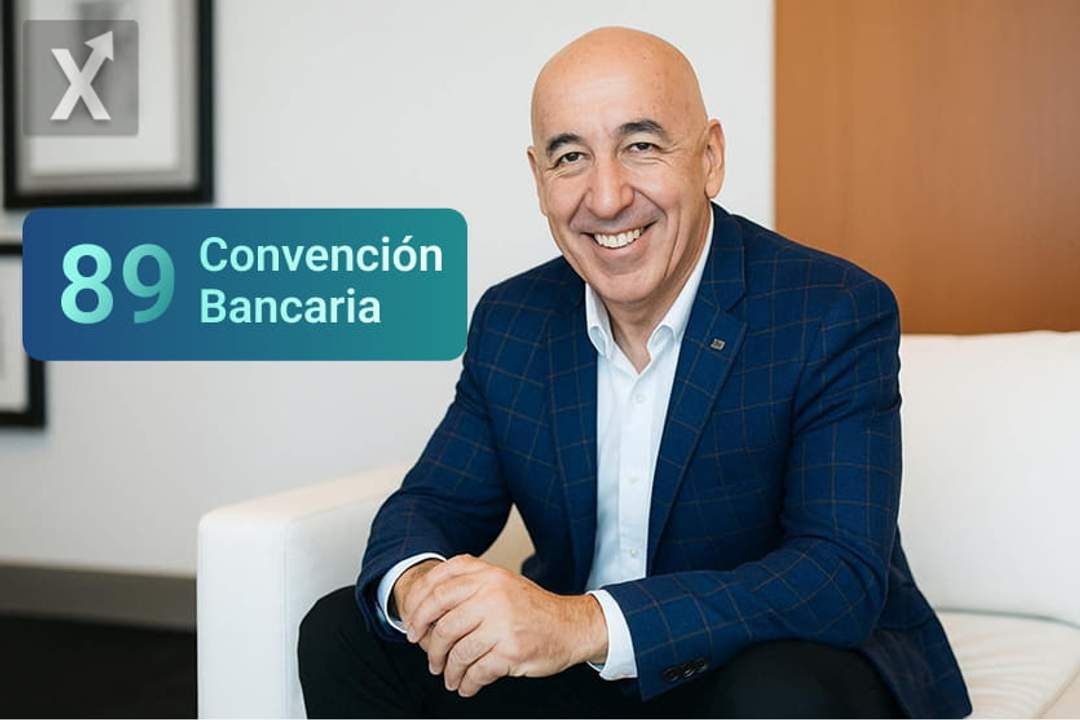
Amid a backdrop of mixed signals for Mexico’s economy—cooling in some activity indicators, but still-resilient employment and consumer spending supported by remittance inflows—Banorte CEO Marcos Ramírez said the USMCA will be finalized despite the uncertainty and volatility that will accompany the process. In his view, keeping the agreement in place is a shared interest for Mexico, the United States, and Canada, even if negotiations are marked by bouts of political pressure and hardline positions on sensitive issues.
The banker’s remarks come at a time when bank lending has lost steam compared with more dynamic years. After growing at single-digit rates last year, credit now faces the challenge of re-accelerating in an environment where companies often delay investment decisions when they perceive regulatory, trade, or external-demand risks. Banorte—still among the system’s largest players by assets—has stressed that greater certainty around regional trade, along with “bankable” projects, could trigger a new phase of loan origination.
The “certainty to invest” narrative is particularly relevant for Mexico given its deep integration with North American manufacturing. Sectors such as auto parts, electronics, electrical equipment, and agribusiness depend on clear rules to run value chains and justify plant expansions. While nearshoring has been a catalyst for investment in industrial regions, the debate around the USMCA and Mexico’s logistics capacity—energy, water, transportation, and security—remains a key factor in determining whether the trend becomes broader and more durable.
Plan México: Infrastructure, Bankability, and the Challenge of Turning Projects Into Credit
Banorte has indicated that Plan México could be a pivot to boost investment and credit, as long as infrastructure projects are structured clearly from the start: identifiable payment sources, transparent risk allocation, workable permits, and realistic timelines. In practice, “bankability” depends not only on the public sector’s willingness to build, but on projects having contracts, guarantees, and an operating framework that allows banks to assess returns and contingencies without resorting to ad hoc adjustments. With financing costs still high and fiscal discipline under closer scrutiny, the quality of project design directly affects its ability to attract private credit.
The bank has been participating in financing tied to water, energy, transportation, and logistics—areas that often generate multiplier effects through productivity gains and lower operating costs for businesses. Still, industry specialists argue that the scale of those impacts will depend on execution: delays, cost overruns, or regulatory changes can dampen credit appetite and raise funding costs. For Mexico, improving infrastructure is not just about public works; it is a competitiveness driver that affects exports, foreign direct investment, and formal employment.
At the same time, Banorte is keeping its focus on its “universal bank” strategy with nationwide reach. Beyond digitization, the group plans to expand and relocate branches with associated investment and hiring—pointing to a specific reading of the market: digital adoption is rising, but banks still compete on physical coverage in segments where in-person service and financial inclusion remain important.
On the digital front, the institution continues integrating the Rappicard business under its corporate control, while keeping Rappi as a commercial partner to distribute products within its ecosystem. From an industry standpoint, this trend reflects the balance Mexican banks have been seeking in recent years: speeding up origination and improving user experience through technology platforms, without giving up the corporate governance and risk management required of a regulated institution.
Over the next few quarters, credit performance will hinge on three main variables: the tone of the USMCA review and what it means for trade flows; the path of inflation and, with it, the interest-rate cycle; and the rollout of investment projects—public and private—capable of sustaining demand for financing. A gradual normalization of rates can ease borrowing costs, but banks typically need clearer visibility into economic activity and future cash flows to expand their loan books without undermining asset quality.
Against this backdrop, Banorte’s message combines cautious optimism about the trade pact with a clear bet on executable infrastructure. The risk balance remains: a tense negotiation process can increase volatility, but if the USMCA holds and Plan México projects are structured with discipline, the economy could regain traction and credit could return to a pace closer to its potential.