BBVA Mexico warns: cutting interchange fees at gas stations isn’t enough to speed up digital payments
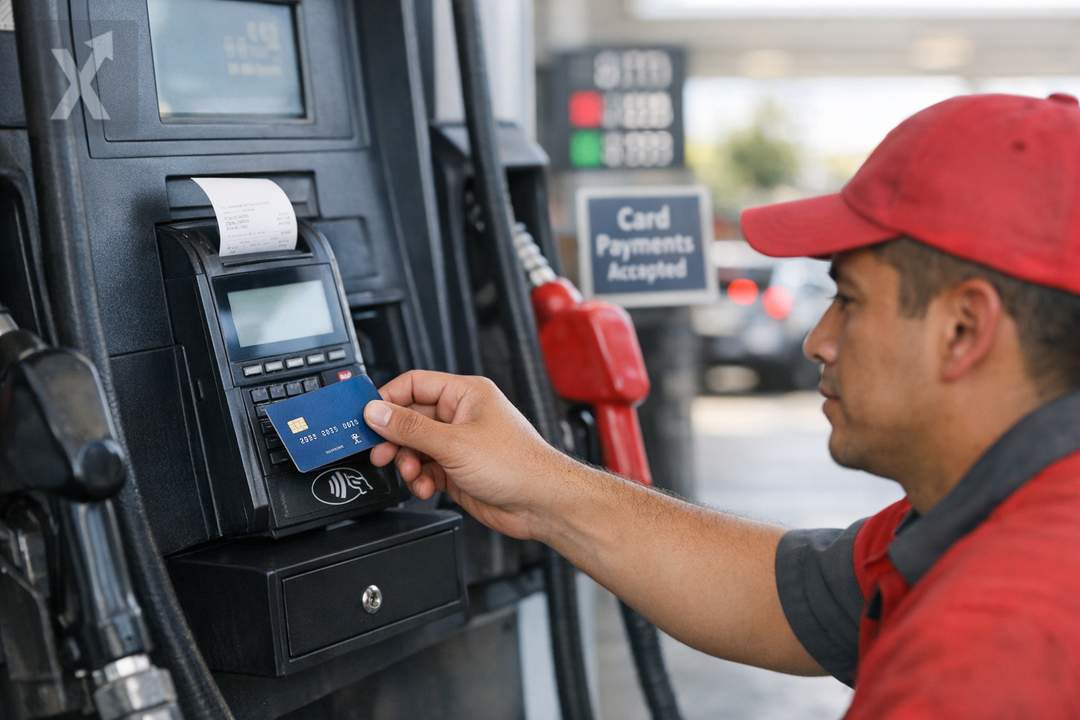
Banks see the “zero interchange” measure as limited unless it comes with incentives, tech adoption, and greater formalization.
The decision to reduce—and even temporarily bring to zero—the interchange fee on card payments at gas stations is aimed at easing the sector’s operating costs, but on its own it does not guarantee a faster shift from cash to digital methods, according to BBVA Mexico CEO Eduardo Osuna. In his assessment, the change mainly benefits station operators’ margins and does not visibly change the final price paid by consumers, so the direct incentive for customers to change their payment habits remains weak.
The program, agreed upon by authorities, banks, and the gas station industry, includes a six-month period that begins May 1 and runs through late October. In card-payment pricing, the interchange fee is a meaningful part of a merchant’s acceptance cost; eliminating it lowers the per-transaction cost faced by the acquirer and the business, particularly in a high-volume category like fuel.
According to figures released by the finance authority, the estimated average effect is that the issuer would stop charging around 2.57 pesos per debit card payment and up to 7.45 pesos per credit card transaction. At the same time, Banco de México data show that in a comparable period (May to October of the previous year) more than 401 million card payments were made at gas stations, with credit accounting for a significant share. The size of that flow helps explain why reducing payment frictions looks attractive for a sector squeezed by costs and by the political and social sensitivity surrounding energy prices.
Still, banks’ view is that lowering merchant fees does not automatically “digitize” the point of sale. Adoption of electronic payments depends on additional factors: availability and quality of terminals, reliable connectivity, staff training, consumer incentives, and trust in the transaction. In a country where cash remains dominant across many activities—and where parts of the population are still underbanked—habit change tends to be gradual and highly sensitive to the user experience.
The discussion is taking place as the government seeks to contain inflationary pressures and avoid second-round effects on consumer goods. While fuel prices have their own drivers (including taxes, logistics, and international benchmarks), the cost of accepting electronic payments at gas stations has become a negotiating point because of its impact on stations’ cost structures. For the banking system, the challenge is to balance lower fee income with the need to expand transaction volume and financial inclusion.
What it would take for “zero interchange” to translate into less cash
For digital payments to gain ground in a lasting way, specialists and market participants typically point to the need for complementary incentives and conditions. On the consumer side, measures such as rewards programs, explicit discounts for paying by card or transfer, and clearer disclosure of fees or charges can work; if the final price doesn’t change, users don’t perceive an immediate benefit. On the merchant side, beyond a lower per-transaction cost, what matters is investment in terminals, negotiations with acquirers, faster reconciliation, and access to financing tied to sales history. At gas stations, payment reliability (connectivity and authorization times) is critical: a bad experience during peak hours can send customers back to cash. In the background, formalization also matters: when a business and its supply chain capture operations more fully, the benefits of traceability, reduced cash-handling risk, and access to financial services multiply.
From a macroeconomic perspective, expanding digital payments can help reduce transaction costs across the economy, improve safety around cash handling, and strengthen transparency of flows—but it also opens debates about competition, fee structures, and access to infrastructure. In Mexico, the growth of electronic transfers and certain payment-collection solutions has been notable in recent years, although regional gaps, differences in adoption by business size, and connectivity challenges remain. That is why the financial sector insists digitization tends to accelerate when there is a combination of infrastructure, incentives, and operational certainty—not just pricing changes.
Looking ahead, the six-month period will serve as a real-world test of effectiveness: if the lower cost shows up in greater card acceptance at the pump, fewer declines, and higher digital volume, it could open the door to permanent frameworks or complementary policies. If the result is limited to improving station profitability without changing consumer preferences, the measure will amount to temporary relief rather than a catalyst for modernization at the point of sale.
In short, the temporary elimination of the interchange fee may lower the cost of accepting card payments for gas stations, but the shift toward “less cash” will depend on visible incentives, better payments infrastructure, and a consistent checkout experience for customers.






