Mexico Buys More Steel Than It Produces: The Challenge of Import Substitution in Public Works
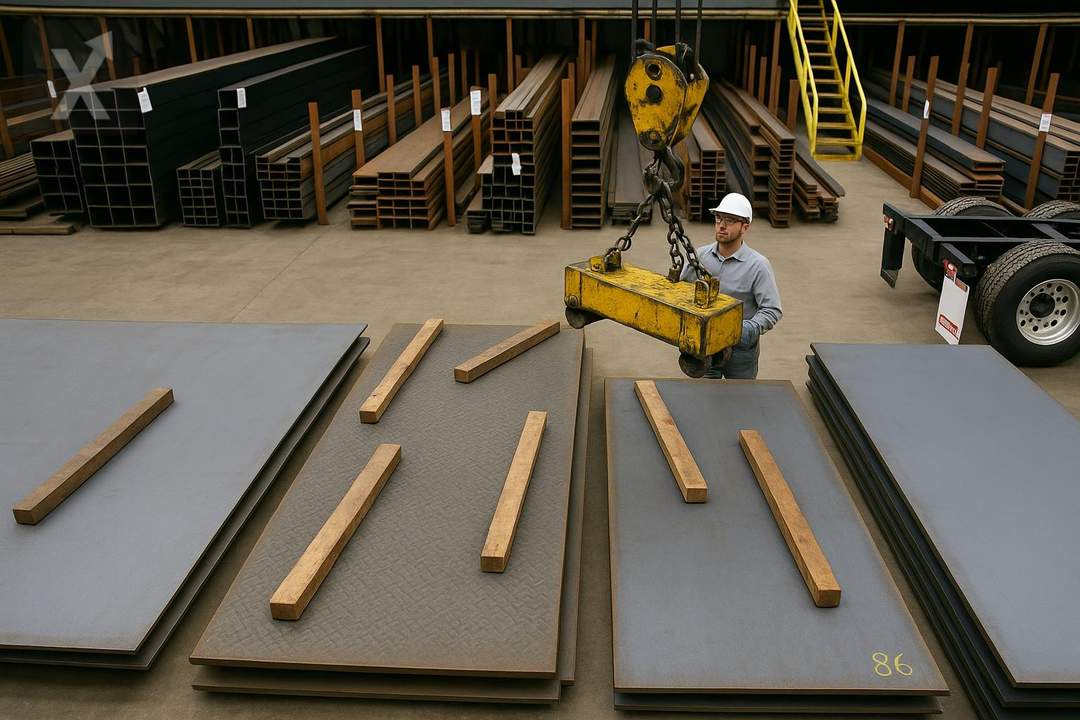
Reliance on imported steel inputs grew after the pandemic, complicating the government’s push to prioritize steel made in Mexico.
The federal government’s decision to prioritize the use of steel produced in Mexico for public procurement and public works aims to reorganize a strategic value chain for investment, industrial jobs, and manufacturing competitiveness. However, recent foreign-trade figures show the country is entering this effort with greater dependence than a decade ago—especially on basic foundry, iron, and steel inputs.
According to trade data reported by Banco de México (Banxico), in 2025 Mexico imported roughly $16.362 billion in foundry products, iron, and steel. While that figure is below the peak seen in 2023 (when purchases exceeded $21.5 billion) and also lower than in 2024, it remains significantly higher than in 2015, when imports were around $9.406 billion. In other words, even with the recent cooldown, Mexico is buying far more basic steel from abroad than it did before the pandemic.
The rise in imports accelerated during the post-Covid reopening: after hitting relatively low levels in 2020, purchases surged in 2021 and stayed high in 2022 and 2023. That pattern aligns with the rebound in construction and manufacturing investment, the reshuffling of global inventories, and the reorganization of North American supply chains, where Mexico became an attractive destination for industrial processes geared to external markets.
The greater exposure to foreign markets is also evident in the sector’s trade balance: the deficit in foundry products, iron, and steel has widened over time, suggesting a persistent gap between what is produced locally and what the economy demands. At bottom, the issue is not only the level of imports, but the structure of consumption: Mexico needs more steel than its domestic industry is supplying, and a large share of the shortfall is covered through international purchases.
In physical terms, the imbalance is clear: domestic steel output stood at around 14 million metric tons in 2025, while domestic consumption reached roughly 28 million. That difference implies that close to half of the steel used in the country depends, directly or indirectly, on foreign supply—a delicate situation for metal-intensive sectors such as infrastructure, automotive, appliances, machinery, and equipment.
Suppliers, USMCA, and the Impact of U.S. Tariffs
In the supplier mix, the United States stands out as Mexico’s main source of steel inputs, followed by Brazil and Japan, with meaningful shares, along with South Korea and China. This mix reveals two realities: on one hand, regional integration under the USMCA facilitates the exchange of inputs among North American plants; on the other, Mexico remains exposed to external price cycles, trade-policy decisions, and supply risks when global flows tighten.
U.S. tariff policy has added uncertainty for the regional industry. Tariffs applied to steel under Section 232, revived and tightened under Donald Trump’s administration, have put pressure on shipments from Mexico to the U.S. market and raised planning costs for companies operating across shared value chains. In this environment, Mexico’s strategy of strengthening government purchases using domestic steel also serves as an industrial-policy signal: it seeks to make demand more visible and improve utilization of installed capacity, while reducing vulnerability to external barriers.
Another factor complicating the landscape is competition from China, which accounts for a majority share of global steel production. Mexico’s industry has pointed to dumping practices and subsidies that distort international prices. In addition, one phenomenon has gained traction: indirect steel imports—that is, steel embedded in finished manufactured goods (vehicles, machinery, electrical equipment, or household appliances) that enter the country and compete with local production without always showing up as “steel” in the traditional statistics for basic inputs.
Paradoxically, while Mexico increased purchases of basic inputs, growth in imports of manufactured foundry, iron, or steel products (already processed goods) has been more limited over the past decade. This suggests the biggest “jump” occurred in raw materials and semi-finished products—precisely where domestic industry could aim to substitute imports if it can invest in capacity, energy efficiency, logistics, and specialization.
That is where the government–industry agreement becomes relevant: prioritizing Mexican steel in public works can raise domestic content and provide an anchor of demand for producers such as ArcelorMittal, Deacero, Frisa Forjados, Gerdau Corsa, Grupo Acerero, Grupo Simec, Suacero, Tenaris TAMSA, Ternium, and Tyasa, among other players in the ecosystem. Still, the real reach will depend on procurement rules, certifications, delivery times, technical standards, and—above all—whether the industry can expand output of more sophisticated steels (specialty grades, specific flat-rolled products, automotive grades, plate, and high-performance products) to reduce reliance in segments where foreign supply currently dominates.
In the short term, the steel market will also be shaped by the economic cycle: the path of public and private construction, the performance of export-oriented manufacturing, and exchange-rate movements can make imports relatively cheaper or more expensive. Likewise, energy and transportation costs remain decisive for steel competitiveness; in Mexico, access to reliable electricity at competitive prices—as well as efficient rail and port logistics—matters as much as any preference in public procurement.
From a longer-term perspective, substituting steel imports will not be achieved with a purchasing directive alone, but with a comprehensive strategy: investment in new production lines and technologies, access to financing, regulatory certainty, effective enforcement against unfair practices, and coordination with downstream industries. If the goal is to reduce the deficit and dependence, the challenge is twofold: produce more and produce better, without losing competitiveness in an economy that is highly integrated with the United States and exposed to Asian competition.
In sum, Mexico is entering its new “domestic steel” push with a sizable gap between consumption and production, a deficit trade balance, and a complex trade environment. Success will depend on turning public demand into a lever for modernization and expanding local supply toward more specialized steels—without insulating the industry from the efficiency incentives imposed by the market.






