U.S. trade uncertainty cools investment in Mexico: the tab is already about $17.4 billion, and the risk is rising into 2026
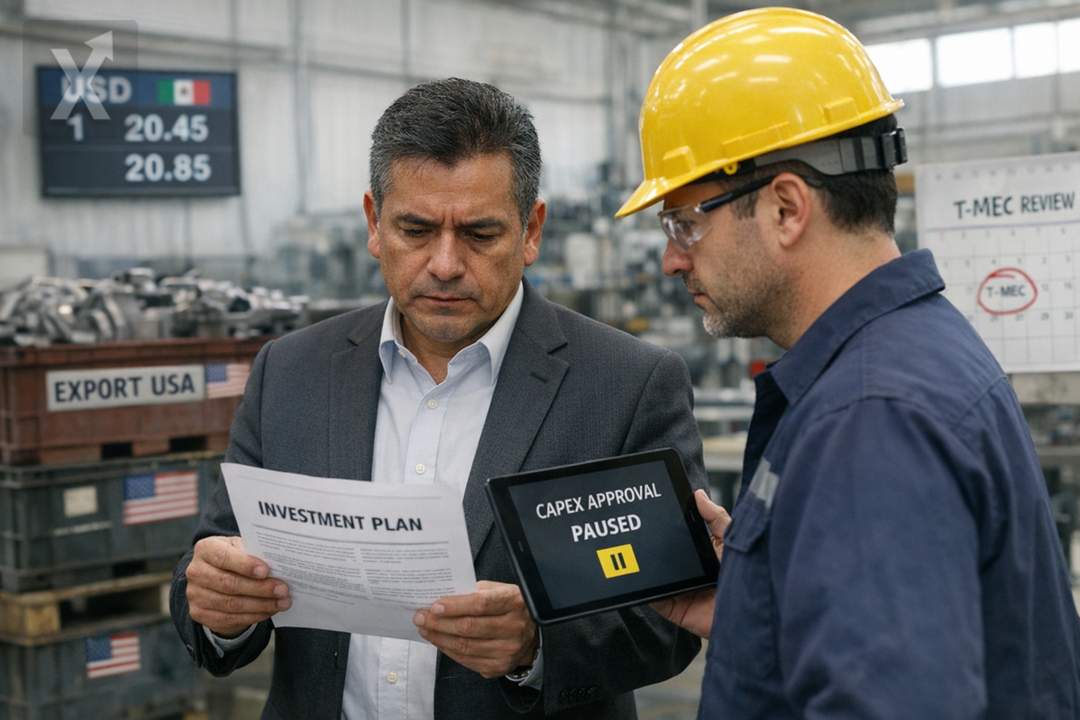
Volatility in the rules governing trade with the United States is translating into delayed projects and greater business caution—right as the USMCA review approaches.
In 2025, Mexico’s economy once again felt the impact of something that is often quiet but persistent: uncertainty. This isn’t just about swings in financial markets or tariff headlines—it’s about corporate decisions that get put on hold, resized, or relocated. According to Oxford Economics estimates prepared for the International Chamber of Commerce, volatility tied to U.S. trade policy cut investment in Mexico by 6.8% compared with a more certain scenario—equivalent to roughly $17.4 billion in projects that were not carried out or were postponed.
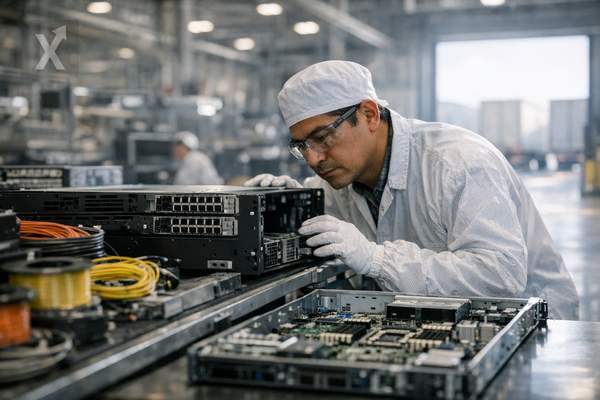
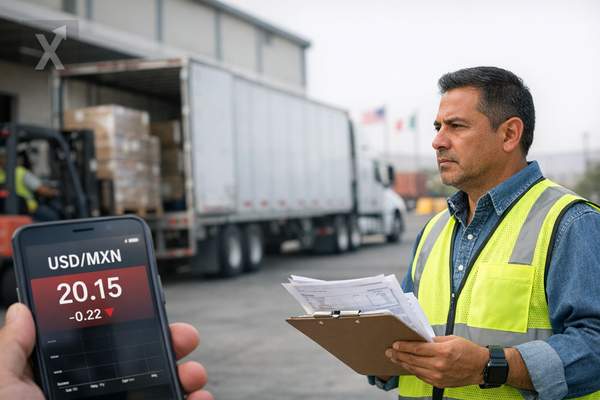
This is happening at a particularly sensitive moment for Mexico: the economy remains highly integrated into North American value chains—especially in manufacturing segments like autos, auto parts, electronics, and electrical equipment—and it relies on the strength of the U.S. market to sustain exports, formal employment, and a significant share of private investment. When trade policy in Washington changes direction frequently, the impact is amplified on the Mexican side: hedging gets more expensive, returns are recalculated, machinery purchases are deferred, and plant-expansion timelines get stretched out.
The report places 2025’s level of global uncertainty well above its historical average, even higher than episodes like the 2008 financial crisis and the early phase of the pandemic. In this environment, Mexico stands out as one of the most exposed economies in the group analyzed, given its dependence on foreign trade and the sensitivity of its capital flows to changes in the rules for accessing the U.S. market.
The central warning looks ahead: if uncertainty climbs again in 2026, investment in Mexico could take an even bigger hit. Under an adverse scenario, the adjustment would be in the double digits, with an additional loss of tens of billions of dollars. The contrast is clear: if the rules become more predictable, Mexico could also be among the biggest winners thanks to its logistical proximity to the United States, its installed manufacturing capacity, and the network of trade agreements that lets it export to multiple markets on preferential terms.
This back-and-forth coincides with a decisive political-economic calendar item: the USMCA review. While the agreement has served as an institutional anchor for regional trade, the mere possibility of changes to key chapters—rules of origin, dispute settlement, government procurement, or disciplines in strategic sectors—raises the bar for long-term decisions, especially in capital-intensive industries.
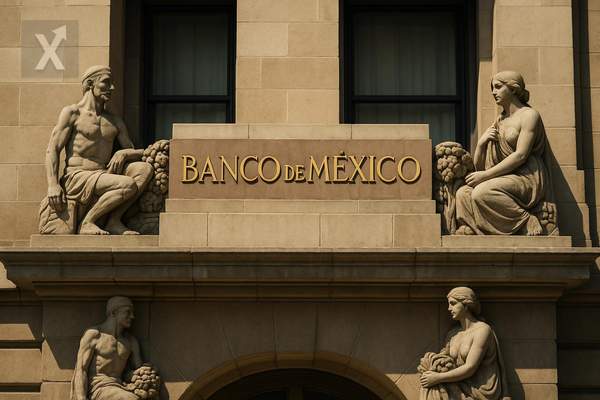
At the same time, Mexico faces domestic factors that interact with the external shock. Financial conditions remain tight: although inflation has followed a more controlled path than at its 2022–2023 peak, borrowing costs stayed high for an extended period, and many companies scaled back expansion plans. In addition, structural challenges that typically show up in project due diligence persist: energy availability and cost, infrastructure capacity at border crossings, security along logistics corridors, and regulatory certainty for permits.
Nearshoring: the opportunity is still there, but it requires clear rules and installed capacity
The nearshoring narrative hasn’t disappeared—it has become more demanding. Many companies are still evaluating Mexico as an export platform to the United States because of its proximity, delivery times, and manufacturing know-how. However, the gap between “interest” and “investment executed” increasingly depends on specific operating conditions. In practice, trade uncertainty can turn greenfield projects into smaller expansions, or even into “wait-and-see” approaches that prioritize short-term contracts and flexibility. To capture production relocation, Mexico needs more than competitive costs: it needs certainty under the USMCA framework, stable regulatory rules, adequate energy supply, and an infrastructure agenda that reduces bottlenecks at customs, highways, ports, and rail networks.
Comparisons with other countries in the region help put the impact into perspective. Canada faces a similar pattern due to its ties to the U.S. market, while the United States—despite being the source of the trade shift—absorbs part of the shock thanks to the strength of its domestic market and the momentum of investments tied to technologies like artificial intelligence and data centers. By contrast, Mexico depends more on the export channel and on investment geared toward regionally integrated manufacturing; that’s why a trade-policy signal can quickly ripple into decisions about production lines, equipment purchases, and supplier location.
Globally, the investment slowdown attributed to uncertainty adds up to hundreds of billions of dollars. For Mexico, the critical issue is the proportion: an adjustment of this magnitude can amount to a meaningful share of annual fixed investment and complicates the goal of raising potential growth. Investment is the component that expands productive capacity; when it is delayed, it’s not only spending today that is lost—future productivity is also constrained.
Looking ahead to 2026, the market will watch for specific signals: the tone and scope of the USMCA talks, the definition of tariff and compliance rules, and clarity around U.S. sector-specific incentives or restrictions. Domestically, Mexico’s ability to unblock projects through more predictable permitting, improve border logistics, and strengthen conditions for electricity- and water-intensive sectors will also matter. In short, the conversation is no longer just “how much investment arrives,” but “how much investment is actually executed—and on what timelines.”
In perspective, the message from 2025 is that uncertainty carries a measurable cost: fewer projects executed and more caution in expanding capacity. If the USMCA review and U.S. trade policy deliver greater predictability, Mexico could restart investment given its geographic advantage and industrial integration; if not, the slowdown could drag on and weigh on medium-term growth.