Mexico Shuts the Strategic Bonded Warehouse Regime to Footwear and Tightens the Clampdown on Undervaluation
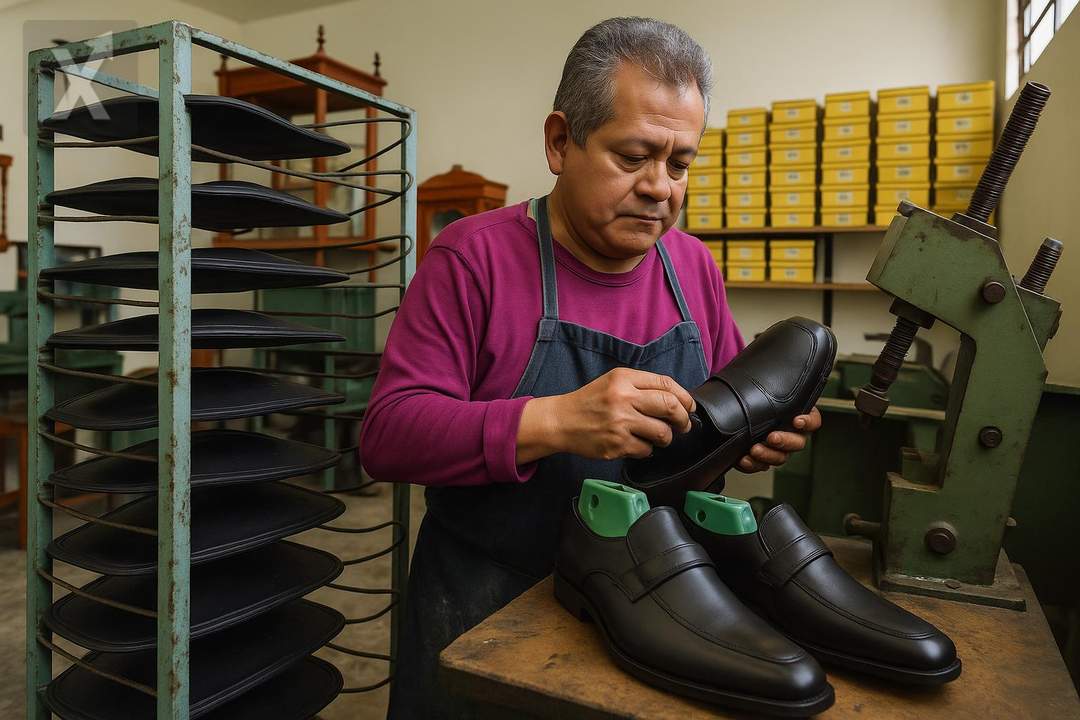
Removing footwear from the RFE aims to curb the irregular entry of finished goods and restore competitive balance in a key jobs sector.
The Mexican government has decided to exclude footwear from the Strategic Bonded Warehouse (Recinto Fiscalizado Estratégico, RFE) regime—a customs framework originally created to facilitate logistics and manufacturing operations, but which in recent years the industry has criticized as a channel for bringing in finished merchandise with fewer controls and a higher risk of irregularities.
The decision—set to be formalized through publication in the Official Gazette (DOF)—aligns with an agenda pushed by business chambers in the sector, particularly in Guanajuato and Jalisco, where a significant share of domestic production is concentrated. For manufacturers, the change is meant to close a “shortcut” that allegedly enabled practices such as undervaluation, transshipment, and unfair competition, squeezing margins and jobs in a labor-intensive industry.
According to figures presented by industry representatives, footwear imports covered by this scheme rose by nearly 2,000% between 2023 and 2025, jumping from roughly 250,000 pairs to more than 5.3 million. The size of the increase was seen as a sign of atypical use of the regime: instead of serving as an intermediate zone to store or transform goods before their formal entry into the market, it may have facilitated the entry of finished footwear with less scrutiny.
Operationally, the RFE allows goods to be brought into authorized facilities without being treated as immediately imported; foreign trade taxes are deferred while the merchandise remains under the regime. While the design is intended to attract investment and enable efficient supply chains, authorities face the challenge of preventing these mechanisms from turning into routes for avoidance—especially when it comes to final goods ready to be sold to consumers.
A shift within a broader industrial and customs policy strategy
Excluding footwear from the RFE adds to other measures implemented since 2025 to contain imports that, according to the industry, were distorting the market. These include rule changes to block the entry of finished footwear through IMMEX, which led to a significant decline in imports under that program, as well as tariff adjustments on sector-related tariff lines with rates that have ranged from 25% to 35%. Taken together, the stated goal is to strengthen domestic production capacity, encourage import substitution, and raise domestic content—consistent with a more active industrial policy and the reshaping of North American supply chains.
This tightening comes as Mexico seeks to capitalize on nearshoring and the periodic review of the region’s trade commitments, while also facing pressure from technical smuggling, informality, and customs undervaluation practices. For a sector like footwear—with a large base of small and mid-sized companies—the cost of competing against undervalued or irregularly imported goods often shows up as lost market share and deteriorating labor conditions.
At the same time, the shift creates implementation challenges. Restricting access to the RFE for footwear does not, by itself, eliminate incentives to evade; it shifts pressure to other points in the chain, such as import entries, tariff classification, origin verification, and post-clearance audits. As a result, effectiveness will depend on coordination among the Ministry of Finance, the Tax Administration Service (SAT), and the National Customs Agency, as well as inspection capacity and risk analytics to detect abnormal import patterns.
In the short term, the industry expects the change to reduce the inflow of low-priced finished product and improve competitive conditions. However, analysts warn the crackdown could raise costs for distributors that depended on cheap imports and, in certain segments, translate into higher consumer prices if domestic supply does not quickly cover volume, design, or delivery times. Over the medium term, the government’s bet is that greater certainty and a level playing field will encourage investment in installed capacity, modernization, and supplier development—especially in clusters such as the Bajío region.
The measure also reflects a tougher approach toward special regimes and incentive programs that, while legitimate competitiveness tools, require guardrails to prevent them from becoming schemes for “legalized” informal entry. In a country where revenue collection and formalization remain central economic policy goals, customs enforcement has become an important component in protecting employment-intensive sectors and sustaining public revenues.
In broader perspective, removing footwear from the RFE confirms the shift toward a more selective trade policy: facilitating productive integration when there is transformation and value added, and closing off space when incentives are found to be used to bring in final goods with undue advantages. The ultimate impact will be measured by the drop in irregular imports, job stability, and the sector’s ability to compete through productivity—not through evasion.