Mexico Streamlines Imports of Clinical Equipment to Attract More Pharmaceutical Investment
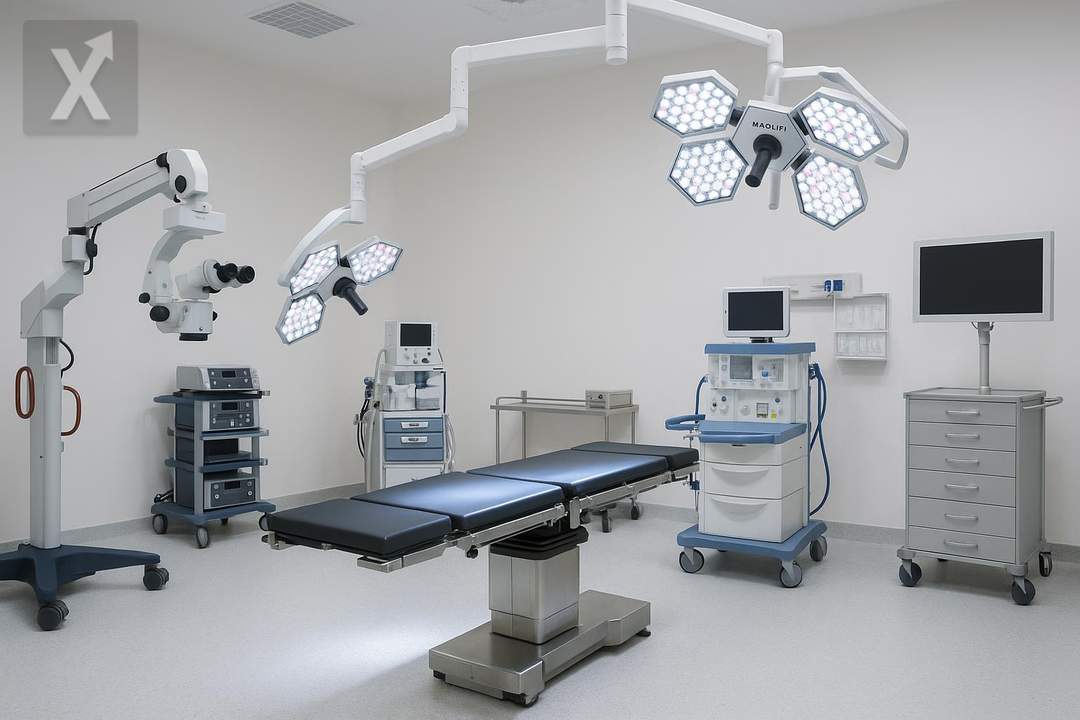
Mexico is looking to clear bottlenecks for specialized equipment in order to boost investment in clinical research and gain ground in a high-value global market.
Mexico has taken a regulatory step to speed up the importation of specialized electrical and electronic equipment used in clinical research protocols—a move the federal government is banking on to cut costs and logistical lead times that have constrained the sector’s growth. The Ministry of Economy estimates that, by simplifying requirements and criteria for bringing these goods into the country, annual foreign investment in clinical research could rise by as much as 50% from current levels.
According to industry figures, investment that currently hovers around $300 million a year could approach $450 million in the near term if some of the administrative friction faced by laboratories, CROs (contract research organizations), hospitals, and research centers is removed. The expectation is not only more capital, but also more predictable operations: less uncertainty at customs, lower risk of trial delays, and better planning for international sponsors.
This move aligns with the goals of the 2025–2030 National Development Plan and the so-called “Plan Mexico,” which identify clinical research as a strategic component for the knowledge economy, industrial upgrading, and access to medical innovation. At a time when Mexico is trying to maintain its appeal for productive investment—amid cost pressures, regional competition, and greater selectivity in global capital flows—the pharmaceutical sector stands out as an opportunity to diversify exports and raise technological content.
Globally, clinical research is a large-scale market, while Mexico’s share remains limited. For the country, the challenge is not only attracting new studies, but also building institutional and operational capacity: competitive approval timelines, regulatory coordination, adequate hospital infrastructure, and an ecosystem that offers legal and operational certainty.
Economic impact: specialized jobs, supply chains, and regulatory confidence
Clinical research tends to generate spillover effects beyond the direct spending of a trial: demand for medical and technical staff, pharmacovigilance specialists, sample logistics, lab services, scientific translation, and data management. In regions with strong hospital and academic concentration, these projects can support higher-paying jobs and facilitate skills transfer, while also encouraging purchases from local suppliers of inputs and services. However, the decisive factor is often process reliability: for global sponsors, certainty around import timelines and regulatory compliance is just as important as cost.
In the macroeconomic context, the announcement also speaks to a recurring public-policy objective: raising productivity and attracting investment in higher value-added sectors, at a moment when potential growth remains constrained and the economy faces challenges such as cyclical slowing, pressure on energy infrastructure, and the need to strengthen both public and private investment. In that sense, a more agile framework for importing specialized equipment can reduce frictions without requiring major fiscal outlays, though its effectiveness will depend on implementation at service windows, customs, and the use of consistent criteria.
The government has laid out more ambitious long-term goals that would imply multiplying the annual flow of investment in clinical research several times over. To get closer to those targets, industry analysts often point out that it will also be key to improve coordination across agencies, speed up ethical and regulatory reviews, push the digitization of procedures, and expand hospital capacity for research—without compromising safety and transparency standards.
Looking ahead, the measure could become a competitive advantage if it succeeds in reducing variability in import times and eliminating discretionary interpretations. The message to investors is that Mexico is seeking to remove specific bottlenecks to gain share in a knowledge-intensive global industry, where speed and operational certainty often determine where new studies and capital land.
In short, facilitating the importation of clinical equipment aims to clear a specific barrier that had driven up costs and delays; the potential for additional investment is meaningful, but the outcome will depend on regulatory consistency and the ability to execute.






