Zero Fees on Card Payments at Gas Stations: The Agreement Aimed at Lowering Transaction Costs and Pushing Digitalization
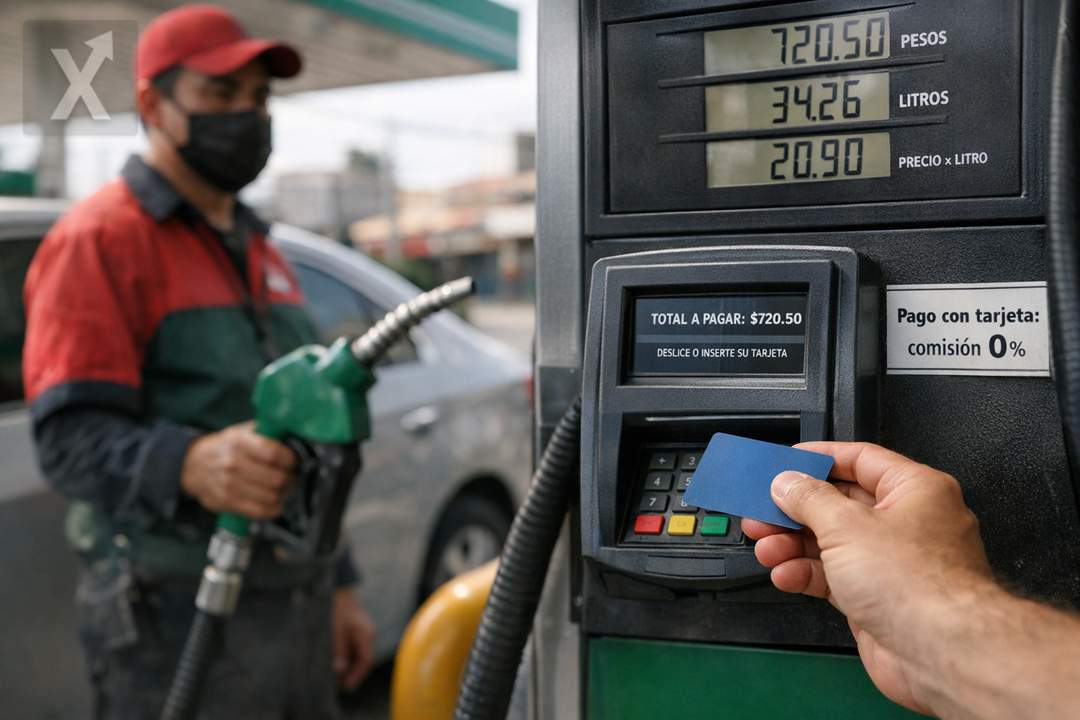
The government and the banking sector agreed to eliminate fees for paying by card at gas stations starting May 1, as a boost to digital payments and relief for consumers.
Starting May 1, card payments at gas stations in Mexico will carry zero fees, according to an agreement signed by the Ministry of Finance and Public Credit (SHCP), the Mexican Banking Association (ABM), and voucher issuers. The measure—announced as effective through October 31—aims to cut costs tied to electronic transactions and speed up adoption of digital payments in a sector where cash still has a meaningful presence.
In practical terms, the agreement removes the fees charged for accepting debit and credit card payments at service stations, as well as for “open-loop” vouchers, which work similarly to a bank card. For “closed-loop” vouchers, the framework translates into a fixed per-transaction discount associated with use of the instrument, with an emphasis on transactions in the transportation and logistics sector.
This approach adds to other public policy actions meant to contain the impact of fuel costs on household budgets—such as the fiscal stimulus applied at different times through the IEPS excise tax—but now by targeting the cost of payment rather than the benchmark price. The logic is that if a service station has to absorb a fee for accepting cards, that expense tends to be passed on directly or indirectly to the end consumer, especially in a market with tight margins and strong local competition.
According to what authorities and the banking sector have laid out, the reduction is implemented mainly by eliminating the interchange fee, a component that typically accounts for a majority share of the total merchant fee. The National Banking and Securities Commission (CNBV) and the Bank of Mexico (Banxico) are participating within the regulatory framework to enable the planned start date and operation throughout the announced period.
To put the change in perspective, under the prior scheme, reported fees were roughly 0.45% per debit transaction and 1.00% per credit transaction; under the new agreement, the charge drops to 0%. Open-loop vouchers align with that same reduction. In the case of closed-loop vouchers, a fixed discount per transaction is contemplated, particularly relevant for fleets and frequent fuel purchases.
Implications for Consumption, Formalization, and Competition in the Fuel Market
Zero fees could have effects that go beyond simple per-transaction savings. For consumers, it reduces the friction of paying by card—especially for small and mid-sized fill-ups—and may reinforce a preference for electronic payment methods in a context where Mexico’s economy continues moving, albeit unevenly, toward payment digitalization. For gas stations, the incentive is twofold: on the one hand, it lowers acceptance costs; on the other, it helps increase the share of traceable sales, which typically improves internal controls and reduces risks associated with handling cash.
On the competitive front, the change may benefit stations with higher volumes that previously negotiated better terms by leveling the cost of acceptance and giving smaller operators room to compete without facing higher fees. It may also strengthen transaction transparency—an important factor in a sector that faces compliance and verification challenges across different regions. For banks, the argument is that greater use of electronic payments increases the generation of transaction history, which could expand access to credit and improve risk assessment, though that effect is usually seen over the medium term.
That said, the ultimate impact will depend on whether the benefit is actually passed on to users. In highly competitive markets, savings are more likely to show up in better terms; where local competition is weaker, the adjustment could be diluted. In addition, to achieve a sustained shift, connectivity infrastructure, terminals, and technical support will be decisive—particularly in areas with spotty signal or lower levels of banking access.
Looking ahead, the agreement comes at a time when Mexico is combining intermittent inflationary pressures, consumer spending supported by employment and remittances, and a monetary policy stance that remains restrictive compared with prior years. In that environment, any reduction in transaction costs—however small it may seem—can have a cumulative effect, especially for fuel-intensive sectors such as transportation, logistics, and services.
In sum, eliminating fees on card payments at gas stations is intended to make electronic payment methods cheaper to use and accelerate the sector’s digitalization push; its success will be measured by actual adoption, the quality of infrastructure, and the extent to which the savings translate into observable benefits for consumers and businesses.






