Treasury Ministry cuts interchange fees at gas stations to zero: relief for stations, cost for banks, and questions about the consumer payoff
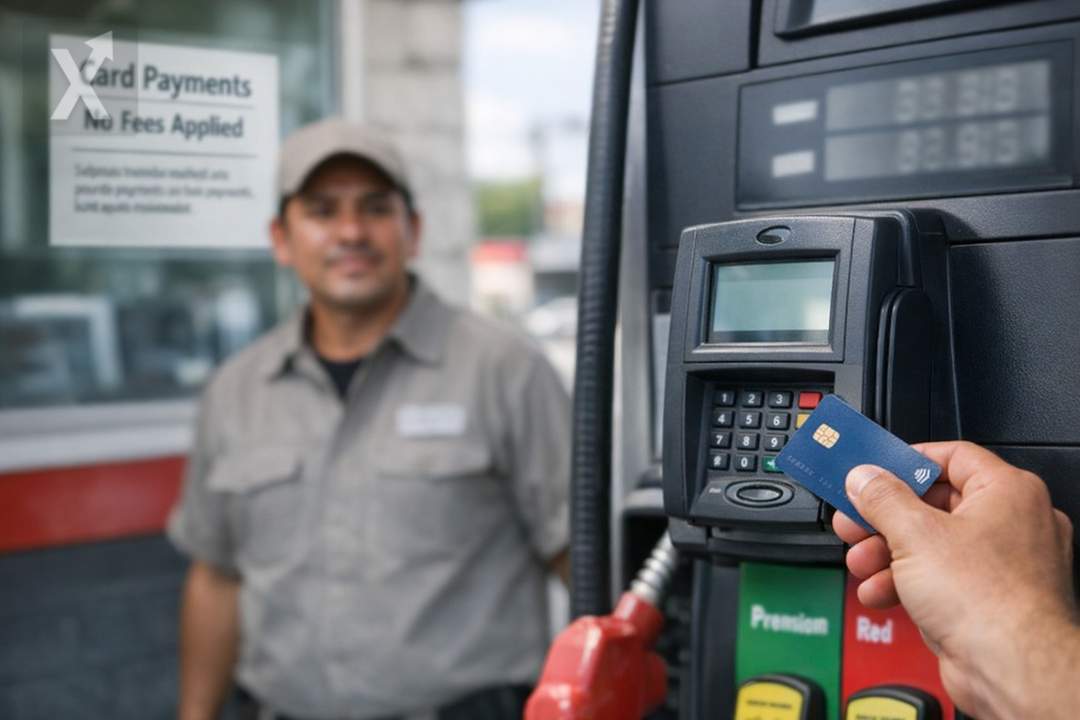
The zero-fee policy for card payments at gas stations aims to curb fuel-related pressures, but its impact on pump prices isn’t guaranteed.
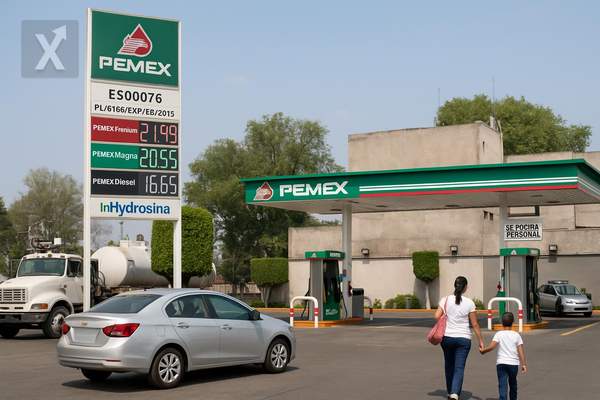
Mexico’s Ministry of Finance and Public Credit (SHCP) made official in the Official Gazette of the Federation a measure that reduces to zero the interchange fee on card payments at gas stations— a regulatory tweak that, in practice, eliminates one of the charges associated with using point-of-sale terminals in that industry. The agreement, announced as a temporary six-month measure, is framed as support to cushion the impact of higher fuel costs on households, at a time when energy inflation often bleeds into logistics costs and consumer prices.
The change is significant: because interchange is a fee typically paid within the card acceptance chain, eliminating it lowers costs for service stations, but shifts the burden to issuing banks and other participants in the payments ecosystem. Industry estimates put the aggregate cost at close to 1.6 billion pesos over the life of the agreement, depending on transaction volume and the mix of debit and credit payments in the gas-station channel.
Operationally, the Treasury Ministry has emphasized that, for each debit card payment at gas stations, the issuing bank would stop receiving an average of about 2.57 pesos, while for credit cards the average foregone amount would be as high as 7.45 pesos per transaction. The size of the impact reflects heavy use of electronic payments at stations: data from the Bank of Mexico (Banxico) show hundreds of millions of transactions in comparable recent periods, with a meaningful share coming from credit cards.
The Mexican Banking Association (ABM) has described the agreement as an investment effort to deepen digitization and broaden payment acceptance. Still, for commercial banks the measure means giving up a revenue stream tied to processing, in an environment where margins are under scrutiny due to competition, regulation, and funding costs that remain high relative to prior years—even as an interest-rate cycle that could gradually normalize takes shape.
The measure also draws a boundary among system participants: while banks and fuel-card companies are part of the understanding, organizations in other segments—such as parts of the fintech universe or certain nonbank entities—are not listed as participants, raising questions about the real reach of the policy and regulatory consistency across different players in Mexico’s payments market.
Will gas prices fall, or is this just a shift in who absorbs the cost?
The government’s stated goal is to limit pressure on consumers’ wallets, but pass-through isn’t automatic. In practice, retail gasoline prices in Mexico are driven mainly by the international benchmark, the exchange rate, logistics costs, retail margins, and the tax framework (including the IEPS excise tax and related stimulus mechanisms). The interchange fee is a more micro-level component of a station’s operating costs; so even if a station pays less to accept cards, it doesn’t necessarily cut the price per liter. In retail markets with limited competition or prices that move off common reference points, the savings can turn into extra margin, investment in infrastructure, or a selective commercial strategy (discounts, loyalty programs), rather than a broad, visible drop on the price sign.
In the background is the broader energy environment. When international prices rise—due to geopolitical tensions, supply cuts, or logistics disruptions—Mexico often faces the dilemma of allowing the increase to flow through to final prices or smoothing it via tax stimulus. In that context, measures like a zero interchange fee work as complementary tools: they don’t replace the role of taxes or market dynamics, but they can reduce friction in a massive, everyday payment channel.
There are also implications for the fee structure and the sustainability of the acquiring model. If banks and issuers offset the loss of interchange by adjusting other line items (for example, service fees, tougher commercial requirements, changes in terminal offerings, or acceptance terms), the net benefit for merchants could be diluted. The final impact will depend on whether the agreement is paired with effective competition among acquirers and transparency in merchant costs, as well as oversight to prevent substitute charges.
Another angle involves trade policy and international commitments. As discussions about economic integration and rules for financial services continue, the evolution of Mexico’s payments market— including fees, access, and participation terms—has been watched by trading partners, particularly the United States (U.S.). To the extent Mexico seeks to strengthen its payments infrastructure and competition, the design of temporary, targeted measures will be judged by their consistency with goals of greater openness, interoperability, and nondiscrimination among market actors.
From the consumer’s perspective, day-to-day behavior likely won’t change much in the short term: today, customers typically pay the same whether they use cash or a card at the station. If the zero-fee policy translates into something tangible, it may show up more in promotions or in a greater willingness by merchants to accept cards without restrictions—especially in areas where cash still dominates. Over the medium term, if the incentive accelerates digitization in a high-frequency purchase category, it could strengthen payment traceability and formalization, though that effect depends on actual terminal adoption and on merchants not shifting to other informal mechanisms.
In sum, the Treasury Ministry’s decision lowers costs for gas stations and shifts the weight to banks and issuers, betting that the ecosystem can absorb the adjustment without affecting users. Its success will be measured not only by accounting savings, but by whether it improves payment acceptance, prevents substitute fees, and—most importantly—whether it helps, even marginally, cushion the impact of energy prices in a macroeconomic environment where inflation and consumption remain sensitive variables.