Economy Ministry Reshuffles Team Ahead of USMCA Review
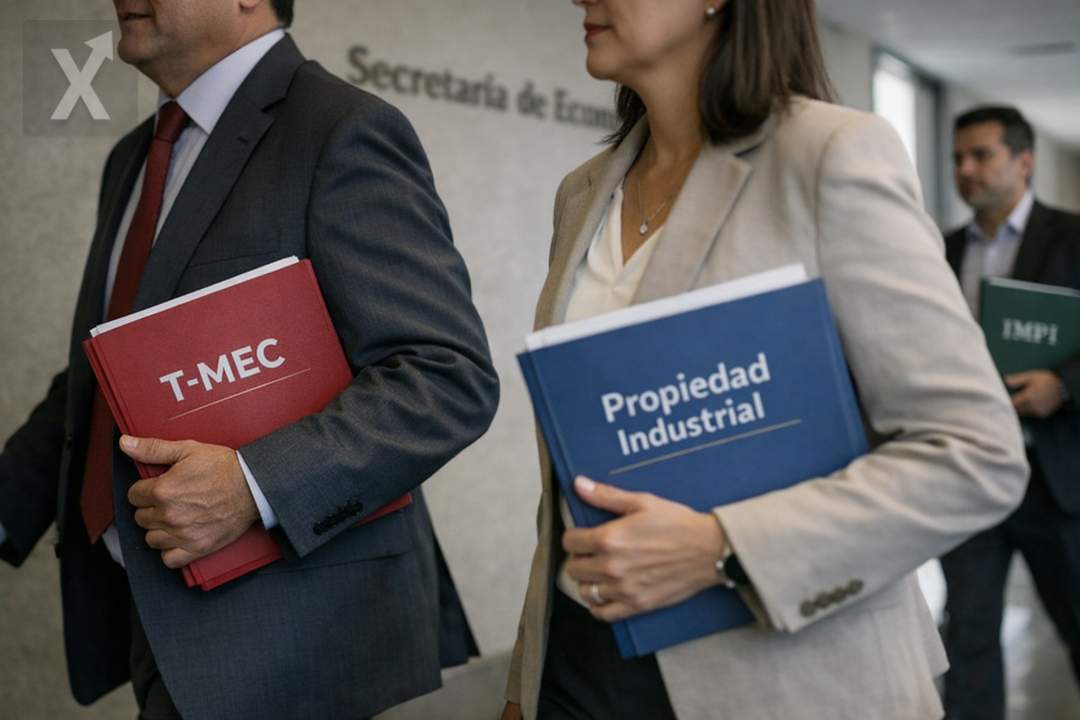
The shake-ups in key leadership posts at Mexico’s Ministry of Economy come as the country fine-tunes its strategy for a USMCA review with implications for investment, rules, and intellectual property.
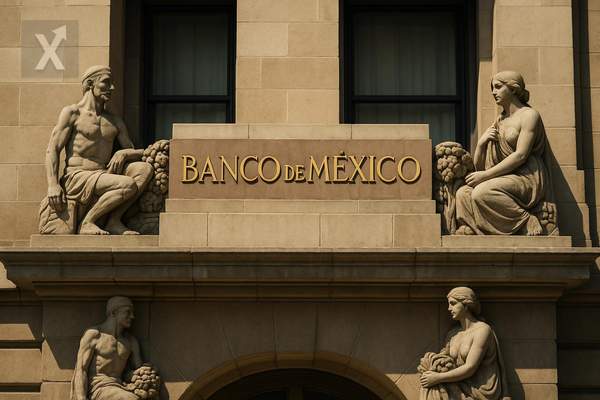
Just weeks before formal talks begin to review the USMCA, Mexico’s Ministry of Economy (SE) made internal adjustments in sensitive areas responsible for engagement with the private sector and for the day-to-day management of issues that often escalate to the trilateral agenda. The moves follow the departures of officials seeking to run for elected office and come at a time when the agreement is once again at the center of expectations around investment, exports, and regulatory certainty.
The most visible change is in the Undersecretariat for Industry and Trade, where Ximena Escobedo Juárez takes over after leading the Productive Development Unit. Her background—experience in public policy and in the bilateral relationship with the United States—arrives at a moment when Mexico faces cross-pressures: on one hand, capitalizing on the reshoring and reconfiguration of North American supply chains; on the other, addressing recurring disputes and friction in regulated sectors.
Vidal Llerenas Morales, who held the undersecretary post, will be proposed as head of the Mexican Institute of Industrial Property (IMPI), replacing Santiago Nieto. IMPI is shaping up to be a key player in the treaty review cycle, since industrial property—trademarks, patents, enforcement, and procedures—often becomes a barometer of confidence for companies operating across the region, especially in high-tech and pharmaceutical industries.
The reshuffle also includes the appointment of Carlos Javier Castillo Pérez to lead the Productive Development Unit, while the General Directorate of Heavy and High-Technology Industries will be headed by Luis Enrique Vázquez Rodríguez, who previously worked in trade facilitation. Meanwhile, María Idalia Salgado Hernández takes over the General Directorate for Trade Facilitation and Foreign Trade, replacing Wilfrido Márquez. Taken together, these changes aim to ensure operational continuity in areas that affect logistics costs, paperwork, inspections, and border times—variables that directly shape export competitiveness.
The “domino effect” behind these appointments stems from several resignations: in addition to Santiago Nieto and Wilfrido Márquez, officials tied to international panels, inclusion economics, state representation, and strategic projects also left their posts. Names mentioned include Héctor Ochoa Moreno, Salma Luévano Luna, Omega Vázquez Reyes, Humberto Hernández, and Julio Benavides Serrano. For markets, the key question isn’t only who is coming in, but how quickly the internal machinery stabilizes so Mexico can arrive at a negotiation that is often technical but highly political with clear positions.
The economic backdrop makes the reshuffle more consequential. Mexico remains deeply integrated in trade with the United States and Canada and continues to rely on manufacturing and export momentum to sustain investment and employment in industrial states. At the same time, structural challenges persist: raising domestic value-added, expanding supplier capabilities, easing energy and infrastructure bottlenecks, and strengthening the rule of law to contain the costs of uncertainty. In that context, the SE typically serves as a hinge between domestic agendas (industrial policy, regulation, competition) and international commitments.
Industrial property and certainty: why IMPI is becoming more important
In a USMCA review, the discussion isn’t limited to tariffs or rules of origin: certainty around intangible assets and the institutional capacity to uphold industrial property rights are factors that influence investment decisions, the establishment of engineering centers, technology transfer, and linkages with local suppliers. A new leader at IMPI at this stage raises questions about priorities—turnaround times, the quality of examinations, enforcement standards, and coordination with other authorities. For Mexico, a signal of institutional strength on this front can help sustain the narrative of a “reliable platform” in North America; the opposite signal can fuel tensions at a negotiating table where every issue can be used as leverage.
In the short term, the main challenge will be maintaining technical continuity while teams and responsibilities are redrawn. In practice, the agreement’s chapters and disputes are driven by case files, data, and inter-agency coordination, and any organizational gap can translate into delays or less consistent positions vis-à-vis counterparts and productive sectors.
Looking ahead, the performance of the new officials will be watched by two audiences: the business community seeking predictability to invest and operate, and trade partners evaluating compliance and institutional effectiveness. In a more protectionist global environment and amid competition to attract new plants, Mexico can gain ground if it combines clear rules, trade facilitation, and an industrial strategy aligned with its regional integration.
Overall, the changes at the Ministry of Economy and the leadership transition at IMPI come at a highly sensitive moment for Mexican trade policy; their impact will depend on how quickly teams consolidate and how effectively that reorganization translates into execution and certainty ahead of the USMCA review.