Mexico’s Finance Ministry boosts IEPS fuel subsidies: support rises for Regular and diesel, and Premium incentive returns
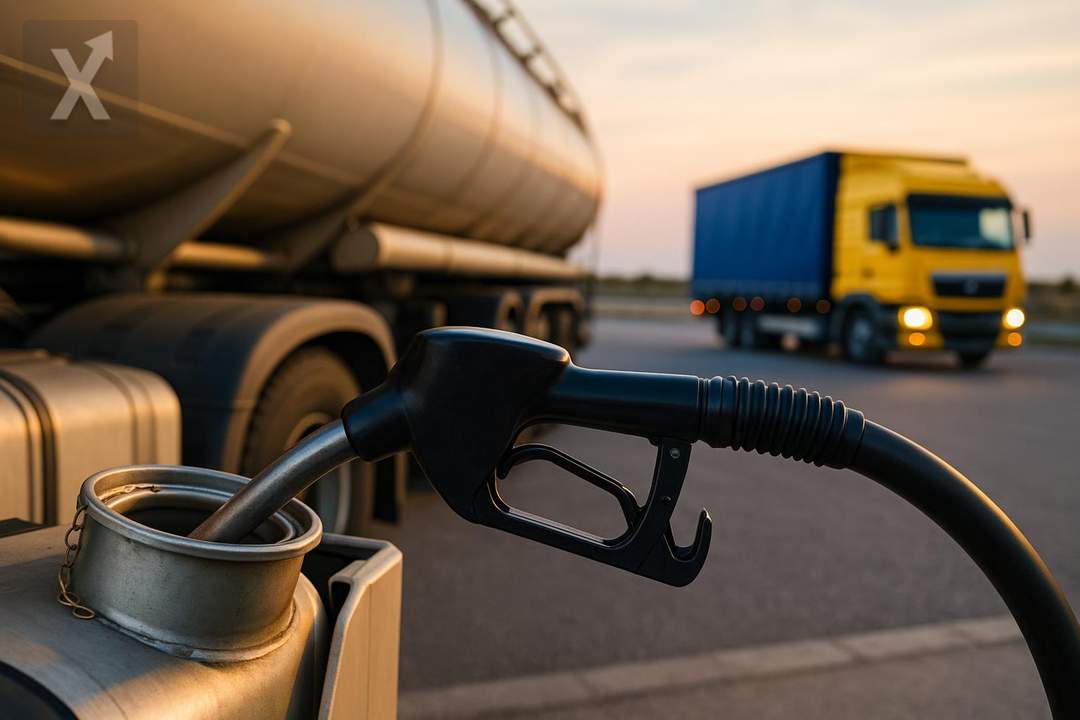
The Finance Ministry (SHCP) increased IEPS subsidies to cushion the impact of international prices on gasoline and diesel during the first week of May.
Mexico’s Ministry of Finance and Public Credit (SHCP) significantly increased the tax subsidies applied to the Special Tax on Production and Services (IEPS) for fuels for the week of May 2–8—signaling the government is seeking to soften the effects of external volatility on consumer prices and, in turn, limit inflationary pressures. The measure was published in the Official Gazette of the Federation (DOF) and updates the discounts on the tax rates for Regular (Magna) gasoline, diesel, and Premium gasoline.
For diesel, the tax subsidy rose to 4.47 pesos per liter, up from 2.44 pesos per liter the prior week. As a result, the discount increased from 33.2% to 60.71%, and the IEPS rate to be paid came in at 2.89 pesos per liter. For Regular (Magna) gasoline, support increased from 1.05 to 2.55 pesos per liter, which raised the subsidy from 15.68% to 38.06% and left an effective IEPS rate of 4.15 pesos per liter.
In addition, after two weeks with no subsidy, Premium gasoline again received an incentive: 1.50 pesos per liter, equivalent to 26.5%, with an IEPS rate of 4.16 pesos per liter. These figures extend a streak of continued support for diesel—an eighth consecutive week with subsidies—and for Regular (Magna)—a seventh week with incentives—at a time when energy prices remain sensitive to geopolitical factors, supply adjustments, and global demand expectations.
The IEPS subsidy works as a partial “shock absorber”: when benchmark fuel prices rise, the Finance Ministry can temporarily reduce the tax burden to moderate how much gets passed through to pump prices. However, the mechanism does not eliminate the underlying pressure: Mexico imports a significant share of the fuels it consumes, and while domestic refining has aimed to increase, domestic prices remain tied to international conditions and logistics costs.
For consumers, the immediate impact depends on market dynamics and local costs, but the incentive generally shows up as less upward pressure on the final price than in a scenario without subsidies. For the broader economy, the most visible effect is on inflation: energy prices have both direct and indirect weight in the price index by influencing transportation, goods distribution, and services.
Implications for inflation, public finances, and economic activity
The reinforcement of subsidies comes at a time when economic policy is trying to keep the disinflation process on track without abruptly slowing consumption. In Mexico, the energy component can trigger temporary spikes in headline inflation and, even though core inflation is typically the main guide for monetary policy, sharp fuel moves affect expectations and companies’ operating costs. At the same time, larger subsidies mean lower effective IEPS collection per liter, which can strain the fiscal balance if maintained for many weeks—especially if they overlap with other spending commitments.
From the standpoint of economic activity, diesel is especially important given its role in freight transportation, the agribusiness sector, and parts of manufacturing operations. A higher subsidy for this fuel tends to moderate logistics costs, which can help contain price increases in food and consumer goods, although the effect is not immediate and depends on competition in each market. For Premium, the return of the incentive suggests the Finance Ministry is also trying to avoid overly sharp price step-ups in the higher-octane segment, even if its consumption is lower than Regular (Magna).
In the short term, the government’s room to maneuver will remain constrained by global energy-market behavior, the exchange rate, and seasonal demand. If international prices stabilize, the Finance Ministry could gradually scale back subsidies to recover revenue; if they rise again, the trade-off will be whether to allow more pass-through to prices or expand the fiscal cost of the support.
Overall, the increase in IEPS subsidies for Regular (Magna) and diesel, along with the return of the incentive for Premium, points to a strategy aimed at containing energy shocks and prioritizing short-term price stability—though with a potential cost in tax revenue if the measure remains in place.






