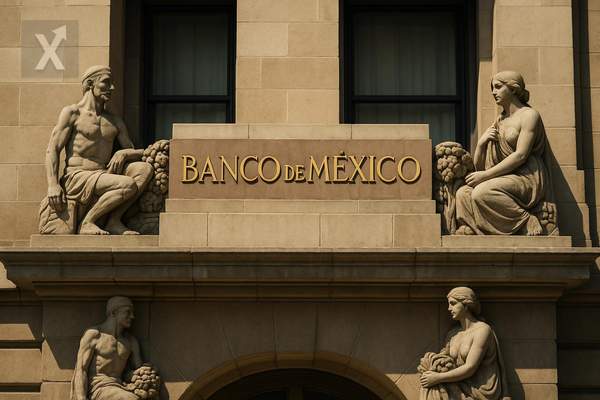
Digital payments under USMCA scrutiny: The United States pressures Mexico over competition and clear rules
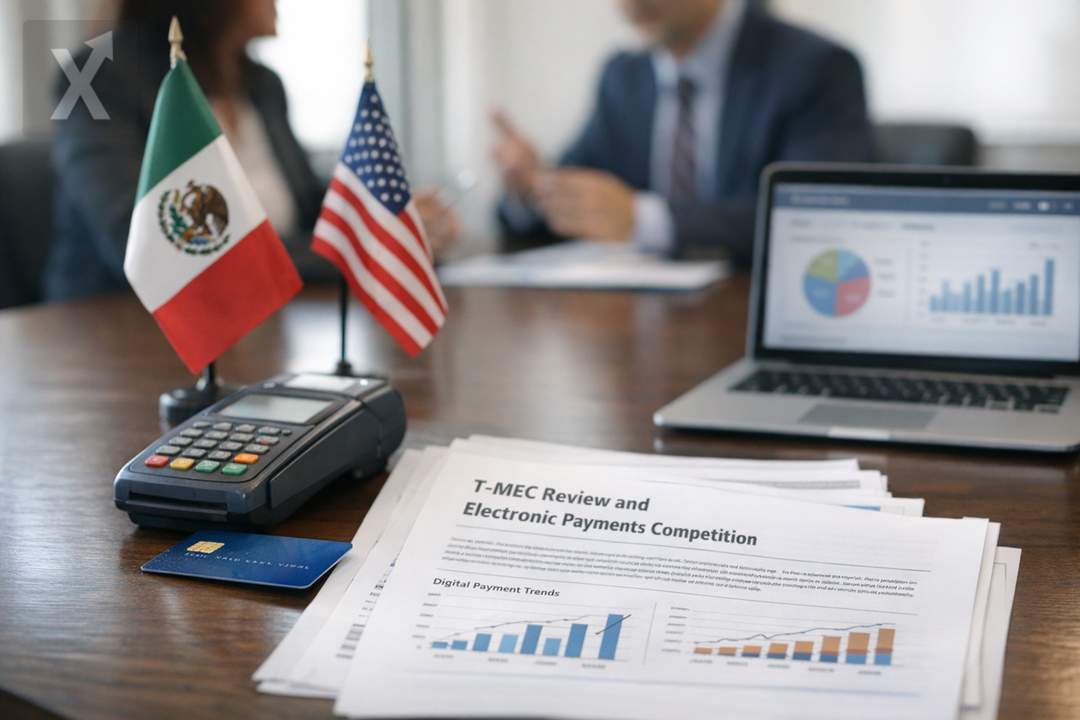
The debate over payment networks, clearinghouses, and regulation could become a sensitive front as the USMCA review approaches.
In the run-up to the USMCA review, the U.S. government raised its tone against Mexico, arguing that the regulatory framework for electronic payments is not creating sufficient competitive conditions—particularly for providers headquartered in the United States. The claim was laid out in the 2026 National Trade Estimate Report, submitted each year to the U.S. Congress and used as a barometer of the issues Washington considers priorities in its trade agenda.
The report maintains that, despite recent consultations and draft regulations, barriers remain that limit U.S. companies’ ability to offer cross-border value-added services—such as fraud-prevention tools—and to compete on equal terms with players that have entrenched positions in Mexico. In practice, the message is that digital payments are no longer a purely technical matter: they now risk becoming a bargaining chip in a high-stakes trade negotiation with major implications for the Mexican economy.
The warning comes as Mexico seeks to shore up its appeal for “nearshoring”-related investment, in an environment of still-high financing costs, moderate growth, and pressure to modernize infrastructure and expand financial inclusion. In that context, any friction with its main trading partner can translate into regulatory uncertainty and, potentially, higher compliance costs for the financial and fintech sectors.
The focus: clearinghouses, card rules, and implementation of recommendations
At the center of the dispute are two layers of the market: on one hand, processing infrastructure (such as clearinghouses) and, on the other, the economic rules for card payments (including interchange fees). The United States underscores that Mexico’s competition authority identified barriers in card-payment processing and issued recommendations to the Bank of Mexico (Banxico) and the National Banking and Securities Commission (CNBV), but that, in its view, those recommendations have not been implemented with the force expected. This matters because if clearing infrastructure and access rules are seen as restrictive, the incentive for new entrants to compete on price, service, and technological capabilities is reduced.
The regulatory process itself has become part of the debate. Washington notes that draft regulations published toward the end of 2025—covering both card payment networks and clearinghouses—did not resolve the identified barriers or address feedback from interested companies. Later, in February 2026, the CNBV withdrew the draft related to payment networks to conduct a deeper analysis, adding a new layer of uncertainty about the timeline and ultimate direction of the rules.
The most visible case is Visa, after the antitrust authority denied its acquisition of a controlling stake in PROSA on the grounds that it would pose competition risks with potential impacts on users of the financial system. Visa disagreed and indicated it would seek a review of the decision, while reiterating its interest in the Mexican market and its commitment to digitizing payments, especially for micro and small businesses.
For Mastercard, the debate has centered on the difficulty of getting a clearinghouse up and running even with an authorization obtained back in 2020. According to the U.S. position, the issue is not just the license, but operational viability under competitive conditions. In the spirit of the USMCA, they argue, U.S. providers should face a playing field comparable to that of their Mexican counterparts.
Another sensitive component is technology infrastructure. The United States also flagged concerns about the length and complexity of approval processes for institutions seeking to use cloud computing services, as well as uncertainty about whether there are implicit pressures to favor local infrastructure. In a payments system that depends on resilience, security, and scalability, this point ties directly to operating costs and the speed at which innovations can be deployed.
For Mexico, the challenge is balancing goals that sometimes compete with one another: boosting competition and lowering costs for merchants and consumers; protecting the stability and integrity of the payments system; and preserving regulatory room for security, cyber resilience, and fraud prevention. Banxico has been pushing for broader adoption of digital payments and greater efficiency across the ecosystem, while the banking sector debates mechanisms to lower card-payment costs in specific industries. However, the U.S. view is that the measures still do not correct the market’s structural barriers.
Looking ahead, the payments chapter could escalate if it becomes a “test case” within the USMCA review—not necessarily to break the agreement, but to condition progress on other issues. For the Mexican economy, the main risk would be prolonged uncertainty in a sector where investment in technology, cybersecurity, and infrastructure requires clear regulatory horizons. Conversely, a predictable regulatory path aligned with best practices could accelerate competition, expand acceptance of digital payments, and reduce friction for cross-border trade.
In sum, the U.S. complaint puts Banxico, the CNBV, and competition authorities to the test on regulatory coordination in a market that is key to digitizing the economy. The outcome will influence both investors’ confidence in the payments system and the tone of the USMCA review, at a time when Mexico needs certainty to capitalize on regional integration.