Mexico’s GDP Slips at the Start of 2026: Down Less Than Expected, but Fragility in Industry and Services Persists
The GDP contraction in the first quarter confirmed an economic cooldown, with manufacturing and services still under pressure despite a better March.
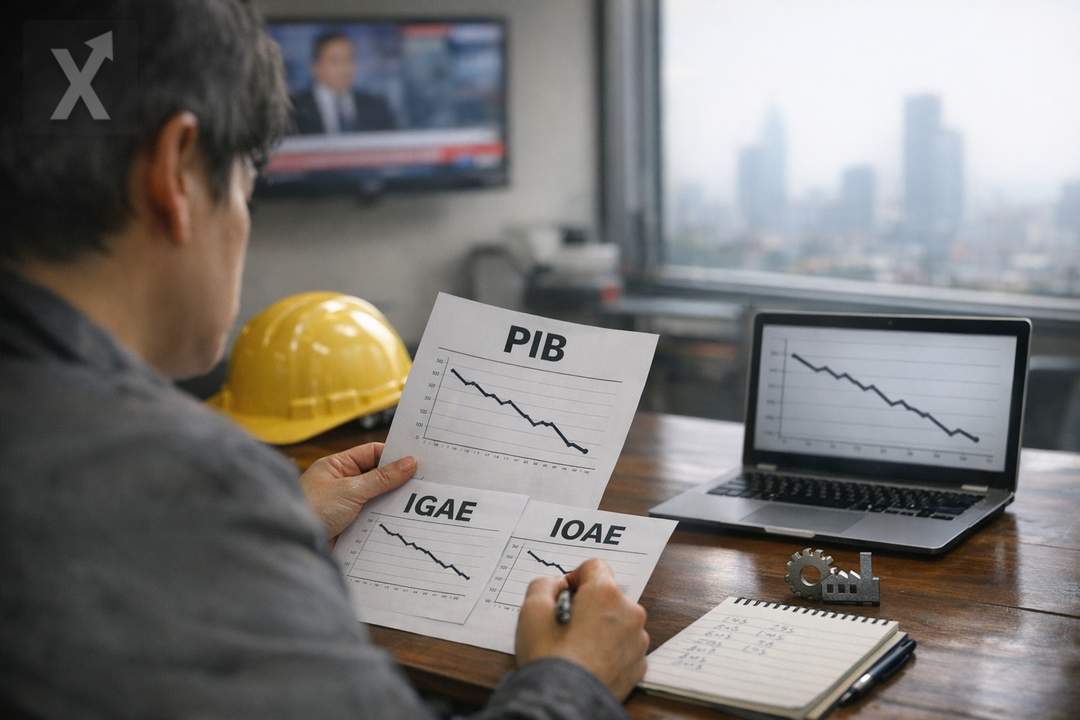
Mexico’s economy stumbled into 2026: Gross Domestic Product (GDP) contracted 0.6% quarter over quarter in the first quarter, seasonally adjusted— a smaller decline than initially estimated by the Timely Indicator of Economic Activity (IOAE), which had pointed to a 0.8% drop. On an annual basis, growth was marginal at 0.4%, according to INEGI figures.
The revision versus the timely estimate was largely explained by better performance toward the end of the quarter. In March, the Global Indicator of Economic Activity (IGAE) rose 0.4% month over month, helping soften the declines seen in January and February. However, the sector breakdown continued to show weakness, with productive activity still facing a climate of business caution, elevated financing costs compared with recent years, and global trade that remains volatile.
By major activity groups, secondary activities—where manufacturing, construction, and mining are concentrated—fell 1.0% quarter over quarter and 1.1% year over year, reflecting a soft patch in the industrial cycle. Manufacturing dropped 2.0% year over year and construction declined 0.7%, in a context where the boost from public works has not fully offset a slowdown in private projects in some segments and an adjustment in certain investment-related categories.
In services (tertiary activities), sector GDP decreased 0.4% quarter over quarter, though it still posted 1.1% year-over-year growth. The details point to less dynamic consumption and more cautious business demand: temporary lodging and food and beverage services recorded a 2.9% annual decline, while professional, scientific, and technical services fell 3.4% year over year—an important signal because these activities are often tied to corporate investment and hiring decisions.
Monthly data show that the end of the quarter prevented a bigger deterioration. In March, tertiary activities rose 0.8% month over month and primary activities increased 4.5%, while construction weakened again with a 3.3% monthly plunge, underscoring the sector’s volatility and its sensitivity to execution timelines, financing, and expectations.
What the sectors are signaling for the rest of the year
The first-quarter snapshot points to an economy that is cooling, but not necessarily to an immediate, broad-based halt. Industry remains the main focus because of its links to North American supply chains and external demand for manufactured goods; when this engine loses traction, employment in certain industrial corridors feels the strain and supplier orders get postponed. At the same time, the fact that some service categories are posting declines—especially those tied to professional activities—suggests part of the private sector is holding back on spending, consulting, and projects while waiting for more clarity on costs, order momentum, and financing conditions.
Looking ahead, the performance of domestic consumption and the labor market will be key in determining whether the slowdown stays contained. While Mexico’s economy has shown resilience in recent episodes thanks to formality in some segments, remittances, and consumer credit, a persistently weak industrial sector and swings in construction could translate into more uneven growth over the next few quarters. In this context, investment—public and private—becomes the central pressure point: without a sustained rebound in capital formation, the recovery tends to be slower and more uneven across regions.
In addition, the path of inflation and interest rates will continue to shape the pace of the economic cycle. A disinflationary environment would gradually allow for less restrictive financial conditions; still, the speed will depend on how service, energy, and food prices evolve, as well as external shocks. For businesses and households, that translates into more careful spending decisions, particularly on durable goods and expansion plans.
Overall, first-quarter GDP fell less than expected, but the sector details confirm the economy is operating with less momentum: industry remains weak, services are losing steam in investment-sensitive areas, and construction is facing ups and downs. March’s pickup offers some breathing room, though the overall read remains one of caution for the rest of 2026.