The Fed Pauses Rates and Raises Uncertainty: Effects on the Peso and Financing in Mexico
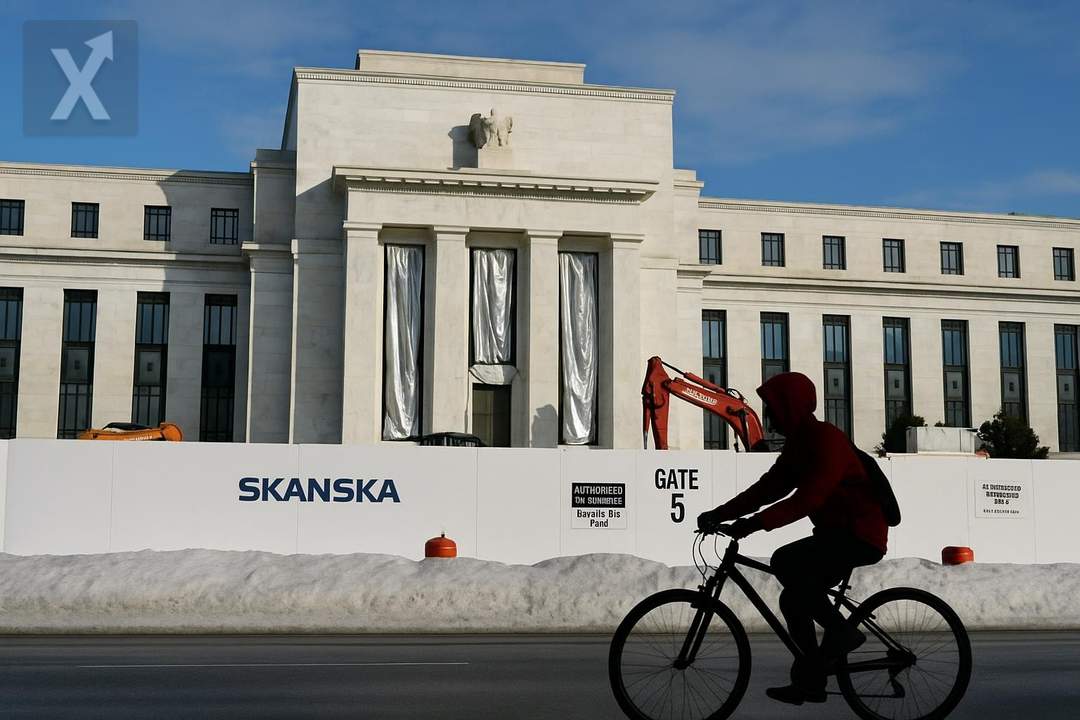
The Fed’s decision to hold rates steady, amid heightened geopolitical tensions, complicates the outlook for Mexico’s exchange rate and financing costs.
The U.S. Federal Reserve (Fed) left its benchmark rate unchanged for a second consecutive meeting and made it clear that the impact of the war in the Middle East on inflation and growth remains uncertain. For Mexico, that signal matters: when the Fed extends a restrictive stance or delays rate cuts, it tends to bolster the U.S. dollar (USD) and tighten global financial conditions—two factors that directly influence the exchange rate, imported inflation, and the cost of financing.
The U.S. central bank’s message—closer to “wait and see” than to a clear path of cuts—arrives as markets are also gauging the trajectory of Banxico, which has begun to move more cautiously amid persistent inflation pressures in certain categories and external volatility. In practice, divergence or alignment between the Fed and Banxico often shows up in the relative appeal of peso-denominated assets, particularly government securities and corporate debt.
Beyond the rate channel, the Middle East conflict puts energy back at the center of the story. If oil and fuels become more expensive due to logistical disruptions or higher risk premiums, Mexico faces a two-front challenge: on one hand, higher transportation costs and pressure on consumer prices; on the other, potential partial relief via oil revenues—though limited by the need to import fuels and by Pemex’s financing costs, which are highly sensitive to the interest-rate environment.
Exchange Rate and Carry: The Window for the Peso Narrows
With the Fed keeping rates high for longer, the rate differential with Mexico remains a tailwind for the peso in “carry trade” strategies, but it also increases the risk of outflow episodes if the market concludes that the extra return for holding pesos no longer compensates for volatility. In a risk-off environment, demand for safe-haven assets and dollars typically rises, putting pressure on the foreign-exchange market. For Mexican companies with USD liabilities—or imported inputs—an abrupt depreciation squeezes margins and raises costs, while for exporters it can provide temporary relief, depending on hedging and cost structures.
In Mexico, pass-through to consumers is not automatic, but the exchange rate is an important driver of goods inflation, particularly for durable goods, electronics, auto parts, and some processed foods. As a result, a prolonged period of dollar strength could complicate the disinflation process—just as households are still feeling the cumulative price increases of recent years.
On the credit side, persistently high U.S. rates often keep global yields elevated, making issuance more expensive for companies and governments. In Mexico, while the local market absorbs a large share of financing, funding costs adjust to Banxico’s policy rate and to risk premiums. If the Fed is slow to cut and the geopolitical backdrop adds volatility, the yield curve could remain under pressure, affecting mortgages, auto loans, and financing for small and mid-sized businesses, as well as investment plans in capital-intensive sectors.
This also makes Mexico’s monetary-policy calculus more complex: cutting too quickly could reignite exchange-rate and inflation pressures; cutting too late could prolong the slowdown in consumption and investment. The balance will depend on the path of core inflation, the performance of the U.S. economy—Mexico’s main trading partner—and energy-price dynamics.
Looking ahead, Mexico’s main risk is not just the Fed’s policy rate, but the combination of high rates with supply shocks tied to energy and logistics. If uncertainty drags on, the baseline scenario for 2026 could be moderate growth, stickier inflation in exchange-rate-sensitive components, and a more selective financial market. By contrast, a gradual normalization of U.S. inflation and easing geopolitical tensions would open room for coordinated cuts that lower borrowing costs in both countries.
In short, the Fed’s pause keeps the spotlight on the dollar, the exchange rate, and financing conditions: Mexico still has buffers—such as Banxico’s credibility and a deep local market—but it will remain exposed to external shocks as long as the international outlook stays uncertain.






