Banxico Steps Up Its Anti-Money Laundering Focus: More Oversight, Cooperation with the U.S., and Tougher Banking Controls
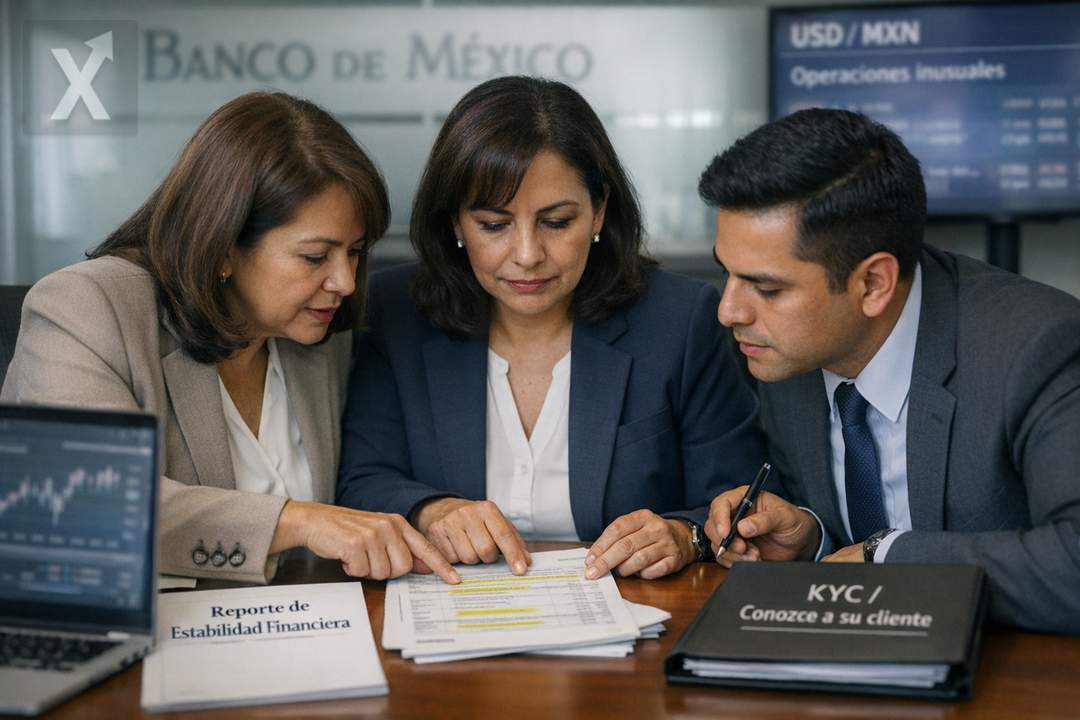
Banxico reported progress in preventing money laundering, with greater coordination with the U.S. and stricter protocols at banks and digital entities.
The Bank of Mexico (Banxico) emphasized that Mexico’s financial system has accelerated the strengthening of its defenses against money laundering and terrorist financing, amid heightened international scrutiny and domestic regulatory adjustments. During the presentation of its latest Financial Stability Report, Governor Victoria Rodríguez said processes have been modernized and reviews have been intensified to boost the ability to detect unusual transactions, particularly in higher-risk segments.
One factor that triggered this shift was the episode involving allegations by the U.S. authority FinCEN against Mexican intermediaries—an event that left operational and reputational lessons for the sector. After that, the governor explained, “know your customer” practices and beneficial ownership verification were reinforced, with more frequent reviews and deeper analysis of transaction profiles.
The official narrative also places cross-border cooperation front and center. Banxico highlighted closer coordination with the government of the United States (U.S.), consistent with financial integration stemming from regional trade and remittance flows. For the banking system, this environment requires raising compliance standards to reduce correspondent banking risks, avoid operational disruptions, and preserve access to international payment channels—particularly during periods of global volatility and shifts in risk appetite.
Domestically, tighter controls have shown up as more demanding documentation and digital requirements for opening and maintaining accounts: data updates, validation of official IDs, and strengthened mechanisms for remote onboarding. The trend extends beyond traditional banking to digital platforms and community savings institutions, which face the challenge of balancing financial inclusion with traceability and ongoing monitoring.
Extortion and Transaction Patterns: The New Operational Front
A key part of the recent agenda is cracking down on flows linked to fraud and extortion, with an emphasis on transactions originating from prisons. The Financial Intelligence Unit (UIF) has identified distinctive patterns: transfers with recurring payment descriptions, rapid dispersion of funds, and heavy use of mobile apps—elements that accounted for a majority share of the transactions observed in the cases analyzed. In response, banks and authorities have been working to fine-tune alerts and monitoring models to distinguish legitimate transactions from movements typical of criminal schemes, without unduly slowing everyday use of digital payments.
The timing of these actions matters for Mexico’s economy. With a labor market that remains resilient but showing signs of cooling in some areas of activity, the strength of the financial system and confidence in its integrity become key factors in sustaining credit and intermediation. In addition, the boom in electronic payments—driven by digitization and the expansion of real-time transfers—has increased the volume and speed of transactions, forcing greater investment in analytics, cybersecurity, and compliance.
At the same time, the sector faces reputational and cost pressures: strengthening controls typically requires greater investment in technology, training, and auditing, as well as added friction for end users. However, the cost of not doing so can be far higher: sanctions, loss of correspondent banking relationships, the departure of institutional clients, and deterioration in perceptions of country risk in the financial sphere—especially if international scrutiny intensifies during periods of high travel and population mobility.
Looking ahead, industry analysts expect anti-money laundering efforts to continue shifting toward risk-based and data-driven models, with more information sharing between authorities and financial institutions. The challenge will be maintaining strong standards without shutting out users with limited credit histories, while also closing off avenues for triangulation schemes and the use of borrowed identities.
In short, Banxico argues that Mexico’s financial system is adjusting its rules and capabilities to address risks that evolve alongside digitization and international cooperation; the balance between efficiency, inclusion, and control will be decisive for maintaining confidence and stability.






