Services Inflation Holds Firm in Mexico, Complicating Banxico’s Path Back to 3%
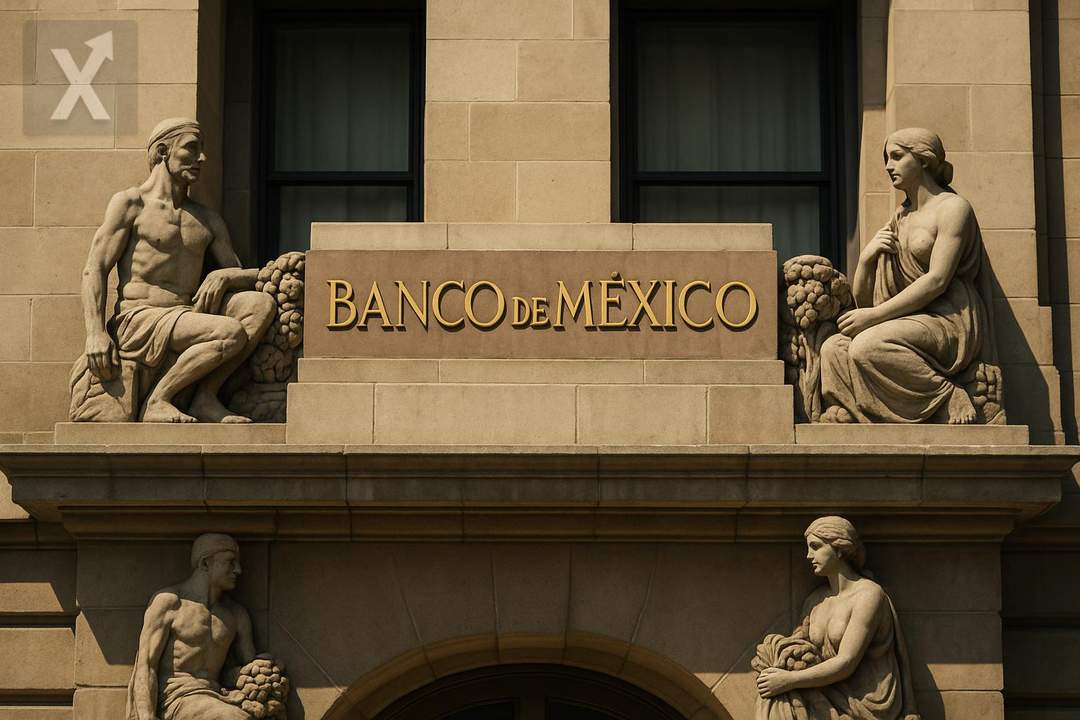
Sticky service prices are keeping monetary policy cautious and could lengthen the timeline for inflation to converge to the target.
Mexico’s fight against inflation has shifted from pricier goods to tougher terrain: services. That “stickiness”—reflected in year-over-year readings that have hovered at elevated levels for extended periods—threatens to delay a sustained return of headline inflation to the Bank of Mexico’s (Banxico’s) 3% target and reinforces the idea that monetary policy will need to remain restrictive for longer.
Gabriel Cuadra, Banxico deputy governor, warned in a webinar hosted by Invex that persistent services inflation is the main risk factor for core inflation—excluding more volatile components and typically guiding monetary-policy decisions—to slow more gradually than anticipated. In his view, while services inflation has shown signs of easing, the process has been gradual after staying near 5.2%–5.3% for roughly two years.
The central bank’s mandate is to keep inflation at 3%, with a variability range of +/-1 percentage point. However, convergence depends on core inflation losing momentum—something that usually takes longer when increases come from services—restaurants, transportation, lodging, education, and other labor-intensive categories—where pricing is driven more by labor costs, rents, and expectations than by temporary shocks.
Cuadra noted that weaker economic activity has contributed to disinflation, but it hasn’t been enough for a rapid adjustment, in part due to cost pressures. One example is the pass-through of higher input prices into food services, such as restaurants and small eateries. In Mexico, this channel matters because it combines food costs with operating expenses (energy, transportation, rent, and wages), making it harder for prices to fall quickly even when some goods prices stabilize.
On the policy rate, the deputy governor said that based on the information available, the current level is appropriate to address the macroeconomic challenges, though he left the door open to future adjustments when conditions allow. In practice, the decision hinges on the balance between the path of core inflation, labor-market dynamics, the pace of credit, and how monetary policy transmits to consumption and investment.
Regarding the external backdrop, Cuadra said geopolitical flare-ups—such as the conflict in the Middle East—can become an inflation risk, especially if they push up energy prices or disrupt supply chains. Even so, he argued that a move by the Federal Reserve (Fed) in the United States does not necessarily require an automatic response from Banxico: if the Fed were to raise rates by 25 basis points, Mexico might not follow, as long as the local assessment of the inflation outlook and financial stability permits it.
Why Services Take Longer to “Cool Off”
Services inflation tends to be more persistent because it is tied to contracts, fee adjustments, and wage dynamics. In addition, many services aren’t imported and face less exposure to foreign competition. In Mexico, the labor market has gone through periods of relative tightness and wage increases above past inflation, which can keep unit labor costs elevated. Add to that rising commercial rents, insurance costs, and urban logistics expenses, which ultimately show up in final prices. For Banxico, this means disinflation can’t be won solely through lower energy prices or normalization in goods: it requires inflation expectations to remain anchored and aggregate demand not to reignite pressures.
Another factor is second-round effects: when food or inputs rise, part of that increase ends up filtering into related services, from prepared food to lodging. That pass-through tends to be slower on the way up—and even slower on the way down—making the services component a critical gauge for anticipating whether inflation will converge to 3% within the forecast horizon.
Cuadra also addressed an episode of interest: the June soccer tournament did not trigger a broad-based price jump. Inflation ended that month at 3.37%, and in the first half of July it slowed to 3.10%. According to the central bank’s interviews with businesses, most did not plan to raise prices because of the event, partly due to weak demand and strong competition. There were temporary effects in some services—travel packages, hotels, and air transport—but they tended to reverse.
Looking ahead, the challenge for monetary policy will be navigating mixed signals: on the one hand, headline inflation has come down from its peaks; on the other, stubborn services inflation keeps the risk that convergence will be slower. With the economy growing unevenly across sectors and external uncertainty—from U.S. rates to commodity shocks—the Governing Board will face a delicate balance between avoiding premature easing and not deepening a broader slowdown in activity.
In sum, persistent services inflation has become Banxico’s main focus: if it cools more clearly, room would open for gradual adjustments; if not, monetary tightening could last longer and the return to 3% could take more time than expected, even if headline inflation remains contained in the short term.





