Finance Ministry Signals an End to Fuel IEPS Tax Breaks in 2027: Fiscal Pressure, Inflation, and Transportation Risks
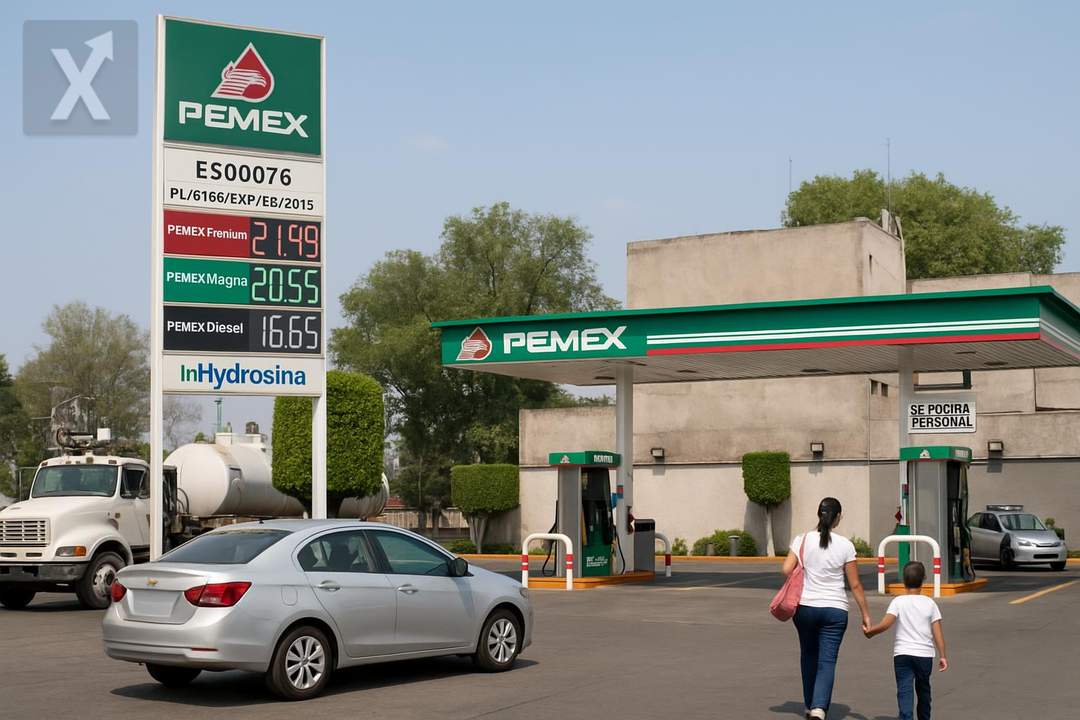
Mexico’s Finance Ministry (SHCP) expects that, if oil prices stabilize, it will stop “cushioning” gasoline and diesel prices with tax breaks—a meaningful shift for public finances and logistics costs.
Mexico’s Ministry of Finance and Public Credit (SHCP) laid out a scenario in which, by 2027, the fiscal stimulus applied to the Special Tax on Production and Services (IEPS) on gasoline and diesel would be zero—meaning no subsidies or discounts on the per-liter tax rates that are reflected in the final price at the pump. The projection appears in the fiscal planning document Renuncias Recaudatorias 2026 (Tax Revenue Waivers 2026), in a context where the stimulus policy has served as a “relief valve” during bouts of volatility in international crude prices.
For 2026, Finance estimates a revenue waiver of 19.044 billion pesos tied to fuel-related IEPS support, a figure associated with a higher-oil-price environment driven by geopolitical tensions. In Mexico, these tax breaks are triggered when rising crude prices and higher costs for imported fuels threaten to feed quickly into consumer prices—especially for regular gasoline and diesel, key inputs for mobility and logistics.
The mechanism is well known: when the international benchmark cost rises, the government temporarily reduces the IEPS burden to soften the impact at the pump; when prices fall or stabilize, the stimulus is withdrawn and tax revenue rebounds. For an administration seeking to contain the fiscal deficit and stabilize the debt profile, a sustained pullback of these tax breaks would mean higher tax intake, though it also raises the risk that transportation and distribution costs will climb if price conditions fail to cooperate.
Market figures underscore why the decision has broad implications. Magna regular gasoline remains the main fuel in domestic consumption, followed by diesel, which is essential for freight transport and part of public transportation. Any change in their prices ripples through supply chains, shipping rates, and—after a lag—some components of inflation.
Between Fiscal Consolidation and the Cost of Living: The Delicate IEPS Balance
Finance’s 2027 bet rests on a critical assumption: that oil prices and energy markets will operate with greater stability. If that holds, ending the stimulus would help strengthen non-oil tax revenue at a time when Mexico faces structural spending pressures—from infrastructure investment and social programs to the debt’s financing cost—and when fiscal room is tighter than in previous years. However, if stabilization fails to materialize or a new external shock emerges, fully removing support could speed up pass-through to prices, complicating the inflation outlook and raising operating costs for transportation-intensive businesses.
On the monetary side, energy prices are typically a key watch item for the Bank of Mexico (Banxico), not only because of their direct effect on the price index but also because of their indirect impact through costs. A jump in fuel prices can widen pressure on goods and services, especially in regional economies heavily dependent on highway transport. In that scenario, a fiscal adjustment via higher effective IEPS could clash with the goal of price stability, intensifying the debate over the pace of rate normalization and the anchoring of expectations.
Additionally, the debate is unfolding in an energy market where Mexico still imports a significant share of its gasoline and diesel. That dependence increases exposure to external shocks while limiting the ability to shield domestic prices from global swings. In practice, the IEPS has functioned as a countercyclical tool: it reduces volatility for consumers, but shifts the cost to public finances when it is used as a subsidy.
For businesses and households, the implicit message is that 2027 could bring greater sensitivity of pump prices to international conditions if the stimulus disappears. For the government, the decision also involves timing: an abrupt exit can be politically costly and economically regressive, while a gradual transition would help manage impacts—though with less immediate revenue upside.
In broader perspective, Finance’s approach confirms that IEPS fuel tax breaks are not permanent; they are designed to cushion shocks. If the baseline scenario of lower oil-market tension holds, the fiscal authority would gain room for consolidation; if not, the debate will again focus on how much the Treasury can and wants to absorb to smooth fuel prices without derailing the fiscal path.
In sum, the potential removal of IEPS stimulus in 2027 points to an inflection point: more revenue and fiscal discipline in exchange for greater exposure of consumers and the logistics sector to oil-price volatility, with potential effects on inflation and transportation costs.