Trump Tariffs Rattle Markets Again, Raising Uncertainty for Trade With Mexico
The new legal basis for U.S. tariffs could end up in court and reopen a risk front for exporters and production chains in Mexico.
The tariff policy of Donald Trump’s administration has shifted legal lanes again in the United States (U.S.), now banking on Section 301 of the Trade Act of 1974 to support broad-based duties under the argument of combating forced labor. However, analysts at the Peterson Institute for International Economics (PIIE) warn that this “third route” could also be vulnerable to legal challenges, reintroducing uncertainty for trading partners and for economies deeply integrated into North American supply chains, such as Mexico.
The debate matters because, beyond the narrative, across-the-board tariffs often function like a tax on consumption and production within the U.S. market itself. Research cited by PIIE—including evidence from the Federal Reserve Bank of New York—suggests that a majority share of tariff costs tends to be absorbed in the U.S. through higher prices or lower margins, rather than being paid by exporting countries. In that context, the tariff strategy also becomes politically contentious at home, as it hits supply chains, inflation, and competitiveness.
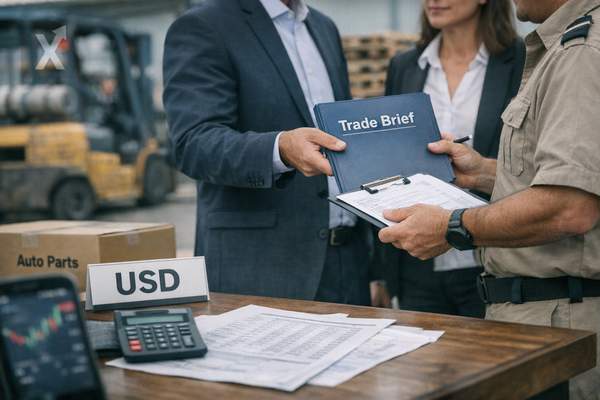
For Mexico, the issue cuts both ways: on the one hand, any tariff escalation in the U.S. can disrupt trade flows and investment decisions; on the other, legal uncertainty—tariffs that take effect, get paused, or are replaced under new authorities—complicates planning for exporters, importers, and manufacturers running just-in-time inventories in sectors such as auto parts, electronics, and intermediate goods.
This new maneuver follows earlier stumbles. First, the administration sought to justify tariffs under the International Emergency Economic Powers Act (IEEPA), then temporarily relied on Section 122 with a limited time window, and now the White House is turning to Section 301, which has traditionally been used to respond to specific trade practices, not as an umbrella for near-global measures. The legal fight intensified after new lawsuits from companies in the U.S. Court of International Trade, setting up another episode in the tug-of-war between the Executive Branch and the U.S. Congress over authority to tax imports.
Implications for Mexico: USMCA, Nearshoring, and the Exchange Rate
While the USMCA framework gives Mexico an institutional channel to challenge measures that violate trade commitments, the operational reality is that tariffs—and shifts in their legal footing—often create friction long before they are resolved. In the short term, regulatory volatility can delay shipments, raise insurance and trade-finance costs, and push companies to diversify suppliers or logistics routes. Over the medium term, it can change the math for nearshoring projects: Mexico has gained ground as a manufacturing platform thanks to its proximity to the U.S., its network of trade agreements, and the reshuffling of global supply chains, but that advantage depends on clear, predictable rules in the destination market.
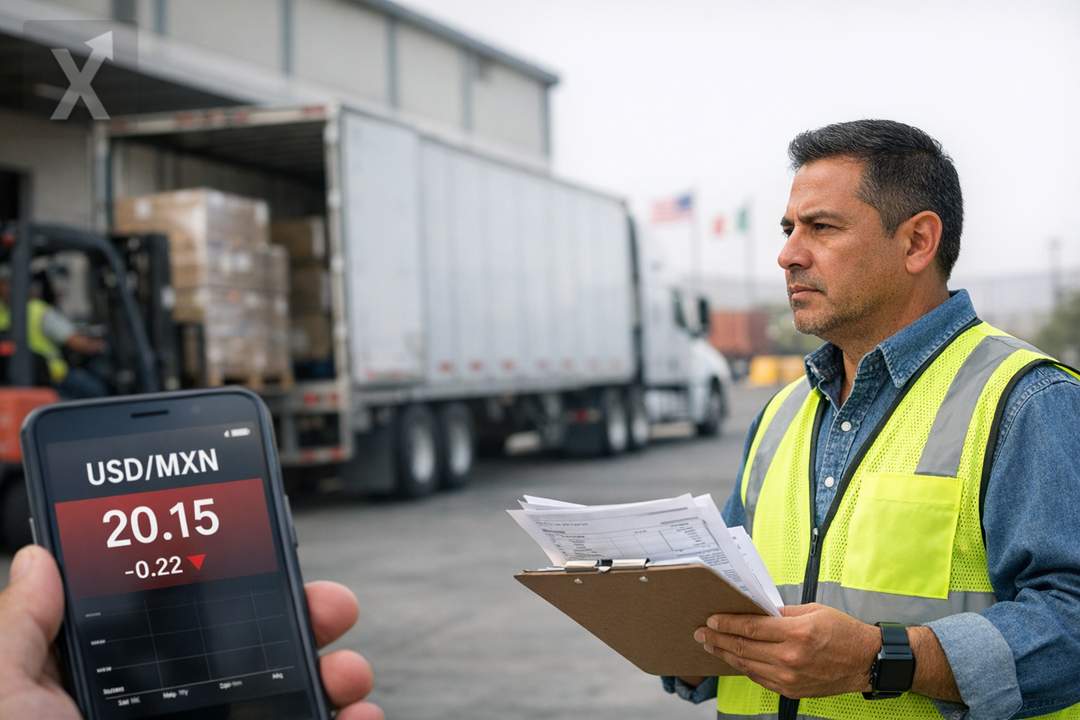
On the macro front, any sustained tariff increase that pushes up prices in the U.S. could delay the Federal Reserve’s easing cycle or fuel bouts of risk aversion. That channel typically reaches Mexico through the U.S. dollar (USD) and external financing costs: a higher-for-longer rate environment tends to strengthen the USD and raise risk premiums, weighing on appetite for emerging-market assets. For Banco de México (Banxico), the challenge would be calibrating monetary policy amid a mixed set of signals: local inflation, domestic activity, and global financial conditions—particularly if exchange-rate volatility intensifies.
There is also a fiscal and relative-price angle: the Tax Policy Center estimates that certain Section 301 tariffs could raise hundreds of billions of dollars over a decade, but with a noticeable annual burden on U.S. households. If that burden translates into weaker demand or supplier substitution, Mexico could face sector-specific adjustments, although in some areas regional integration and USMCA rules of origin could cushion the blow or even favor trade diversion toward North America.
In practice, the outcome will hinge on two clocks: the judicial one and the political one. In court, judges will assess whether the administration met procedural requirements and whether the scope of the duties fits within authority delegated by Congress. Politically, the test will be how long a strategy can hold up that raises domestic costs in the U.S. while aiming to reshape global trade around labor objectives. In both cases, Mexico will be watching closely because its economy—even with greater internal diversification—remains tightly tied to the U.S. cycle through exports, investment, and remittances.
In sum, the legal pivot on U.S. tariffs adds a fresh layer of uncertainty to regional trade that depends on regulatory clarity: for Mexico, the immediate risk is disruption and financial volatility, while the opportunity lies in strengthening competitiveness and compliance to capture supply-chain reshuffling within North America.