Payments in Seconds: How SPEI Made Mexico a Benchmark for 24/7 Transfers
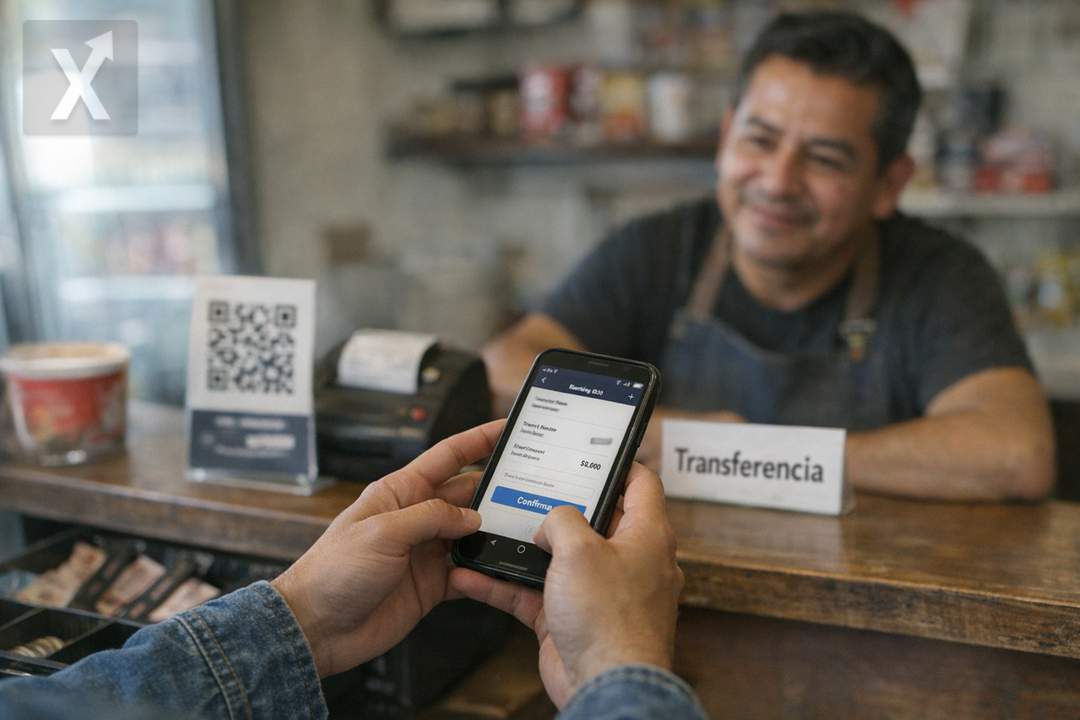
Banxico’s SPEI lets money move in real time year-round, with direct effects on commerce, payroll, and financial digitalization.
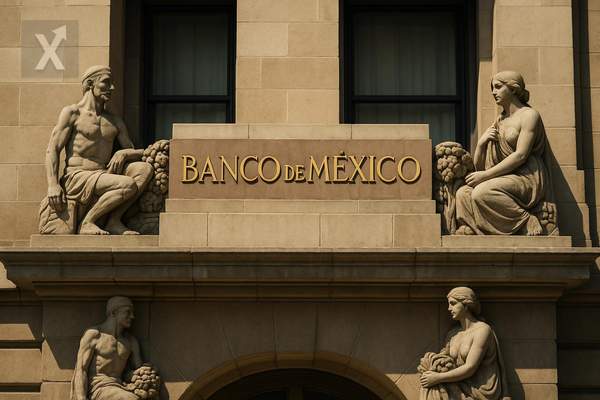
In Mexico, sending a transfer at any time—late at night, on weekends, or on holidays—has become a basic expectation for millions of people and businesses. What in other markets still depends on banking hours or can take one or more business days has been handled in Mexico for two decades through the Interbank Electronic Payments System (SPEI), operated by the Bank of Mexico (Banxico). Its 24/7 availability and settlement in a matter of seconds have reshaped the dynamics of retail payments, business cash flow, and the way money is spent and collected across the economy.
The logic behind SPEI is closer to “critical infrastructure” than an add-on service: connected financial institutions send the instruction, the system validates it and settles between participants, and after clearing, the funds are available to the end user. To sustain this continuous operation, participants maintain accounts and operating rules aligned with the central bank’s own clearinghouse, which reduces friction and eliminates delays associated with branch cutoffs or batch processing.
The result is clear in the volume: interbank transfers have become an everyday payments rail for individuals, merchants, companies, and governments. In an environment where e-commerce and on-demand services have gained ground, immediacy is not just convenience—it’s productivity. For a small or medium-sized business, getting paid instantly can mean restocking inventory the same day or paying suppliers without relying on short-term credit. For a worker, it can be the difference between covering an urgent expense and waiting until the next business day.
In economies such as the United States, the transition to instant payments has been more gradual and fragmented due to the coexistence of multiple networks and uneven adoption across banks. There, the rollout of FedNow began in 2023, but its reach depends on each institution connecting and offering the service. In Europe, solutions like SEPA Instant are moving forward under shared frameworks, though at different speeds by country and by bank. By contrast, Mexico stands out for consolidating an interoperable, nationwide payments rail backed by uniform rules and central-bank oversight.
Economic Impact: Less Friction, More Formalization, and New Security Challenges
SPEI has helped reduce transaction costs and speed up the circulation of money—two variables that matter when the economy faces bouts of volatility or slowdown. For payment-intensive sectors—from retail to logistics and professional services—immediate settlement lowers the need for liquidity “buffers” and improves financial planning. And by enabling traceable digital payments, the system aligns with a trend toward greater formalization in certain activities, especially when paired with transfer-based collections and broader business digitization.
However, speed also raises the bar for fraud prevention. With instant payments, a wrongly authorized transaction can be completed before the user even realizes there’s a problem. That’s why the system’s value is not only in its speed, but in the combination of validations, monitoring, and traceable receipts. In practice, the challenge for the financial ecosystem is to maintain strong controls without reintroducing friction; and for users, to adopt better habits for verifying destination accounts, references, and authentication steps.
The expansion of immediate transfers is part of a broader shift: Mexico has pushed payment digitalization alongside an economy where cash still plays a major role, especially among less-banked segments. In that context, 24/7 payment rails are an enabler, but not a complete solution: adoption also depends on connectivity, financial education, merchant acceptance, and banks and fintechs designing experiences that are both secure and simple.
Looking ahead, SPEI’s potential lies in deepening its role as infrastructure for new use cases: recurring collections, point-of-sale payments by transfer, the disbursement of government support programs or payroll with more automated rules, and greater interoperability with identity and security solutions. At the same time, the system will remain under pressure as volumes grow, making it necessary to strengthen operational resilience and the ability to respond to contingencies.
Overall, SPEI’s 24/7 operation has put Mexico in an advanced position on instant payments: it speeds up transactions, improves liquidity for households and businesses, and pushes digitalization forward. The next step will be to strengthen trust and security at the same speed money moves today.