Banxico Expects SPEI to Overtake Card Payments in 2026, Speeding Up the Shift to Digital Payments
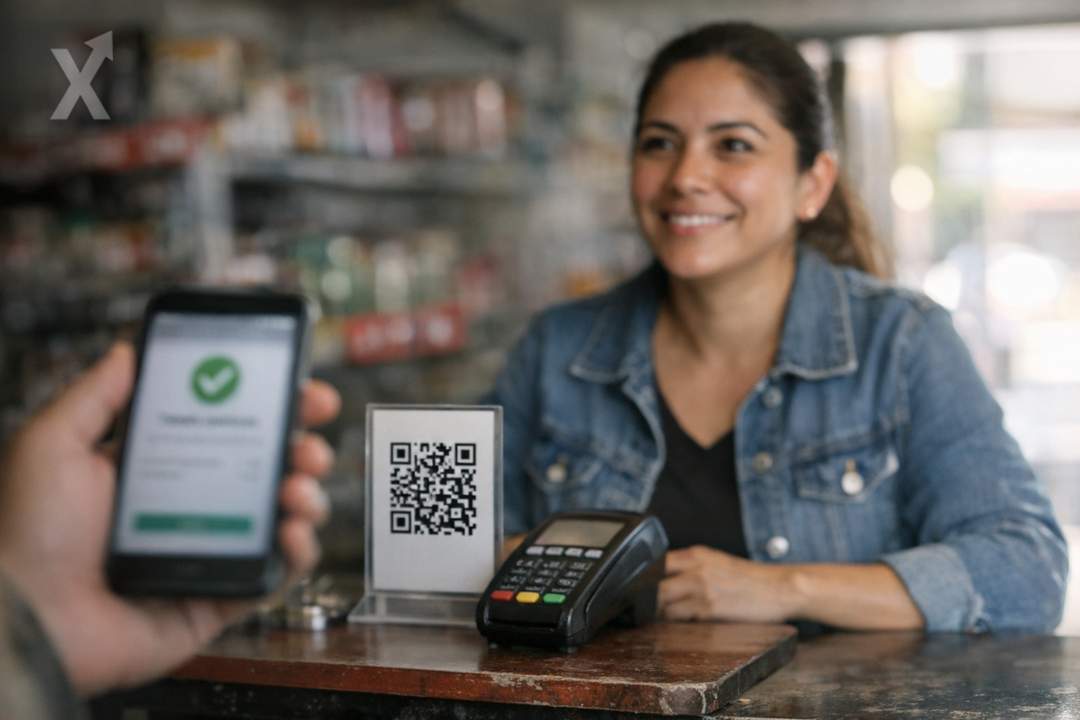
Banxico forecasts that in 2026 SPEI transfers will surpass the volume of debit and credit card payments, driven by digitization and mobile usage.
The Bank of Mexico (Banxico) estimates that by 2026 transfers made through the Interbank Electronic Payments System (SPEI) will exceed—by transaction volume—payments made with debit and credit cards. The projection reflects a structural shift in Mexicans’ payment habits, as banks, merchants, and consumers accelerate the adoption of digital channels.
The clearest sign of the turn is SPEI’s reach itself: by 2025, roughly three-quarters of adults are expected to have made at least one transfer through the system. For Banxico, the next natural step is that recurring transfers—especially person-to-person and for small amounts—will take over some of the space that cards have traditionally occupied in everyday spending.
This progress is happening alongside a broader trend: the digitization of consumption and financial services. In recent years, growth in banking apps, the expansion of point-of-sale terminals and payment aggregators, and greater familiarity with mobile transactions have reduced friction and made it possible to move money in seconds. At the same time, competition among financial institutions has pushed improvements in user experience and 24/7 availability—an attribute that has become critical for immediate payments.
Still, the shift is not uniform. Banxico has noted that Mexico remains highly dependent on cash: in aggregate terms, most everyday transactions are still settled with bills and coins, even though in major urban areas the share of electronic payments is already considerably higher. This geographic divergence means the takeoff of digital payment methods may accelerate in cities with better connectivity, a more formal retail base, and deeper banking penetration, while in regions with less infrastructure and greater informality, cash will remain dominant.
The gap is also generational. Younger users tend to carry out more electronic transactions—whether with cards or transfers—than older adults, suggesting the shift could intensify as consumer cohorts turn over and mobile payments become normalized as an alternative to cash for small-dollar purchases.
Fraud, Trust, and the Remaining To-Do List for SPEI to Gain Ground
The main challenge to cementing the rise of instant transfers is trust. The higher the transaction volume, the more attractive the system becomes for fraud schemes, social engineering, and identity theft. For SPEI and related tools for mass digital payments to grow without slowing adoption, the system needs to reduce incidents and improve the accuracy of validations, alerts, and transaction tracking. In practice, that means strengthening security controls at financial institutions, improving the authentication experience without making it more costly for users, and tightening coordination among banks, authorities, and merchants to contain fraud networks.
This discussion ties directly to the goal of instant person-to-person payments and low-value transactions, where speed is an advantage but also a risk if there isn’t a strong prevention culture. For segments with lower financial literacy or less digital familiarity, ease of use needs to be paired with clear communication about best practices and dispute-resolution mechanisms. Otherwise, growth could face pushback, particularly in areas where cash is seen as “safer” because it’s tangible.
Another front is interoperability and ease of use for mobile-first payment solutions such as CoDi and collection services based on simplified identifiers. If these tools become more intuitive and are widely accepted by merchants—including microbusinesses—they could help lower collection costs, improve traceability, and gradually broaden formalization, though the impact will depend on connectivity, effective fees, and on-the-ground technical support.
From a macroeconomic standpoint, a more digital payments ecosystem can boost efficiency and reduce cash-handling costs, but it also raises the bar for cybersecurity standards and operational resilience. For an economy like Mexico’s—with a high share of informal employment, a strong role for remittances in household income, and a banking sector undergoing rapid technological change—payments modernization can enable financial inclusion if it is supported by infrastructure, education, and clear rules.
Looking ahead, Banxico’s 2026 forecast suggests SPEI will stop being just a transfer rail and become a core part of everyday consumption. The ultimate outcome will depend on how quickly fraud is reduced, merchant acceptance expands, and the regional and generational gaps that still keep cash as the predominant payment method are narrowed.