Political Pressure on the Fed Shakes Rate Expectations and Puts the Mexican Peso Back to the Test
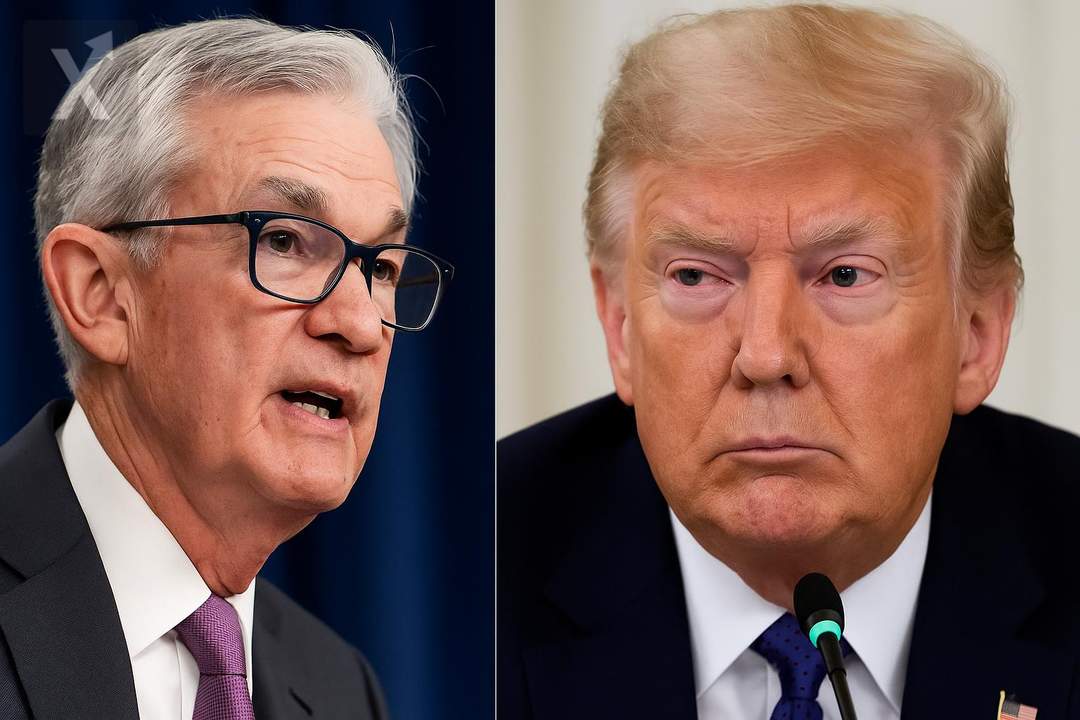
Trump’s threat against Jerome Powell revives uncertainty over the Fed’s independence and adds volatility to the FX market, with spillover effects in Mexico.
Recent comments by U.S. President Donald Trump—warning that he could fire Federal Reserve (Fed) Chair Jerome Powell if he remains in office beyond the end of his term—have reignited the debate over the autonomy of the world’s most influential central bank and the potential consequences for global markets. For Mexico, the signal is significant: a change—or even the perception of a change—in the direction of U.S. monetary policy tends to show up immediately in the exchange rate, financing costs, and risk appetite toward emerging-market economies.
Powell’s term as Fed chair ends in mid-May, but he could legally remain on the Board of Governors while the confirmation process for Trump’s proposed successor, former central banker Kevin Warsh, plays out. Political tensions have already met resistance in the Senate: some lawmakers have questioned the Justice Department’s investigation into alleged cost overruns in Fed construction projects, arguing it could function as a pressure tactic. At the same time, the administration also attempted to remove Governor Lisa Cook, deepening the clash with the institution.
In the near term, the main transmission channel to Mexico typically runs through shifts in U.S. rate expectations and the behavior of the U.S. dollar. A Fed perceived as less independent can trigger bouts of volatility in bond markets, move Treasury yields, and strengthen or weaken the dollar depending on the balance between institutional uncertainty and expectations for rate cuts. For the Mexican peso, that environment translates into sharper exchange-rate swings and, often, higher risk premia.
The potential impact comes at a time when Mexico remains tightly linked to the U.S. cycle: manufacturing exports, financial flows, and remittances. In addition, Mexico’s economy has shown resilience thanks to external momentum and supply-chain relocation (nearshoring), but it remains exposed to confidence shocks and shifts in global financial conditions—particularly when the market reassesses the interest-rate differential between Mexico and the United States.
Banxico, rate differentials, and the peso as a barometer
For the Bank of Mexico (Banxico), the Fed’s path is a key input. If political uncertainty in the United States pushes long-term rates higher or increases dollar volatility, Banxico could face a more challenging backdrop for cutting its policy rate without triggering a disorderly depreciation or a renewed inflation uptick through imports. By contrast, if a scenario of more aggressive rate cuts in the United States prevails—as Trump has called for—the rate differential could remain wide in Mexico’s favor even with local adjustments, which in theory would support the peso; however, that benefit can fade if investors interpret U.S. monetary policy as being subject to interference, raising global risk perceptions.
In Mexico, the effects are also felt in corporate and sovereign borrowing costs, because external benchmark rates influence dollar-denominated issuance and appetite for emerging-market bonds. A period of high volatility can make placements more expensive, shorten tenors, or increase currency hedging—especially for companies with peso revenues and foreign-currency liabilities.
Beyond the political episode, the underlying message for markets is the importance of institutional credibility. In environments where a central bank’s independence is questioned, inflation expectations and the risk premium tend to react quickly. For Mexico, which has managed to consolidate a credible monetary policy framework over decades, the takeaway is twofold: on the one hand, domestic discipline helps cushion shocks; on the other, financial interdependence means events in Washington translate almost immediately into Mexico’s FX market.
Looking ahead, attention will focus on the U.S. Senate confirmation process, the possibility that Powell could stay on temporarily if the nomination stalls, and, above all, how investors interpret the direction of U.S. monetary policy. On the Mexico side, the critical variable will be peso stability and its impact on core inflation, Banxico decisions, and credit conditions.
In short, Trump’s confrontation with the Fed adds a new source of uncertainty that can move the U.S. dollar and increase financial volatility; for Mexico, the effect will be measured in the peso’s performance and in Banxico’s room to adjust rates without undermining stability.






