U.S. Growth Cools and Inflation Picks Up: Spillover Effects for Mexico Through the Exchange Rate and Energy
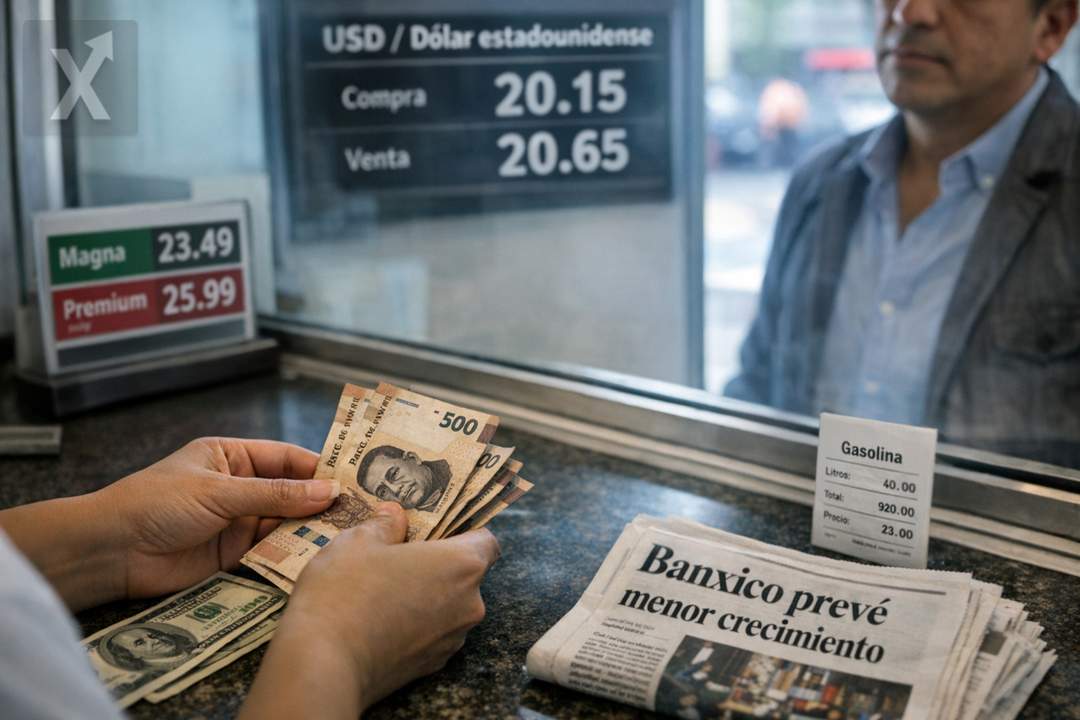
A slowdown with persistent inflation in the United States tends to make financing more expensive and put pressure on energy markets, with direct implications for Mexico.
The U.S. economy showed mixed signals at the start of the year: first-quarter Gross Domestic Product (GDP) growth was revised down, while inflation accelerated again, pushed higher by more expensive energy after the conflict with Iran escalated. For Mexico, this matters because slower growth alongside high prices in its main trading partner typically translates into greater financial volatility, shifts in risk appetite, and changes in trade and investment flows.
According to data released by the U.S. Department of Commerce, GDP grew at an annualized rate of 1.6% in the first quarter, below the preliminary reading of 2%. The revision mainly reflected downward adjustments to consumer spending and private investment, while momentum was concentrated in investment in equipment and intellectual property—categories tied to the development of artificial intelligence. At the same time, the PCE index—the Federal Reserve’s key inflation gauge—came in at 3.8% year over year in April, its highest level in several years, with consumption still rising even as income growth shows weakness.
This kind of mix—moderating growth and elevated inflation—often complicates the path of U.S. interest rates. If the Federal Reserve keeps a restrictive stance for longer to contain prices, the global cost of money stays high, and emerging markets—including Mexico—often face bouts of risk aversion, sharp moves in the USD, and repricing across financial assets.
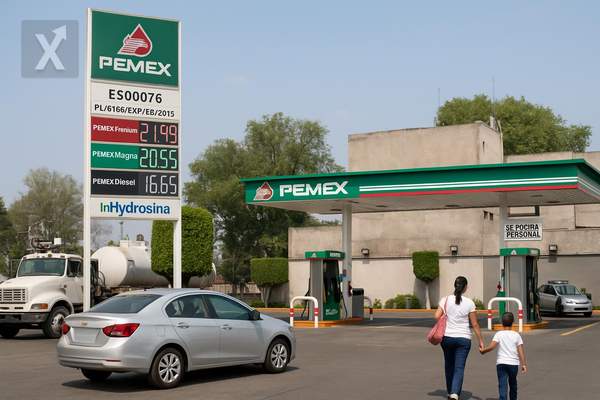
In parallel, the energy channel is back in the spotlight. Geopolitical tension and its impact on critical routes have lifted fuel prices, which then feed into transportation costs and inflation expectations. For Mexico—which exports crude but imports a significant share of gasoline and diesel—the net effect can be mixed: stronger oil-related revenues for the public sector and Pemex, but pressure on consumers and on core inflation if the increase filters through logistics and goods prices.
Implications for Mexico: Banxico, the Peso, and the “Double Hit” of Rates and Gasoline
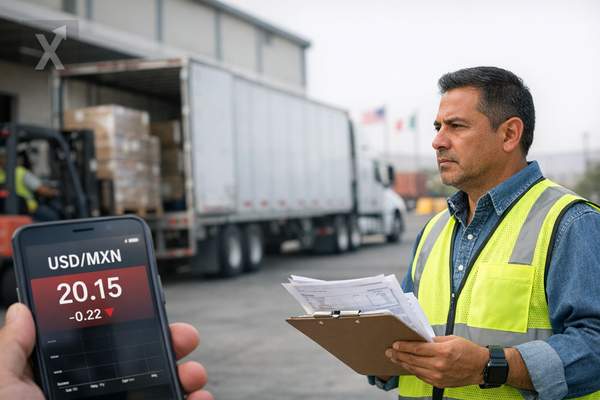
In Mexico, the first impact typically shows up in the FX market: a stronger USD driven by higher rates and lower risk appetite tends to put pressure on the peso, making imports more expensive and raising costs for companies that rely on dollar-denominated inputs. While the exchange rate responds to multiple factors—including trade flows, remittances, and interest-rate differentials—an episode of persistent U.S. inflation can delay Fed cuts and keep yields elevated, reducing the room for aggressive cuts in Mexico without undermining exchange-rate stability.
For the Bank of Mexico (Banxico), the challenge is to calibrate local inflation’s return to target in a more uncertain external environment. If the energy shock fuels inflation expectations across North America, pass-through to prices in Mexico could intensify, especially in transportation and some food categories. In that scenario, Banxico may choose to cut rates more cautiously or with longer pauses, seeking to avoid reigniting inflation pressures or triggering peso volatility.
On the real-economy front, a U.S. slowdown can also temper demand for Mexican manufactured exports, particularly in highly integrated sectors such as autos, electronics, and machinery. Still, the impact would not be uniform: investment tied to supply chains and industrial infrastructure in Mexico could hold up if nearshoring strategies continue, although the pace depends on global financial conditions and on signals of regulatory certainty and adequate infrastructure.
Looking ahead, Mexico’s risk balance will depend on three variables: how long the U.S. inflation episode lasts, the Federal Reserve’s rate path, and the persistence of energy shocks. If fuel keeps getting more expensive, cost of living could worsen and inflation could take longer to converge, while a prolonged restrictive monetary stance would keep financing costly for businesses and households. Even so, an orderly macro framework—fiscal discipline, prudent monetary policy, and a well-capitalized banking system—can cushion part of the shock, even if it cannot eliminate it.
In sum, the downward revision to U.S. growth and the rebound in inflation increase the odds of a higher-for-longer rate environment and renewed energy pressures—two channels Mexico tends to feel through the exchange rate, inflation, and foreign trade.