U.S. announces a 20% fee on cargo under its protection in the Strait of Hormuz, raising risks for energy markets
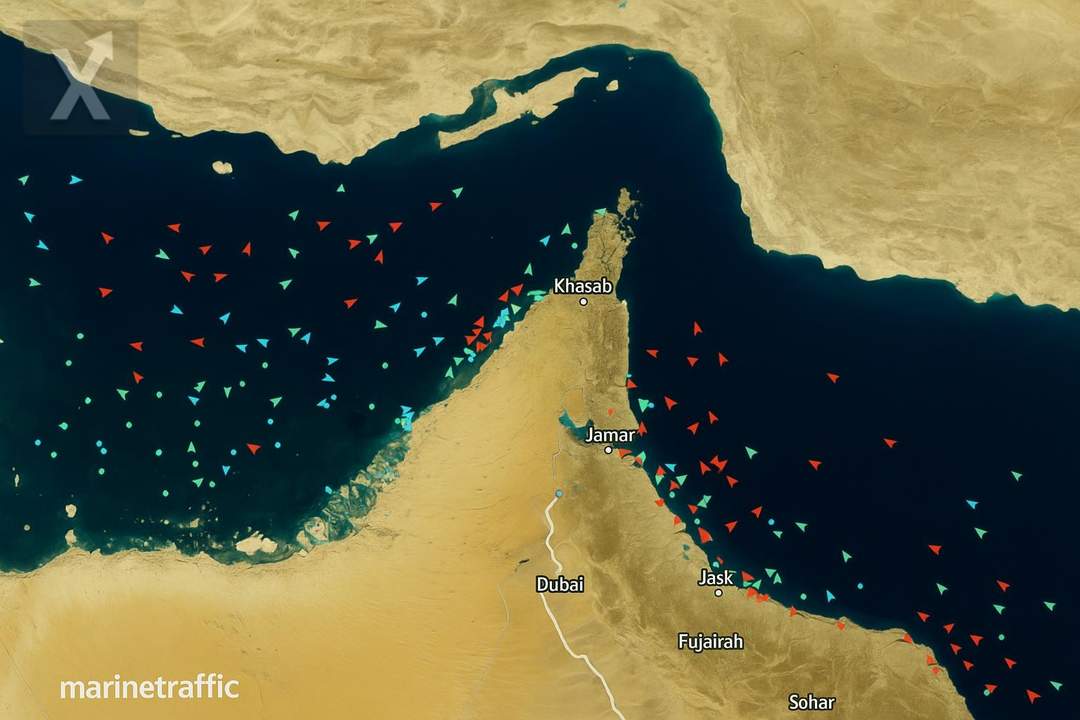
Washington’s move adds pressure to the oil market and could translate into greater volatility for inflation, the exchange rate, and logistics costs in Mexico.
The U.S. government said it will impose a 20% fee on cargo carried by vessels sailing “under its protection” through the Strait of Hormuz, one of the most important maritime corridors for global hydrocarbons trade. The announcement, attributed to President Donald Trump, comes amid renewed tensions with Iran and warnings of possible retaliation against any attempt to “interfere” with the management of the passage.
Hormuz is a strategic chokepoint: a significant share of the crude and fuels that supply Europe and Asia moves through it. From a market standpoint, any measure that increases transit costs, marine insurance, or risk premiums typically shows up in higher oil prices and greater volatility in energy markets—even if the physical flow of barrels is not immediately disrupted.
For Mexico, the impact would be transmitted mainly through international prices. Although the country produces crude, it imports a significant share of gasoline and diesel and is exposed to international pricing for energy and petrochemical inputs. In that sense, higher maritime transport costs or a rise in Brent and related benchmarks tends to push up fuel and freight costs and, in turn, consumer prices.
The episode could also trigger defensive moves in global financial markets: when risk aversion rises due to geopolitical conflicts, safe-haven assets tend to strengthen and portfolios are rebalanced away from emerging markets. In practice, that can translate into bouts of peso depreciation against the U.S. dollar and greater sensitivity in local markets to external headlines, even if domestic fundamentals remain broadly unchanged.
Implications for Mexico: inflation, logistics, and monetary policy
The most visible channel for the Mexican economy is inflation. If oil rises, the energy component of the consumption basket becomes more expensive and, with a lag, transportation and distribution costs increase. In Mexico, pass-through to prices can be uneven: it depends on hedging, inventories, competitive conditions, and business pricing decisions, but the risk of “second-round effects” (indirect spillovers to other prices) increases when energy pressure coincides with still-elevated services inflation.
These kinds of shocks complicate the calculus for Banco de México. Even if inflation is trending lower due to base effects or moderation in some categories, a sustained rebound in oil and currency depreciation can delay convergence to the target and push the central bank toward a more cautious stance. Put simply: even with signs of cooling economic activity, a global energy shock can limit the room for fast rate cuts and keep policy biased toward prudence.
On logistics and trade, the fee announced by Washington could also affect the cost of imported inputs and the pricing structure of supply chains that depend on petrochemicals, fertilizers, plastics, and international transport. Mexico’s manufacturing sector—deeply integrated with North America—could face marginal cost increases, especially in energy- and transport-intensive industries, although part of the adjustment could be muted by supply contracts and by the fact that many routes are not directly tied to Hormuz.
Looking ahead, markets will be watching whether the measure is implemented broadly and how Iran and Gulf countries respond, since that will determine whether the shock remains confined to risk premiums or escalates into disruptions. For Mexico, the main focus will be the combination of fuel prices, inflation expectations, and exchange-rate moves—variables that shape consumption, business costs, and the pace of monetary-policy decisions.
Overall, the U.S. announcement increases uncertainty around energy and maritime transport at a critical point in global trade. For Mexico, the most likely effect is greater volatility—in inflation and in the peso—rather than an immediate hit to activity, though how long the episode lasts will determine the size of the adjustment in prices and expectations.






