Mexico eyes a record export year in 2026 as the USMCA enters a review phase and a period of “realistic certainty”
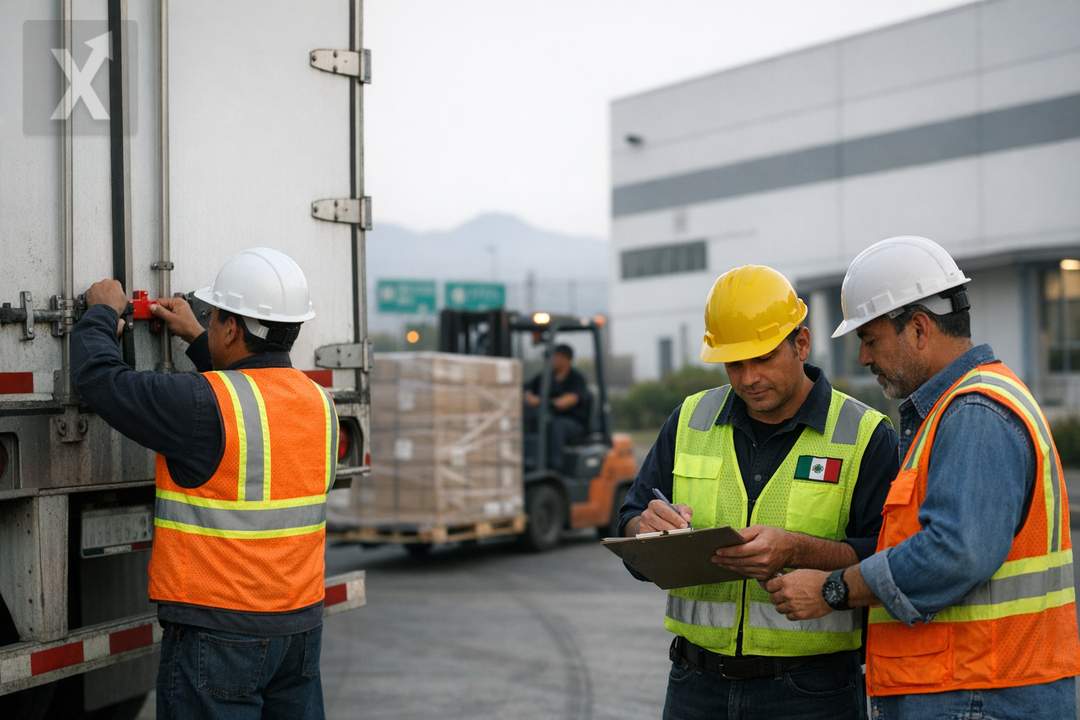
The expected export record comes alongside USMCA reviews that make it necessary to reduce uncertainty in order to sustain investment and value chains.
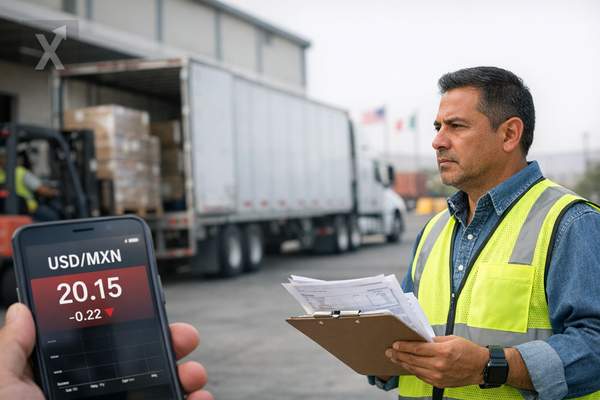
Mexico is on track to end 2026 with a new all-time high in exports, close to $730 billion—performance that reflects the strength of its manufacturing base and deep productive integration with North America. Still, this progress comes at a defining moment for the region’s trade relationship: the United States’ decision not to automatically extend the USMCA for now has opened a stage of periodic reviews that, in the private sector’s view, keeps the agreement in force but adds the challenge of narrowing uncertainty so as not to slow investment, supply-chain reshoring/relocation, and industrial expansion plans.
In a meeting with the press, executives from the Mexican Business Council for Foreign Trade, Investment and Technology (COMCE) noted that the export momentum at the start of the year—with double-digit increases in the first few months—is closely tied to the composition of Mexico’s export basket: about nine out of every ten dollars sold abroad come from manufactured goods. That includes industries such as autos, auto parts, electrical and electronic equipment, medical devices, and machinery—segments where Mexico serves as a production platform for the North American market and, increasingly, as a hub for more complex processes.
The business community’s core message is that the USMCA is not going away and is not entering an annual renegotiation, but it is moving into a phase that demands technical capacity, ongoing dialogue, and clearer political signals. The agreement remains operational at least through 2036, with reviews aimed at clearing bottlenecks, resolving disputes, and updating commitments in an environment shaped by geopolitical tensions, technological competition, stricter industrial rules, and greater use of trade tools on national-security grounds.
For exporters, the main risk is not the existence of a review per se, but rather the region normalizing episodes of friction—tariffs, investigations, and unilateral measures—that raise the cost of trade and complicate long-term investment planning. Even within the USMCA framework, regulatory volatility can affect decisions on new plants, expansions, origin certifications, inventories, and logistics—particularly in highly integrated industries where a component crosses the border multiple times before becoming a final product.
In the background, Mexico enters this conversation with a strong export position and structural advantages that have fueled so-called nearshoring: proximity to the United States, a broad network of trade agreements, manufacturing know-how, and a competitive workforce. At the same time, it faces bottlenecks that could limit its ability to fully seize these opportunities: availability of electricity and natural gas, border and port infrastructure, security along logistics corridors, access to water in industrial zones, and regulatory certainty in strategic sectors. The balance between these strengths and constraints will be decisive in sustaining export momentum beyond a short-term rebound.
Tariffs, rules of origin, and the investment barometer
The debate over the USMCA’s day-to-day outlook is largely focused on preserving zero-tariff trade for goods that meet rules of origin, as well as preventing a proliferation of measures justified on national-security grounds. For Mexico, this is especially sensitive in industries such as automotive—an export pillar and a major generator of formal employment—agri-food, and segments tied to critical minerals and tech supply chains. A ramp-up in tariffs or requirements can reshape the competitiveness of products made in Mexico, encourage substitution, or push companies to redesign processes and regional content—at an immediate cost. At the same time, investment flows—both foreign and domestic—tend to respond to signals of stability: orderly reviews, predictable rules, and trilateral coordination usually translate into more projects; prolonged uncertainty, by contrast, can delay decisions even if external demand holds up.
From a regional standpoint, the review also creates room to strengthen North American integration amid global competition. Business leaders have argued that Mexico and Canada, while both benefit from being neighbors to the United States, also share a high dependence on the U.S. market. That makes it important to accelerate trade-diversification initiatives—without breaking the North American axis—while also building cooperation agendas on infrastructure, talent mobility, advanced manufacturing, minerals supply chains, and strategic components.
In the near term, Mexico’s export trajectory will remain heavily influenced by the U.S. industrial cycle, the evolution of American consumption and investment, and the stability of cross-border logistics chains. Domestic variables will also matter, such as power-generation capacity, modernization of customs and border crossings, and a business environment that streamlines permits, construction, and the operation of new plants. The interaction among these factors will determine whether the export record translates into a broader boost for growth, formal employment, and productivity.
Looking ahead, the “realistic certainty” described by the private sector means recognizing that the USMCA remains the anchor of regional trade, but that its value depends on maintaining clear rules and reducing friction. If the review process succeeds in channeling disputes and limiting discretion in trade measures, Mexico could lock in the export wave and attract more investment; if uncertainty drags on, the export record could coexist with weaker appetite for long-term projects.