From the Oil Era to the Manufacturing Boom: Mexico’s Economy Under NAFTA and the USMCA
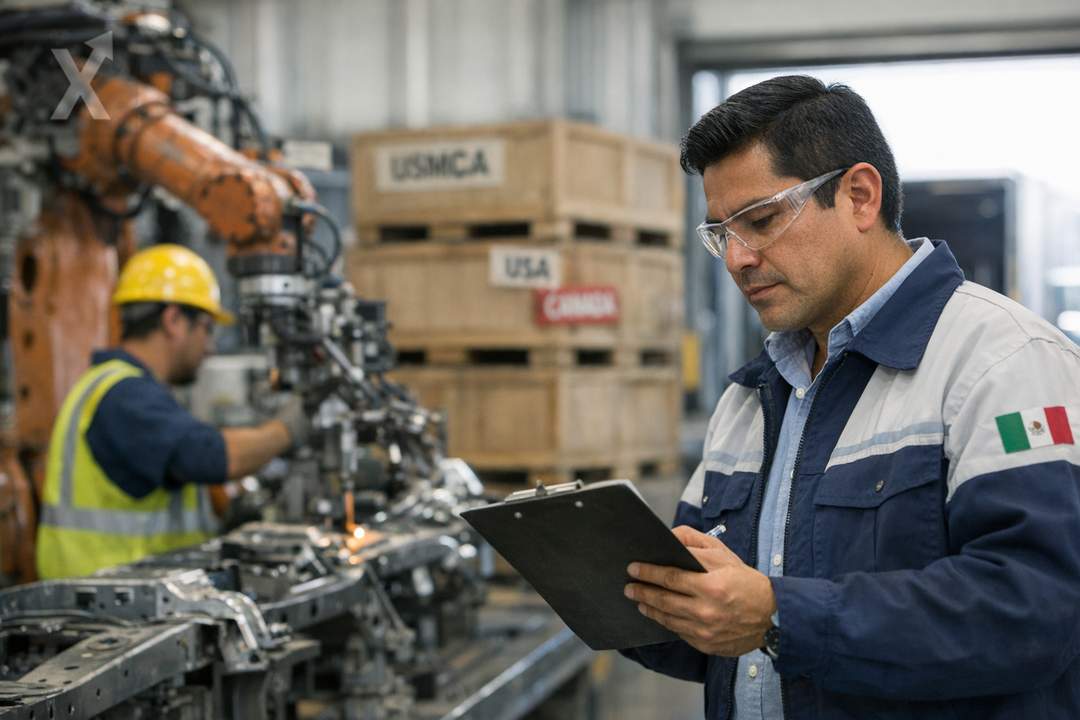
Mexico cemented its export-oriented manufacturing profile with North America, but the challenge remains turning that success into faster growth and stronger domestic productivity.
In just over four decades, Mexico moved beyond being a predominantly oil-based economy and became a manufacturing platform deeply integrated with North America. The shift didn’t happen overnight: it was the result of trade liberalization set in motion after the 1980s debt crisis, reforms to attract investment, and—above all—the certainty provided by trade agreements that set clear rules for producing and exporting.
The latest foreign trade data illustrate the structural change. In 2025, Mexico’s total exports reached $663.770 billion (seasonally adjusted), of which $607.736 billion came from manufactured goods—equivalent to 91.6% of the total. Oil exports, by contrast, totaled $21.306 billion, just 3.2%, according to the merchandise trade balance reported by the Bank of Mexico (Banxico). In other words, the export engine no longer depends on crude: it rests on industrial supply chains, logistics, assembly plants, suppliers, and investment flows tied to external demand—mainly from the United States and Canada.
That pivot, however, coexists with a persistent reality: Mexico developed a competitive export sector, but GDP growth remained moderate for much of the period after 1994. Various assessments by international organizations have noted that the key challenge has been extending productivity and innovation beyond export hubs, bringing more domestic firms—especially small and mid-sized businesses—into supply chains with higher technological content and greater value added.
From a Closed Model to Openness: the Turning Point of the 1980s
For decades, Mexico followed an import-substitution industrialization strategy: high tariffs, permits, subsidies, and a strong state presence aimed to boost domestic production. That framework delivered macroeconomic stability and rapid growth from the 1950s through the 1970s, but it also created protected sectors, limited competition, and dependence on public spending. The 1982 crisis—with devaluation, inflation, and a default—reshaped the country’s economic direction and forced faster trade liberalization and a restructuring of the productive system.
Joining the GATT in 1986 was a milestone in that transition: it opened the door to lower tariffs, more imports, and an export-oriented economy. By the time the North American Free Trade Agreement (NAFTA) was negotiated, liberalization was already underway—but the 1994 agreement added something decisive: stable rules and a long-term horizon to invest, specialize, and build regional production chains.
NAFTA and Productive Integration: Manufacturing as the New “Oil”
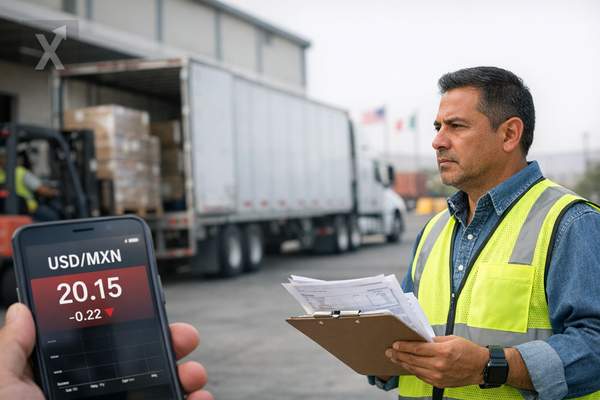
Under NAFTA, Mexico integrated rapidly into the U.S. and Canadian markets—not only as a supplier of finished goods, but as a link in shared production processes. In practice, trade stopped being simply “exporting finished products” and became “exporting within a single regional factory”: parts crossing borders multiple times before being assembled into a final product. Mexico’s strength was built on its ability to produce at scale, with established logistics networks, industrial know-how, and a large manufacturing workforce.
The auto industry became emblematic of that era: Mexico climbed the ranks among global producers and exporters of vehicles and auto parts, attracting investment, formal employment, and specialized suppliers. However, that same concentration also creates vulnerabilities: regulatory changes, tariffs, and political pressure from the United States can affect margins, investment decisions, and production plans.
The USMCA Review and the New Risk Map for Exporting
The USMCA, in force since 2020, arrived in a global environment very different from the 1990s: geopolitical tensions, technological competition, supply-chain relocation (nearshoring), and a greater role for economic security in trade policy. Its rules raise regional content requirements in sectors like automotive, strengthen labor and environmental commitments, and add disciplines for digital trade and intellectual property. The joint review launched in 2026 has been read by markets as a key moment for gauging certainty: Mexico’s appeal as an export platform depends on preferential access and operating rules remaining predictable for investors and suppliers.
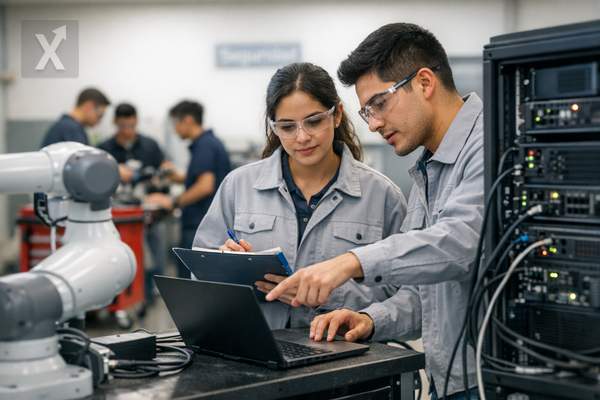
In addition, today’s trade environment is shaped not only by tariffs, but by regulatory compliance, input traceability, labor standards, energy, and infrastructure capacity. For Mexico, this means nearshoring success won’t be secured solely through competitive wages or geographic proximity: it requires sufficient and reliable electricity, efficient ports and customs, security along logistics corridors, and a pipeline of technical talent to support a move toward more complex manufacturing.
Technology, Data Centers, and the Next Manufacturing Phase
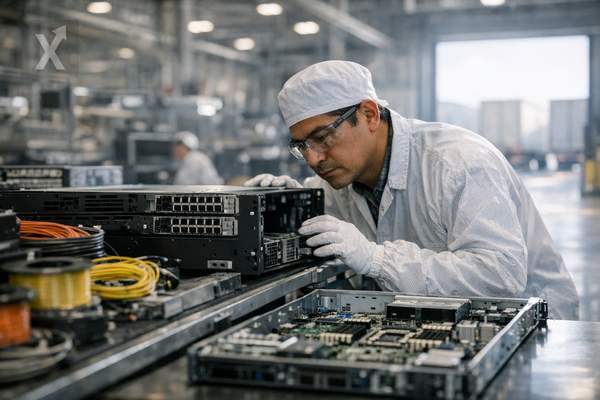
Mexico’s export basket is also changing. In recent years, segments tied to electronics, computer equipment, and machinery have gained relevance, driven by demand for digital infrastructure, automation, and data-economy supply chains. In 2025, exports of computer equipment reached $85.416 billion, posting triple-digit annual growth—a sign that part of the productive base is capturing opportunities beyond traditional automotive assembly.
The economic implication is clear: if Mexico manages to deepen domestic content (local suppliers, engineering, design, industrial software, specialized services) in these industries, the impact can spread to more regions and raise value added per worker. If it doesn’t, the country risks maintaining a pattern in which export manufacturing grows, but with limited spillovers to the rest of the economy.
The Longstanding Gap: Productivity, SMEs, and Investment
The contrast between record exports and moderate GDP growth has been one of the most debated issues since NAFTA took effect. Broadly speaking, Mexico built “islands” of high productivity tied to external markets, while large segments—retail, low-scale services, the informal economy—operate with less capital, less training, and less access to financing. This productive duality constrains long-term growth: even with dynamic exports, domestic demand and overall productivity move slowly if most firms remain outside value chains.
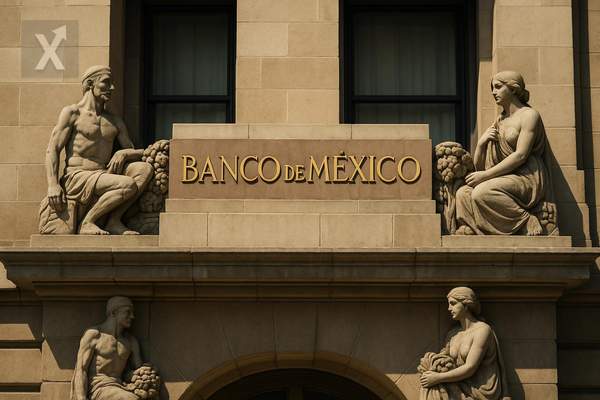
In the short and medium term, the outlook will depend on internal and external factors: the trajectory of U.S. demand, interest-rate and inflation conditions, Mexico’s ability to maintain macroeconomic stability, and—decisively—investment in infrastructure, energy, and human capital. Banxico plays a central role by anchoring inflation expectations, but accelerating potential growth requires measures that go beyond monetary policy: competition, rule of law, regulatory certainty, and supplier-development strategies.
In sum, Mexico shifted from exporting oil to exporting manufactured goods through deep integration with the United States and Canada under NAFTA and the USMCA. The challenge ahead is to turn that external strength into a broader growth platform: higher productivity, more innovation, and stronger domestic linkages that bring the benefits of globalization to more businesses and regions across the country.