Mexico’s Fixed Investment Rebounds in April, Snapping a Weak Streak; the 2026 World Cup Emerges as a Catalyst
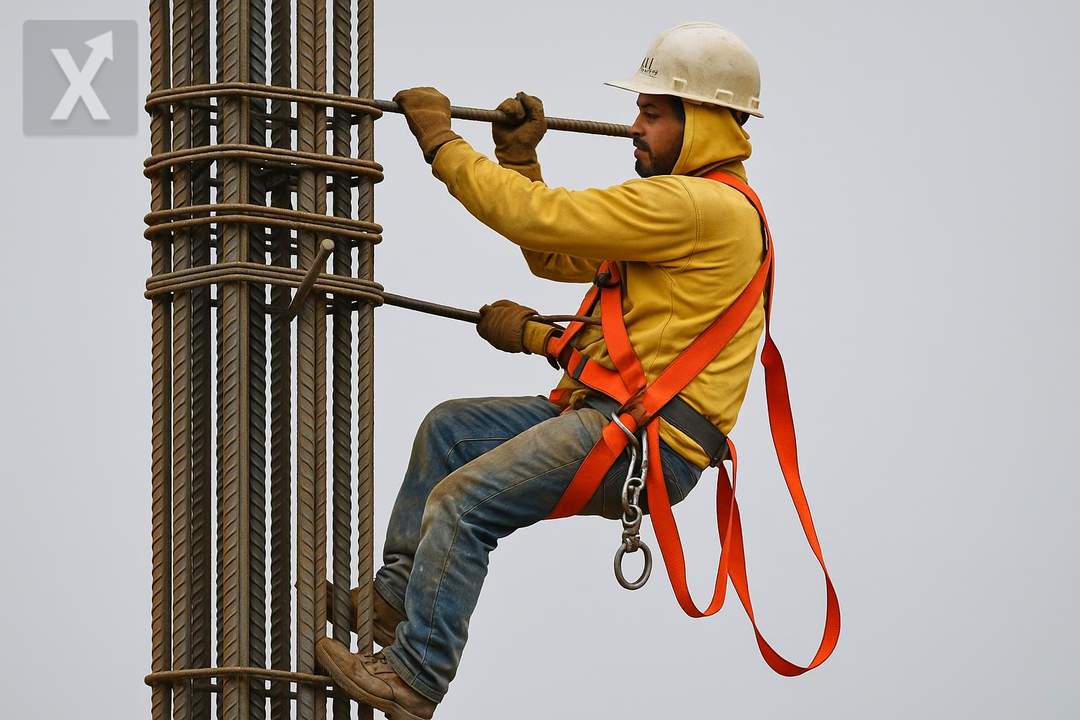
The April pickup in investment points to a temporary turn, driven by construction and equipment purchases, in a still-fragile environment.
Mexico’s gross fixed investment posted an unusual signal in April after more than a year of cooling: it rose 4.0% month over month and 5.1% year over year, according to data from INEGI. With that, the indicator snapped a long run of declines and ranked as one of the most notable moves since the post-pandemic recovery phase. Even so, markets and several analysts are tempering the enthusiasm: part of the momentum appears tied to an extraordinary factor—the build-up to the 2026 FIFA World Cup—rather than necessarily reflecting a structural shift in trend.
The month’s main engine was construction, which grew 6.5% from March, with a particularly strong jump in residential building. At the same time, investment in imported machinery and equipment surged, consistent with a purchasing cycle aimed at speeding up retrofit, modernization, and outfitting projects. In practical terms, April looks like a month when investment decisions that had been put off were brought forward amid cost uncertainty, still-high interest rates, and a less dynamic global backdrop.
On an annual basis, construction also stood out with an 8.8% increase, while machinery and equipment edged up just 0.9%. Behind that contrast is an important gap: the domestic component of machinery remains lagging relative to imported equipment. This pattern typically reflects, on the one hand, Mexico’s integration into regional supply chains that require specialized equipment from abroad and, on the other, constraints in the local supply of capital goods—reducing the “spillover” from investment to domestic suppliers.
Even with the rebound, the January–April balance remains cautious: the cumulative figure for the first four months of the year is still negative year over year, confirming that weakness does not disappear with a single month. For the rest of the year, performance will hinge on whether the rebound turns into a more sustained investment sequence—or whether it proves to be a “spike” tied to specific projects and one-off purchases.
Construction, the 2026 World Cup, and the Risk of a Non-Recurring Boost
The narrative linking the rebound to the 2026 World Cup is gaining traction because of the categories that advanced: construction and remodeling, housing and upgrades, along with imported equipment. In practice, expectations of heavier tourism flows and more events push local governments and the private sector to accelerate improvements in urban infrastructure, transportation, lodging, and services. That said, this type of stimulus tends to be uneven: it is often concentrated in specific time windows and, once delivery targets are met, may be followed by a normalization or correction phase. For that reason, April’s reading—while positive—does not, by itself, guarantee a prolonged recovery in the investment cycle.
Moreover, the net economic impact will depend on the ability to translate those projects into long-term productivity. When investment is directed toward infrastructure that remains useful beyond the event—mobility, connectivity, logistics, urban maintenance—the benefits can extend further. If short-term spending dominates, such as renovations with limited durability or low local integration, the effect may fade once the preparation peak passes.
At the same time, private consumption posted a marginal 0.1% month-over-month gain in April, marking two straight months of positive readings. The breakdown, however, was mixed: consumption of domestically produced goods rose, while spending on services and imported goods declined. This suggests households remain somewhat resilient, but with a cautious pattern—consistent with an environment in which credit and purchasing decisions are still sensitive to interest rates and the trajectory of formal employment.
Looking ahead, the read on Mexico’s economy sits between two forces. On one hand, infrastructure projects and the relocation of production chains to North America have supported investment expectations; on the other, investment continues to respond to financing costs, regulatory uncertainty in certain sectors, and an external industrial slowdown that weighs on orders and exports. At that intersection, the next monthly releases will be key to determining whether April marks an inflection point or an isolated episode.
In sum, April’s rebound provides some breathing room for fixed investment and confirms that construction can trigger recovery bursts—but the challenge is turning that boost—possibly tied to the 2026 World Cup—into a more stable cycle with a higher domestic content in machinery and equipment.






