Commemorative Coins in the U.S. Renew Interest in Metals and Collecting; the Indirect Impact Reaches Mexico
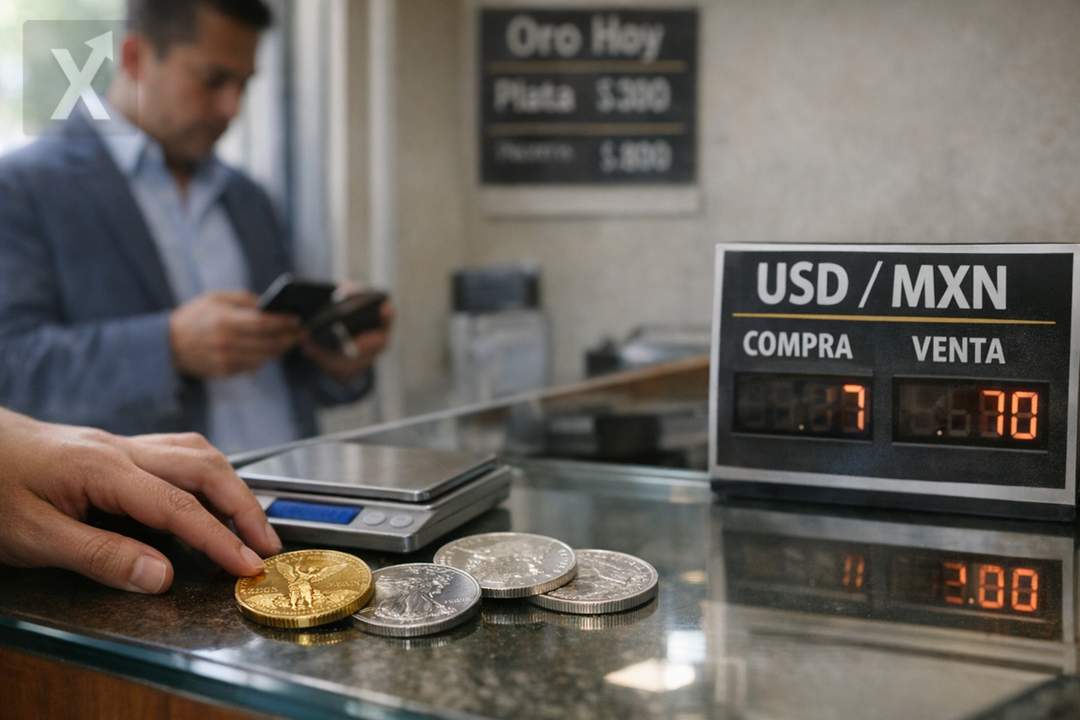
The U.S. 250th-anniversary issue puts the spotlight back on demand for gold and silver—and on the dollar’s role in Mexican portfolios.
The United States’ decision to issue commemorative coins for the 250th anniversary of its independence—including circulating quarter-dollar coins and special gold and silver pieces—has reignited the conversation about money’s symbolic value, but also about the appetite for tangible assets in a global environment of high rates and financial volatility. While the announcement is primarily cultural, its economic reading goes beyond borders: for investors and savers in Mexico, episodes like this often translate into closer attention to the behavior of the U.S. dollar, international metals prices, and the market for numismatic products.
In the Mexican market, the reaction hinges less on whether those coins are available through U.S. banks—which will be random for the 25-cent pieces and by reservation for special editions—than on the “reminder effect” these events create about the role of safe-haven assets. During periods when portfolios are rebalanced due to geopolitical uncertainty or expected shifts in monetary policy, interest typically rises in instruments linked to gold and silver, as well as in holding USD cash for hedging.
For Mexico—where a meaningful share of trade, remittances, and supply chains is tied to the United States—the narrative of the dollar as a reference asset remains firmly in place. Exchange-rate moves can feed into inflation expectations, import costs, and, in some categories, pricing decisions. In that context, the commemoration itself does not change macro variables, but it does coincide with a moment when households and businesses are evaluating how to protect purchasing power and manage risk.
Gold, Silver, and Retail Demand: A Gauge of Caution
The introduction of special gold and silver editions—limited mintages with a focus on collecting—often fuels a demand channel that, while small relative to the global metals market, matters in the retail segment. In Mexico, interest in physical pieces tends to pick up when the public perceives persistent inflation pressures or episodes of FX volatility. During those periods, the gold ounce and the silver ounce become everyday reference points, and traditional products like the Centenario gain visibility due to their association with “store of value,” even though their pricing reflects premiums, spreads, and liquidity conditions in the local market.
This phenomenon coexists with a broader financial reality: metals prices are driven by real rates, USD strength, industrial demand (in silver’s case), and flows into financial instruments. As a result, gold and silver performance can diverge from how savers “feel” about them. In Mexico, moreover, buying and selling channels involve costs and margins that make it important to compare terms, authenticity, and price transparency—especially when demand accelerates.
At the same time, the episode also underscores the centrality of the U.S. dollar in the Mexican economy. The peso has gone through periods of appreciation and depreciation as expectations shift regarding U.S. rates, the differential versus local monetary policy, and global risk sentiment. For companies with imported inputs or USD-denominated debt, FX management is typically more relevant than the numismatic angle; still, the two topics end up connecting when the public looks for signals of stability or protection.
Another angle is institutional credibility. The controversy around images of banknotes bearing alleged presidential signatures—never officially confirmed—serves as a reminder that confidence in money rests on clear rules and verifiable processes. For Mexico, where the credibility of monetary policy and fiscal discipline influence financing costs and price stability, consistent institutional communication is an economic asset in its own right—even when the episodes are media-driven and originate abroad.
Looking ahead, the commemorative issuance will most likely have marginal effects on financial flows, but it may reinforce a broader trend: the search for hedging instruments in an international environment that will remain sensitive to inflation data, central-bank decisions, and bouts of volatility. For Mexico, that means keeping the focus on macro stability, prudent FX risk management, and financial education for the public seeking alternatives across cash, metals, and other assets.
In short, the U.S. monetary commemoration is mainly symbolic, but it serves as a reminder that the USD and precious metals continue to influence saving and investment decisions in Mexico—especially when the economic cycle looks uncertain.






