Annual USMCA Reviews Raise the Risk Premium and Reinforce Moderate Growth in Mexico
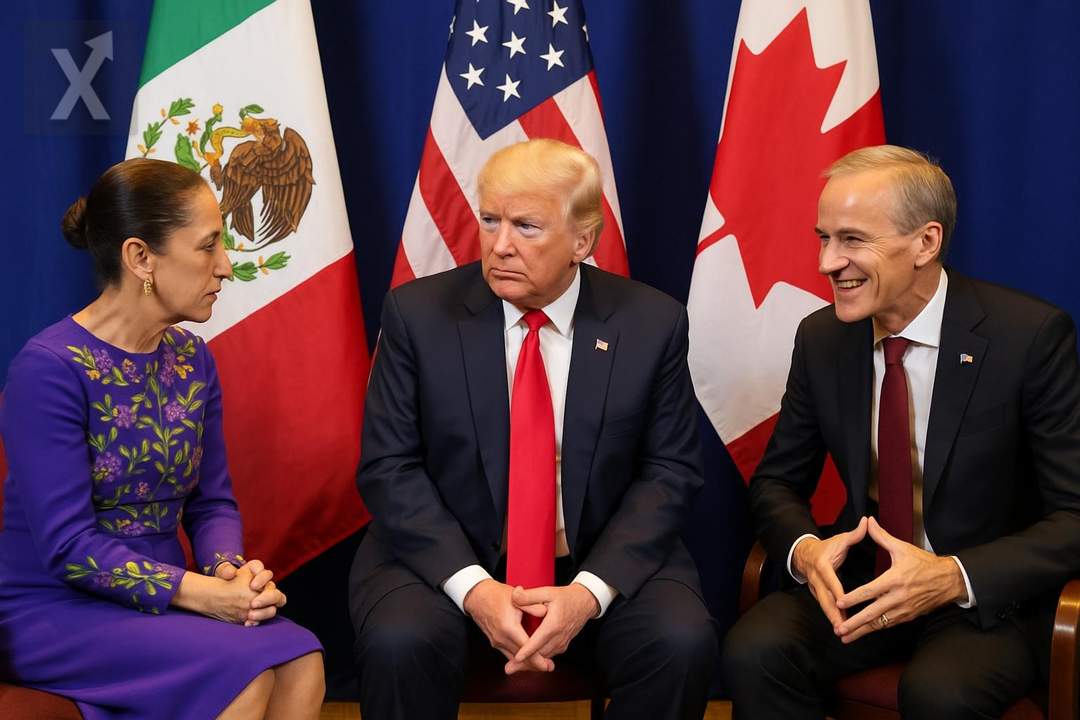
Keeping the agreement in place avoids an immediate shock, but year-by-year negotiations complicate investment decisions and limit GDP’s rebound.
Mexico is once again putting a high-stakes goal on the table: moving up the ranks among the world’s largest economies before the next decade is out. But the room to pick up speed shrinks if the country’s main trade anchor shifts into a pattern of постоян review. The United States decision not to automatically extend the USMCA for 16 years keeps the treaty alive, but moves it to an annual review framework through 2036—a change that raises uncertainty for companies with long-term plans.
In the near term, the consensus among analysts is that this isn’t, by itself, the kind of episode that triggers a recession. The problem is subtler: the economy could get “stuck” at growth rates around 1% to 1.5% for several years—precisely when the reconfiguration of global supply chains, driven by geopolitical tensions, logistics costs, and industrial strategy, could have given Mexico an opening to boost investment, productivity, and value added.
From a portfolio management and financing standpoint, the new review calendar adds an extra risk premium. That shows up in projects that get delayed, resized, or required to deliver higher returns to offset regulatory and trade risk. In a country where fixed investment has been the most fragile link in growth—and where domestic consumption has kept activity afloat during periods of external volatility—any slowdown in capital formation translates into lower potential growth.
Warnings have multiplied in the private sector. Business groups have stressed that the key will be to conduct the reviews with clear rules, technical engagement, and a long-term view so as not to erode the confidence that helped cement integrated manufacturing chains across North America. The concern is concentrated in industries where planning is measured in years—autos, auto parts, electronics, medical devices—and where changes to rules of origin or regional content requirements can alter the profitability of investing in Mexico.
In forecasts, the downside bias is already becoming visible. Some rating agencies and research houses have revised 2026 estimates down to around 1.1% and have cut long-term potential growth. Consistently, the Bank of Mexico survey of private-sector economists has kept projections below 2% over the next several years—a threshold that has become symbolic given the country’s historical difficulty sustaining growth above it.
Beyond GDP, the indicator that typically captures these uncertainty shocks first is investment. Private estimates suggest that volatility in U.S. economic policy has already shaved off projects or postponed key decisions and that, if an environment of ongoing negotiation persists, the cost would grow. For Mexico—highly integrated with the U.S. economy and reliant on foreign trade in key sectors—the signal matters: even with a favorable business cycle north of the border, the boost may not fully carry over if local investment remains cautious.
The real risk: stricter rules of origin and less value added in Mexico
The most sensitive part of the reviews isn’t the annual process itself, but what could be negotiated within it. A tightening of rules of origin—for example, higher U.S.-content requirements in strategic sectors—would force supply chains to be reconfigured. The potential impact would be twofold: on the one hand, some companies might increase purchases in the United States to meet the requirements; on the other, Mexico could lose share in higher-value links in the chain, reducing the domestic content of exports and, in turn, affecting productivity and wages in specific segments.
This risk intersects with domestic challenges: uneven logistics infrastructure, energy and water bottlenecks in industrial zones, human-capital gaps, and regulatory compliance costs. Even with a supportive external environment, sustained growth above 2% requires higher public and private investment, faster permitting, stronger competition, and better security conditions for operating. The USMCA’s annual review adds another layer of complexity to that puzzle.
From the government’s perspective, the emphasis is on turning the negotiation into a platform to deepen regional integration. The bet is that North America will replace imports from Asia in chains such as computing, semiconductors, and AI-related electronics—and that Mexico will capture a larger share of that reshoring/nearshoring thanks to its proximity, manufacturing know-how, and export network. Under that view, the review calendar wouldn’t necessarily curb investment if quick agreements can deliver operational predictability.
The window to reset expectations is narrow. If review mechanisms become more transparent—clear timelines, technical criteria, verifiable commitments—some of the risk can be contained. But if the dynamic is seen as an open-ended, permanent negotiation, companies’ financial strategy will tend to be conservative: less appetite for capital-intensive projects, a greater preference for modular expansions, and shorter contracts with suppliers.
All told, Mexico retains clear competitive advantages—export capacity, a skilled manufacturing workforce, and proximity to the U.S. market—but its challenge remains turning those advantages into higher potential growth. Keeping the USMCA in place avoids a sudden hit; the annual review, by contrast, raises the cost of making decisions and investing, and that friction may be enough to keep the country in a moderate-growth track unless certainty is restored and domestic conditions to produce more—and better—are strengthened.






