Cinépolis and Openbank bet on digital payments to speed up the banking of entertainment spending
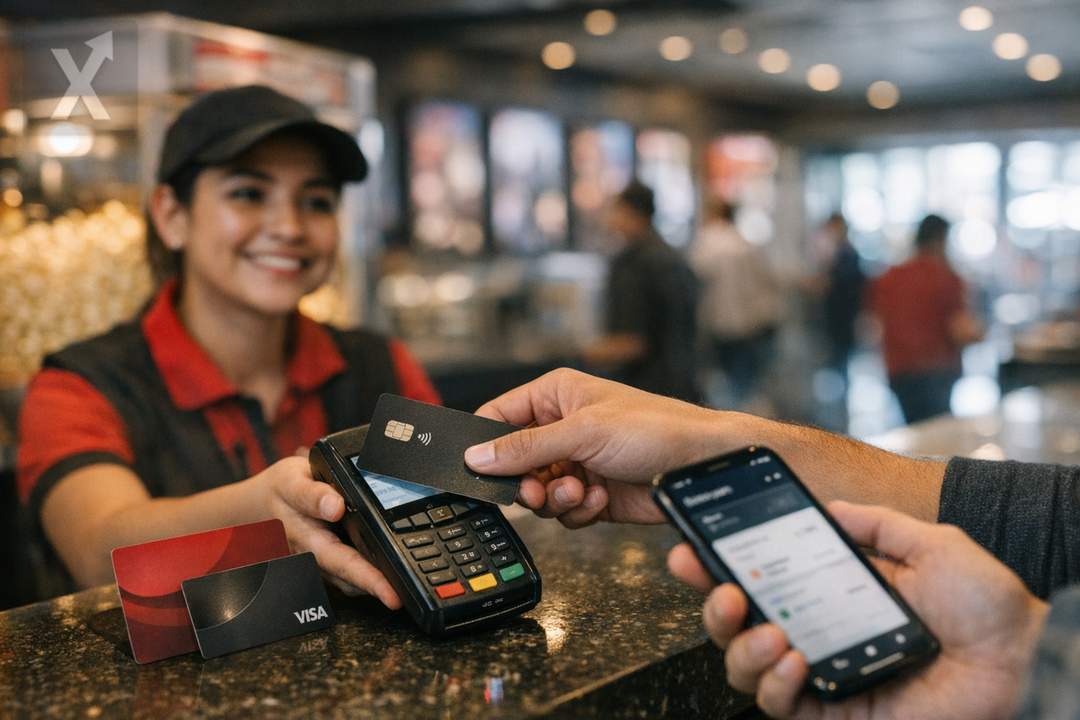
The partnership aims to raise cashless transactions at box offices and concession stands to 60%, at a time of fiercer banking competition and more cautious consumer spending.
Movie theater chain Cinépolis and Openbank, the digital bank backed by Banco Santander, announced a partnership to launch a co-branded credit card. With it, they aim to expand consumer benefits while also accelerating the shift toward digital payments within Cinépolis locations. The operational goal is straightforward: six out of every 10 transactions at Cinépolis would be completed digitally—a target that, if met, would cement entertainment’s move toward more traceable payment methods with less reliance on cash.
According to executives from both companies, Cinépolis starts from a sizable base of repeat customers: about 7.5 million active moviegoers who attend at least once a month. For Openbank, which reported surpassing one million active customers in recent months, the partnership is shaping up to be an acquisition and recurring-use channel, leveraging the volume and purchase frequency typical of movie tickets, combo deals, and impulse buys at the theater.
The strategy lands in a context where Mexico’s financial system is competing to capture younger segments with high transaction turnover, while consumers face a still-demanding price environment in some categories, even with inflation more contained than at recent peaks. In that setting, rewards programs, discounts, and promotions serve as incentives to sustain visits and lift average spend per customer without relying solely on broad-based price cuts.
From a merchant perspective, digitization offers benefits that go beyond convenience: it reduces cash-handling costs, improves reconciliation, and enables consumer analytics. In an industry where margins are pressured by operating costs, leases, and logistics, transaction efficiency becomes a meaningful lever—particularly in high-traffic locations.
Card payments: more data, more credit, and more competition
The push for card payments in Mexico has moved unevenly: while large cities are seeing growing adoption of terminals and digital wallets, there are still areas where cash dominates due to habit, informality, or less infrastructure. Even so, the structural trend points to greater digitization, driven by the proliferation of digital accounts, the use of banking apps, and the expansion of acceptance points. In that environment, a card tied to a mass-market consumer brand like Cinépolis allows a digital bank to increase transaction activity—key to making the relationship profitable—while also building credit history for segments that are beginning their formal financial lives. For the market, this increases competition in credit cards and loyalty programs, pushing other issuers to improve terms, rewards, or the digital experience.
Another factor supporting card usage has been seasonal spikes in consumption tied to entertainment and large-scale events. In Cinépolis’s case, screenings of matches and special content have served as a catalyst for foot traffic, while Openbank has observed higher spending in categories typically linked to experiences: restaurants, food, and beverages. In economic terms, these upticks reflect how discretionary spending shifts when there are clear incentives, even as the average household continues to watch its budget with interest rates on consumer credit still elevated.
Looking ahead, the challenge for the partnership won’t be only reaching 60% digital transactions, but sustaining that level without hurting the user experience. Terminal availability, service speed, connectivity stability, and clear benefits will be decisive. How issuers manage credit risk will also matter: greater card issuance can boost financial inclusion, but it requires prudent policies to avoid over-indebtedness—especially in an environment where revolving credit is among the most expensive options for consumers.
All told, the Cinépolis–Openbank agreement reflects an increasingly visible convergence in Mexico: banks looking to grow through frequent-consumption ecosystems, and merchants betting on digital payments to gain efficiency and understand their customers better. If adoption holds, the digitization of entertainment could become a useful barometer of the country’s progress in electronic payments.






