Mexico solidifies its role as a magnet for manufacturing investment amid a global reshuffle
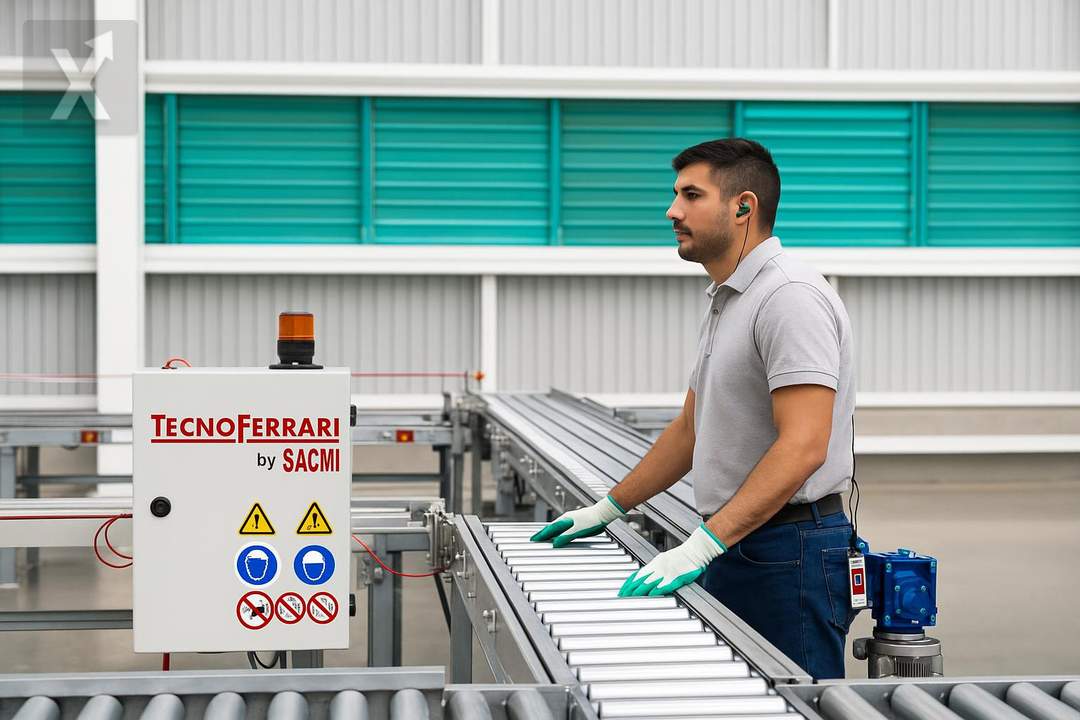
The country is gaining ground in the industrial plans of major economies and faces the challenge of turning capital into greater local value added.
Mexico is steadily establishing itself as one of the most important manufacturing destinations for the world’s leading sources of investment, at a time when companies are reconfiguring supply chains to reduce risk, secure deliveries, and diversify suppliers. A review of UNCTAD’s World Investment Report 2026 places the country among the preferred recipients of new industrial investment coming from the United States, the European Union, Japan, China, and South Korea—an indication of continuity, and in some cases progress, compared with the 2015–2019 versus 2021–2025 periods.
This matters because it doesn’t describe where plants are located today, but rather where new projects are headed—a gauge of how global production is being redistributed. On that map, Mexico stands out as a platform that combines market access, an export base, and operational expertise in highly integrated sectors such as automotive, auto parts, home appliances, electronics, and aerospace—industries that have expanded alongside export manufacturing and the country’s network of trade agreements.
For the United States, Mexico held onto fourth place among the top manufacturing destinations for U.S. capital. The broader takeaway is that, despite heightened global trade uncertainty, North America is still betting on regional production chains to supply the world’s largest consumer market with shorter delivery times. For Mexico, that integration also has macroeconomic implications: it supports external demand that drives a large share of manufacturing activity, while also leaving the country exposed to industrial cycles and trade-policy decisions made by its main partner.
The most striking shift shows up on the Asian side. Mexico went from not appearing among China’s five preferred manufacturing destinations in 2015–2019 to ranking third in 2021–2025. With South Korea, the country entered the group of the most attractive recipients for industrial projects for the first time. In both cases, the pattern suggests a “production for third markets” strategy: manufacturing closer to demand centers—especially North America—to work around tariff frictions, cut logistics costs, and improve resilience.
The European Union also kept Mexico on its list of priority destinations for new manufacturing investment, reflecting the durability of transatlantic supply chains in sectors such as auto parts, machinery, and electrical components. Japan, for its part, maintained Mexico as a relevant platform in a long-standing industrial relationship that has left its mark on automotive clusters in the Bajío region and the north, along with a supplier network that has gradually become more sophisticated.
According to Mexico’s Secretariat of Economy figures for 2021–2025, the United States funneled about $79.429 billion into Mexico; the European Union, $37.361 billion; Japan, $12.985 billion; South Korea, $3.898 billion; and China, $2.463 billion. On the production side, U.S., European, and Asian companies have expanded operations to supply both the regional market and exports to third destinations, reinforcing the manufacturing character of the Mexican economy, where most exports are industrial goods.
Beyond “nearshoring”: domestic conditions that will shape the impact
UNCTAD’s reading points to a key note of caution: geographic proximity alone does not explain the manufacturing redesign. Companies are weighing regulatory stability, alignment of industrial policies, predictability for trade, and the ability to withstand shocks—from tariffs to geopolitical events. For Mexico, that puts a domestic agenda front and center that can accelerate or limit the gains: access to reliable, competitively priced energy; logistics infrastructure (ports, rail, highways, and border crossings); water availability in industrial regions; security along transportation corridors; and technical talent to run more complex processes. The cost of financing and the inflation backdrop also matter—variables where the monetary policy of Banco de México influences the pace of investment and the expansion of local suppliers.
The structural challenge is turning new announcements into more domestic content and higher value added. If plants operate mainly as assembly operations with a high imported component share, the impact on productivity and real wages tends to be limited. By contrast, deeper integration of suppliers—particularly in electronics, auto parts, medical devices, machinery, and specialized services—can increase the impact on formal employment, training, and technology diffusion. Regionally, the competition to attract projects can also widen disparities if investment concentrates only in states with better infrastructure and connectivity while other areas fall behind.
In the short and medium term, Mexico’s ability to sustain this position will depend on keeping clear investment rules, streamlining permitting, strengthening customs and logistics, and ensuring public policy does not raise costs abruptly. At the same time, the country faces the challenge of taking advantage of the manufacturing cycle without neglecting domestic demand: consumption, credit, and public and private investment remain critical to cushioning periods of external slowdown.
Taken together, the evidence from manufacturing flows suggests Mexico is gaining relevance on the new industrial chessboard, but the size of the payoff will depend on whether capital translates into deeper supply chains, productivity gains, and local technological capabilities—not just more export-oriented production lines.
In perspective, Mexico’s advantage rests on regional integration and manufacturing experience; the decisive point will be converting that attraction into industrial development with greater domestic content, supported by certainty and enabling conditions in energy, logistics, and human capital.






