USMCA Review: Canada Calls for Closer Coordination as Mexico Weighs the Economic Cost of Uncertainty
The USMCA review is picking up speed, and Mexico is under pressure to lock in trade certainty at a time when investment is cautious.
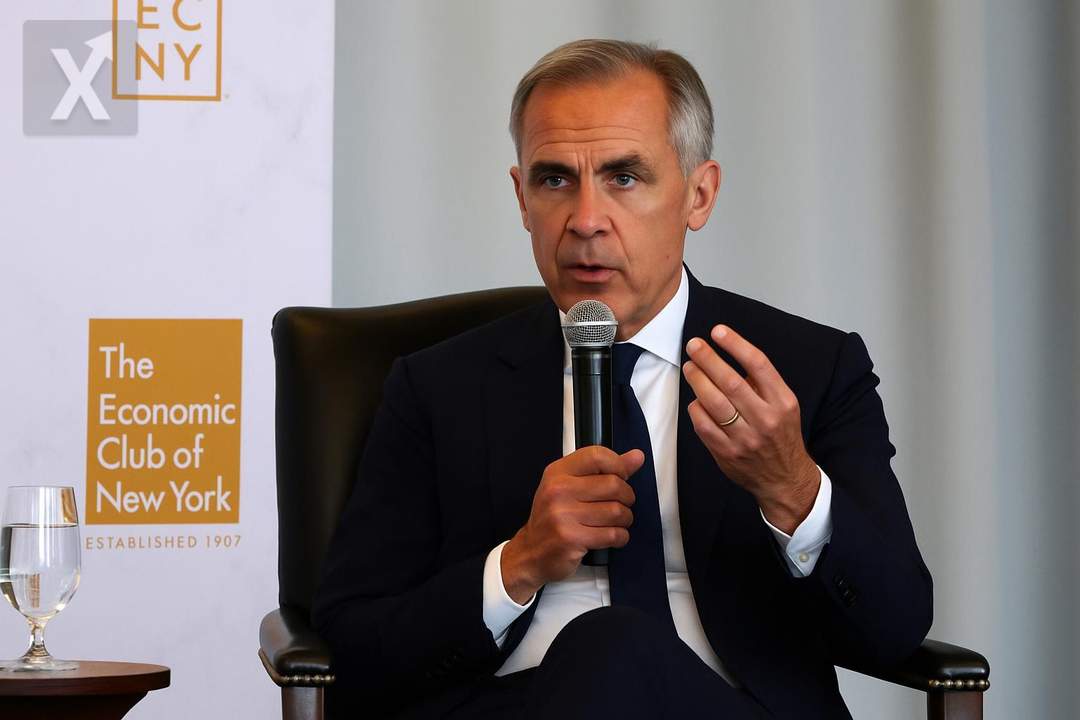
With the July 1 deadline approaching to set the course for the review of the United States–Mexico–Canada Agreement (USMCA), Canadian Prime Minister Mark Carney, speaking in New York, urged stronger regional cooperation and called on audiences to recognize Canada’s economic weight in the U.S. market. His message, aimed at financial leaders, comes as talks move at different speeds: Mexico has already opened a direct channel for dialogue with Washington, while Canada faces a rougher negotiation due to political differences and a sharper tone with Donald Trump’s administration.
For Mexico, the process is unfolding at a delicate point in the economic cycle. The economy has shown uneven performance: on one hand, it is supported by formal employment, momentum in the export sector, and the flow of remittances; on the other, it is showing cooling signals in investment and manufacturing amid still-restrictive interest rates, more volatile external demand, and expectations of regulatory changes. In this context, the USMCA remains the main anchor of certainty for production chains across the country—especially in autos, auto parts, electronics, medical devices, and agribusiness.
Carney emphasized that Canada is the United States’ largest customer and defended the benefits of tighter North American integration. At the same time, he reiterated his intention to reduce vulnerabilities stemming from Canada’s heavy reliance on the U.S. market, with a goal of doubling exports to third countries over the next decade. That pivot highlights a trend Mexico is also watching: even with deep integration, partners are looking to diversify to cushion episodes of protectionism, sector disputes, or abrupt shifts in trade policy.
In Mexico, the impact of the negotiation is not abstract. The country has attracted investment tied to supply-chain relocation (nearshoring), but that boost is not evenly distributed and faces constraints in infrastructure, water, and energy, along with security challenges and the availability of skilled talent. The continuity and clarity of North America’s trade framework directly influence decisions on plant expansions, long-term contracts, and financing—particularly in industrial regions such as the Bajío, the north, and certain logistics corridors in central Mexico.
Exchange Rate, Investment, and the Role of Certainty
The FX market tends to react sensitively to episodes of trade uncertainty. In Mexico, the peso’s performance has been shaped by rate differentials, financial flows, and perceptions of country risk; even so, any sign of prolonged friction around the USMCA could translate into higher volatility—especially if it coincides with inflation surprises or shifts in the monetary-policy path of the Bank of Mexico (Banxico). For importing and exporting companies, that volatility becomes an operating cost reflected in hedging, pricing, and margins.
Beyond the exchange rate, the key variable is investment. The USMCA review intersects with decisions on expanding productive capacity and locating suppliers. If the process results in more demanding rules—for example, on regional content, verification requirements, or labor criteria—Mexico could benefit if local sourcing is strengthened, but it could also face higher costs if red tape increases, legal uncertainty rises, or compliance timelines lengthen. By contrast, an orderly outcome—with clear rules and dispute-settlement mechanisms functioning effectively—would help sustain Mexico’s appeal relative to competitors in Asia and South America.
On the bilateral front, Mexico wants to enter the review with consistent messaging on trade facilitation, border security, anti-smuggling efforts, and logistics coordination—issues that often get folded into the U.S. political conversation. Recent experience suggests the most sensitive chapters tend to concentrate in specific sectors: agriculture, energy, autos, government procurement, and labor standards. For Mexico, room to maneuver expands if it can align industry, government, and regional partners around a shared-benefits narrative: jobs, investment, and stable prices for manufactured goods.
Canada’s stance—emphasizing cooperation but also diversification—adds an important nuance for Mexico: North American integration competes with the need to reduce risk. This could push all three countries to modernize customs processes, harmonize standards, and protect critical supply chains, but it could also lead to tighter rules of origin or more strategic controls in sensitive sectors. In any scenario, Mexico is putting part of its growth strategy for the coming years on the line: cementing its role as a higher value-added export manufacturing platform while also strengthening infrastructure and energy to support new investment.
In sum, Carney’s call for closer cooperation arrives as the USMCA once again becomes the barometer of the region’s economic relationship. For Mexico, the priority is to reduce uncertainty and secure stable rules that support investment and trade; the outcome of the review will shape both export competitiveness and appetite for new productive projects in the short and medium term.






