Banxico Launches Sales of Gold and Silver Coins for the 2026 World Cup
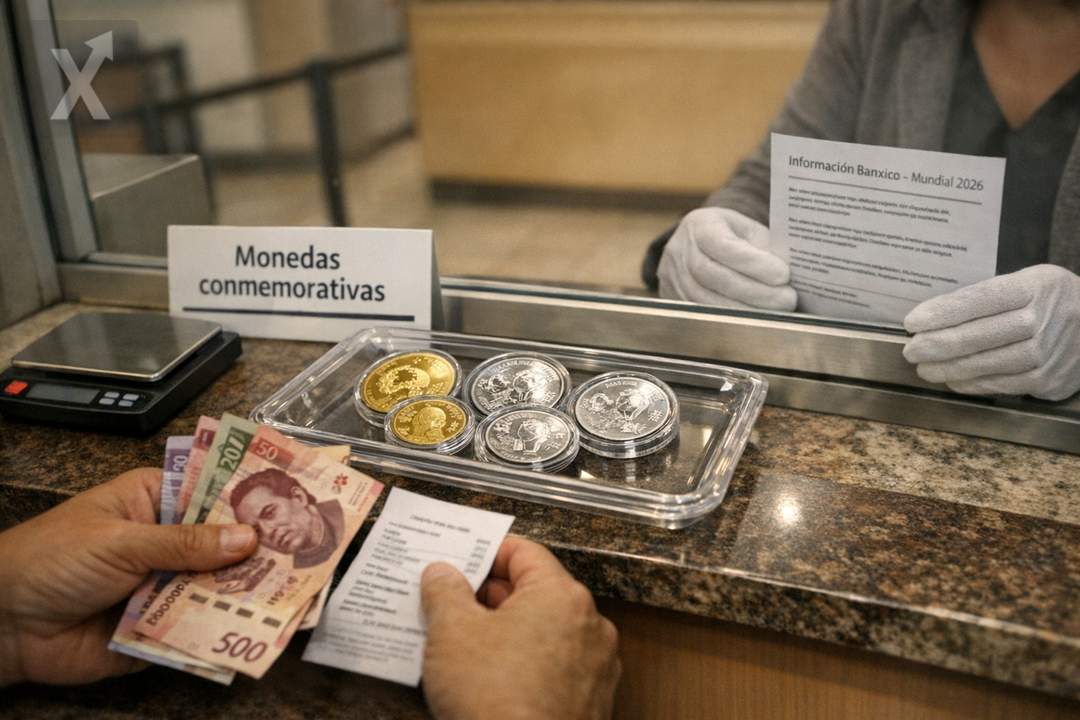
Banxico is preparing to distribute 178,000 precious-metal coins, a commemorative issue that is also stirring Mexico’s collectibles market.
The Bank of Mexico (Banxico) will begin marketing a new family of commemorative gold and silver coins tied to the 2026 World Cup—an event Mexico will co-host with the United States and Canada. The issue—which will not be intended for everyday circulation—aims to serve both collectors and people who buy precious metals as a store of value, at a time when international gold and silver prices often react to interest-rate expectations, the strength of the U.S. dollar, and bouts of global financial volatility.
According to information shared by Governor Victoria Rodríguez, minting through Casa de Moneda will total 178,000 precious-metal pieces. The breakdown includes gold and silver coins spread across four designs per metal, implying different mintages for each theme. Because this is a limited issue, availability will depend on authorized distribution channels and the pace of sales at teller windows and exchange points.
Retail sales will start in the last week of May through national distributors affiliated with Banxico, including Casa de Moneda and the Interactive Museum of Economics (MIDE). Access is also planned through exchange centers in Mexico City and, according to operational details released by the central bank, through participating commercial banks such as BBVA, Banco Azteca, Banregio, and Banorte.
Based on reference pricing communicated earlier, the silver pieces would be priced around 2,200 pesos, while the gold coins would be roughly 21,800 pesos. In practice, buyer appeal is usually split among the metal’s intrinsic value (which moves with international markets), the numismatic component—premium tied to limited mintage, design, and demand—and distribution-related costs. For consumers, the usual recommendation is to distinguish between an investment purchase (more sensitive to metal content and bid-ask spreads) and a collecting purchase (more tied to scarcity and preservation).
The commemorative program includes designs linked to Mexico’s host cities: Mexico City, Guadalajara, and Monterrey, plus one design representing the country. Visual elements incorporate urban and regional icons meant to connect the World Cup narrative to local identity, emphasizing cultural heritage and symbols widely recognized by the Mexican public.
20-Peso Coins: the “Mass-Market” Side of the Commemoration and Its Economic Read
At the same time, Banxico is moving forward with an issue of commemorative 20-peso coins—these will be legal tender for everyday use—with a target of up to 100 million pieces, tens of millions of which are already in circulation. This “mass-market” component tends to have different implications: it is not designed to capture metal premiums, but rather to reinforce circulation of a denomination and embed the commemorative identity in day-to-day economic activity. In monetary terms, it does not by itself change the monetary policy stance (which depends on inflation, economic activity, and financial conditions), but it does underscore how cash remains relevant for large segments of the country even as digital payments expand. For businesses and consumers, these issues can increase interest in setting aside well-preserved coins, which can sometimes slightly reduce their effective circulation, though without meaningful macroeconomic impacts.
The launch comes at a time when Mexican households have faced episodes of elevated inflation and high interest rates in recent years—factors that often push people to look for more attractive savings options. While gold and silver coins are not a traditional banking product, they tend to gain visibility when risk perceptions persist or when the U.S. dollar strengthens, since both factors affect local valuations of metals and demand for “hard” assets.
Looking ahead to the 2026 World Cup, interest in official merchandise and commemorative items is expected to rise. For the numismatic market, limited mintages and the distribution calendar can lead to lines, reselling, and shifting premiums. For consumers, the key will be to buy through authorized outlets, keep receipts, and recognize that resale prices are not guaranteed and may depend both on the coin’s condition and on actual demand in the secondary market.
In sum, Banxico’s issue blends a cultural component with a niche savings angle in precious metals—a reminder that even in an increasingly digital economy, physical currency and tangible assets still have a place in the wealth decisions of many Mexicans, especially during periods of uncertainty.






