Mexican Avocado: Global Leadership Under Challenge and New Pressures on the Countryside
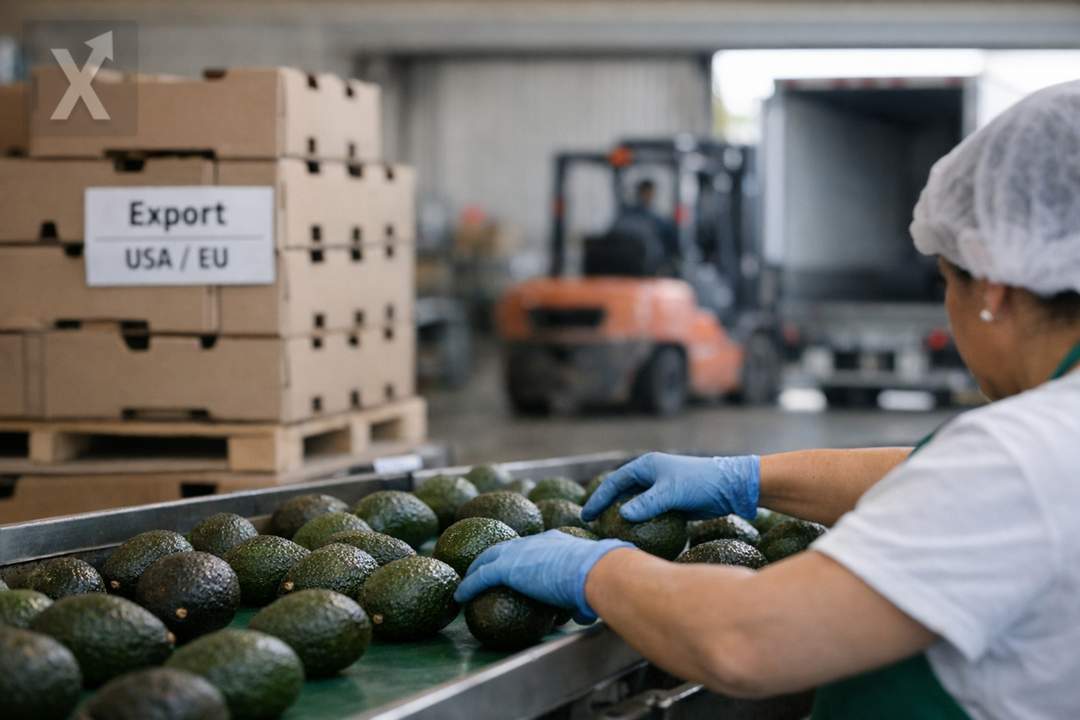
Mexico remains out in front in exports, but Peru and Colombia are picking up speed—forcing adjustments in production, costs, security, and sustainability.
Mexico continues to be the leading benchmark for avocados in international trade, but its dominance is no longer unquestioned. The global market exceeds $20 billion and is still growing, though competition is intensifying as new suppliers enter and seasonal supply expands across multiple continents. In that landscape, avocados have become a barometer for something broader: the ability of Mexico’s agricultural sector to sustain logistical and production advantages amid climate shocks, cost pressures, and a more sophisticated international rivalry.
Projections from international organizations and industry analyses indicate that by 2030 avocados will be the most traded tropical fruit in the world, with exports near 3.9 million metric tons. Global production could approach 12 million metric tons—a major jump compared with 2010. Latin America would still account for most of the volume thanks to climate and available land, but that same regional strength also creates room for more countries to build exportable supply and develop large-scale logistics chains.
So far, the main anchor of Mexico’s leadership has been its proximity to the United States, the world’s largest importer. Demand in that market has remained solid and, in recent seasons, the combination of tighter availability and shipping adjustments pushed prices higher. However, the backdrop is starting to shift: U.S. buyers and distributors are looking to diversify supply risks, while the European Union strengthens its role as a key destination and ramps up competition around quality, certifications, and delivery consistency.
In the short term, international prices have reflected a market that swings between episodes of scarcity and periods of oversupply. Even with expectations that volumes will recover in the next agricultural cycle, bigger harvests in competing regions and the expansion of new plantings in South America increase the likelihood of downward price pressure in certain windows of the year—especially when export peaks overlap.
The rise of Peru and Colombia explains a central part of this new dynamic. Peru has managed to scale volumes with export capacity and harvest calendars that let it compete in strategically important seasons. Colombia, for its part, has moved quickly: it is expanding acreage, bringing in investment, and gaining visibility among the world’s major suppliers. Together, South America is shaping up as an emerging bloc that could surpass 1 million metric tons in exports in the 2025–2026 season—within a market that for years had a clear-cut dominant player.
Europe offers a clear example of this competitive pressure. Demand supported high prices through 2024 and into part of 2025, but massive summer shipments from Peru forced adjustments in wholesale prices. In addition, growing exports from African countries add new layers of competition on similar routes and in similar time windows. At the same time, other players outside Latin America—such as Australia and New Zealand—are on track to recover production in the next cycle, adding even more volume to an already more saturated market.
Costs, Climate, and Security: Domestic Fronts Weighing on Competitiveness
The international contest is unfolding alongside internal challenges that limit Mexico’s room to maneuver in avocados. In key states like Michoacán, a meaningful share of certified acreage lacks irrigation, increasing vulnerability to droughts and heat waves. Climate volatility—more frequent and more intense—not only hits yields; it also complicates harvest planning and shipment stability, both of which are critical when buyers demand continuity and traceability.
At the same time, labor costs in Mexico have risen significantly in recent years due to steady increases in the minimum wage, squeezing margins—especially for mid-sized and small producers that can’t always pass the increase on in the final price. Add to that environmental strain: issues such as soil erosion raise the cost of maintaining productivity and require investment in agroecological management, conservation, and modernization.
Security remains an economic risk factor. In producing regions, the presence of organized crime and illegal extortion payments raise operating costs, distort investment decisions, and undermine certainty. Since a majority share of exportable avocados comes from Michoacán, any disruption in that area can have immediate effects on supply, prices, and commercial reputation. The industry—which has posted exports worth billions of dollars in recent years—depends not only on agricultural productivity, but also on institutional conditions that allow operations to run without extra-economic friction.
For the Mexican economy, the avocado case matters because of its ties to the agro-export sector, regional job creation, and hard-currency inflows. In an environment where the country is seeking to strengthen value chains and capitalize on its integration with North America, maintaining leadership takes more than scale: it requires investing in irrigation and climate resilience, raising productivity per hectare, strengthening certifications and traceability, and reducing logistical and security risks that currently translate into higher costs.
Looking ahead, the market will likely reward those who can deliver consistent supply and differentiate on quality in a context of greater global availability. For Mexico, the geographic advantage relative to the United States will remain key, but it is no longer enough on its own. Competition from Peru and Colombia, along with expansion from other origins, is pushing Mexico to modernize its production model and harden its export chain.
In short, Mexico retains a privileged position in the global avocado business thanks to its scale and proximity to the United States, but it faces tougher competition and internal challenges that test profitability and sustainability. The outcome will depend on how quickly Mexico can close gaps in irrigation, environmental management, costs, and security to sustain its leadership over the next decade.






