IMF warns of an oil shock and Mexico braces: inflation, the exchange rate, and public finances under pressure

A prolonged spike in oil prices driven by tensions in the Middle East could reignite inflation in Mexico and complicate decisions by Banxico and the federal government.
The International Monetary Fund’s (IMF) warning about “difficult times” for the global economy if the conflict in the Middle East drags on has refocused attention on a classic risk for net energy-importing countries: a persistent rise in the price of oil and refined products. In Mexico’s case, the impact wouldn’t be straightforward: although the country produces crude, it imports a significant share of gasoline, diesel, and natural gas, so a sustained increase in international prices typically filters through to transportation and food costs and, more broadly, to the non-core component of inflation.
The scenario laid out by the IMF—featuring energy price pressures and potential logistical disruptions—comes as Mexico is trying to cement disinflation after the global inflation episode of 2021–2023. Recent trends have shown progress, but with bouts of volatility in energy and agricultural prices. An additional shock would raise households’ cost of living and test the room to maneuver for both the government and monetary policy.
For the foreign-exchange market, the combination of geopolitical uncertainty and high energy prices typically triggers risk-off moves, boosting demand for so-called safe-haven assets. In that environment, the U.S. dollar tends to strengthen, and USD strength often puts pressure on emerging-market currencies, including the Mexican peso, even if local fundamentals remain relatively stable. A weaker exchange rate, in turn, could amplify pass-through to prices for imported goods and for supply chains with a high imported-content share.
Kristalina Georgieva’s call for central banks to “wait and see” before adjusting rates is especially relevant for Mexico. The Bank of Mexico (Banxico) has kept a restrictive stance for longer than several peers in an effort to anchor expectations. However, if the energy shock translates into more persistent inflation or a deterioration in expectations, the balance of risks could tilt toward a longer pause in rate cuts—or, in an extreme case, toward a more hawkish bias.
Inflation and fuel: the most immediate channel for Mexico
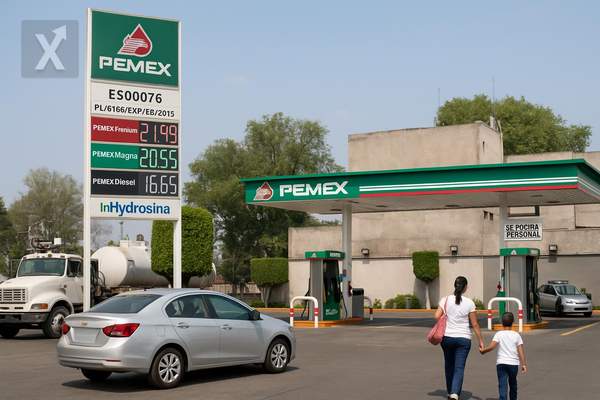
The first transmission channel is usually fuel and transportation. Mexico relies on gasoline and diesel imports, so an international increase can show up in consumer prices, even with smoothing mechanisms such as IEPS fuel tax stimuli that have been used at different times to cushion volatility. The effectiveness of those measures, however, is constrained by their fiscal cost and by the shock’s duration: the longer energy prices stay elevated, the harder it is to sustain broad-based support without hurting public revenues or crowding out spending elsewhere.
A second channel is food. Higher energy costs raise the price of fertilizers, transportation, and refrigeration, increasing production and distribution costs. For Mexico, where food inflation hits household budgets hard, the risk is a rebound in staple goods and a slowdown in the recovery of purchasing power. At the same time, companies with tight margins could gradually pass costs through, pushing up core inflation with a lag.
On the fiscal front, a high-oil-price environment can lift the government’s oil-related revenues, but it doesn’t necessarily offset the higher cost of importing fuels or the potential subsidies or tax breaks used to contain domestic prices. In addition, Pemex’s financial and operational situation remains a structural factor: higher crude prices can improve cash flow in the short run, but they coexist with investment needs, debt amortizations, and government support. The IMF’s recommendation to avoid “untargeted” measures points to a recurring dilemma: protecting consumers from higher prices without undermining fiscal sustainability.
For growth, the net effect depends on the size of the shock and the policy response. Higher interest rates help contain inflation and stabilize expectations, but they also raise borrowing costs. In Mexico, where consumption and investment already face challenges from tight financial conditions, an external shock that hurts confidence and makes energy more expensive can translate into slower momentum. Even so, factors such as supply-chain relocation (nearshoring), the strength of certain manufactured exports, and remittance inflows can partially cushion the blow, though they don’t eliminate it.
Looking ahead, the key issue is how long the episode lasts. If geopolitical tensions ease and energy prices normalize, the impact could be temporary and allow Banxico to continue a cautious process of monetary normalization. If, instead, a prolonged period of expensive oil takes hold, Mexico will face a more complex mix: inflation pressure from energy, FX risks tied to a stronger USD, and a fiscal debate over the cost of smoothing domestic prices. In that setting, the credibility of monetary policy and discipline in the design of support measures will be decisive.
In sum, the IMF’s alert underscores an external risk Mexico can’t control, but can manage: protecting purchasing power with targeted measures, safeguarding macro stability, and keeping expectations anchored will be crucial if the energy shock drags on.