Inflation Accelerates, Complicating Banxico’s Path to Rate Cuts—Though Markets Still Expect a Move
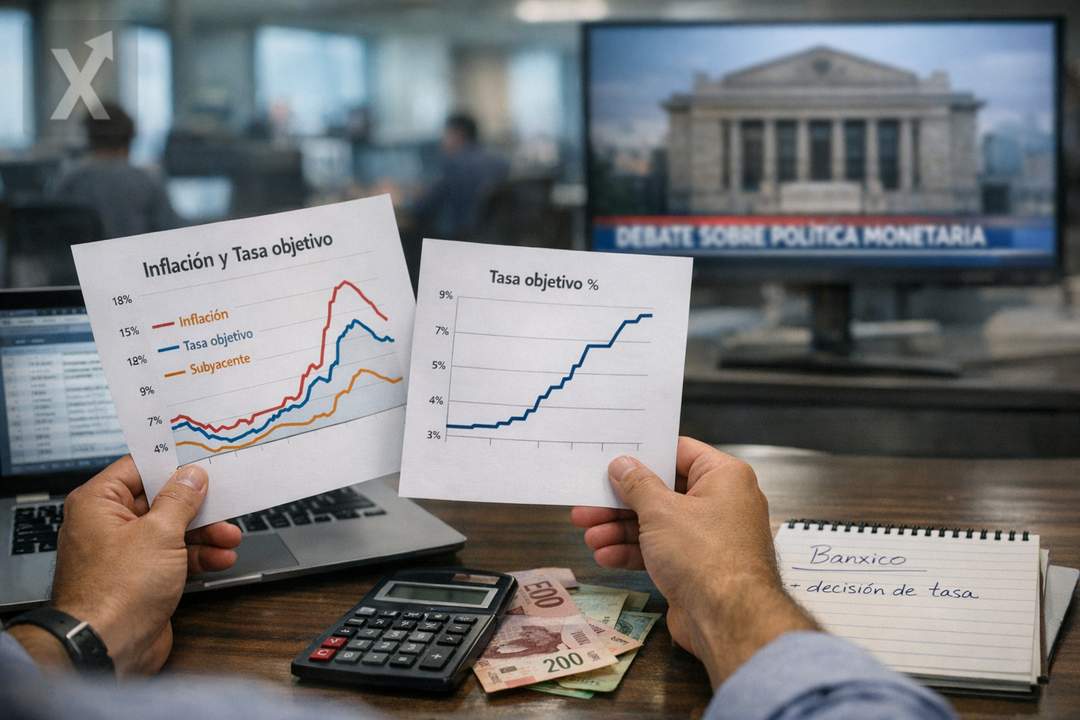
March’s inflation uptick tightens the debate on the Governing Board, but it doesn’t erase expectations for a cut—likely paired with a more cautious tone.
The rebound in inflation in the first half of March put the Bank of Mexico (Banxico) back in an uncomfortable spot: continue the rate-cut cycle so as not to choke off economic activity, or hit the brakes to avoid jeopardizing the disinflation process. With headline inflation at 4.63% year over year—above what was seen in prior weeks—market analysts are sticking with the base case of another cut to the policy rate, though they expect a more split debate within the Governing Board and more hawkish communication.
The consensus across brokerages and research desks is that the central bank still has room to adjust rates, in part because the recent spike is concentrated in the non-core component, where seasonal moves and supply shocks tend to dominate. Still, core inflation—the metric Banxico tracks most closely given its link to the medium-term trend—remains high (4.46%), limiting how quickly policy can be eased without calling into question the commitment to the 3% target.
The discussion isn’t happening in a vacuum. Mexico’s economy has shown resilience, supported by strong services activity and investment tied to supply-chain relocation (nearshoring), but it faces a mix of risks: higher costs for certain inputs, food price pressures, volatile energy costs, and an external backdrop in which rate moves in the United States continue to influence financial flows and the exchange rate. In that context, Banxico typically prioritizes consistency: gradual cuts, data-dependent decisions, and messaging aimed at anchoring expectations.
In addition, the market is assigning greater odds that even if a cut is delivered, it will come with a signal of a pause ahead. A split decision—with dissenting votes on the Board—would be read as evidence that the central bank believes the balance of inflation risks has worsened, even if it views some recent shocks as temporary.
What’s Behind the Price Jump—and Why It Matters for Monetary Policy
In the first half of March, prices rose sharply in typically volatile items: fruits and vegetables, some processed foods, and services with seasonal components. Among the most noticeable increases were tomatoes, chicken, air travel, and electricity, along with food consumed away from home such as lunch counters, torta shops, and taco stands. These moves are often tied to weather factors, tariff adjustments, and seasonal demand patterns, so they can reverse in subsequent biweekly readings. The problem for Banxico is that if the episode drags on or spills over into other prices—through logistics costs, expectations, or service-sector indexation—core inflation could take longer to converge, forcing rates to stay higher for longer.
For the central bank, the challenge is telling a temporary shock from a shift in trend. If non-core inflation cools but services remain sticky—due to labor costs, rents, or demand—policy will have to remain restrictive. If, on the other hand, the increases fade and medium-term inflation expectations stay stable, Banxico could justify additional cuts, though likely spaced out.
Looking ahead to the next few months, the outlook points to a less straightforward path for rates. The combination of inflation still above target, localized pressures in food and services, and markets’ sensitivity to U.S. Federal Reserve policy suggests that any easing will be cautious. At the same time, for households and businesses, the cost of credit will remain a key factor: a gradual reduction can ease financing conditions, but it won’t necessarily translate immediately into cheaper borrowing if banks build in risk premiums and expectations of persistent inflation.
In short, the inflation rebound doesn’t eliminate the possibility of a Banxico cut, but it does strengthen the case for a more cautious stance and more divided decisions, with the rate path determined by the still-uncertain speed at which inflation returns to a trajectory consistent with the target.






