Treasury Ministry reinstates IEPS tax breaks to curb gasoline and diesel price hikes amid an oil rebound
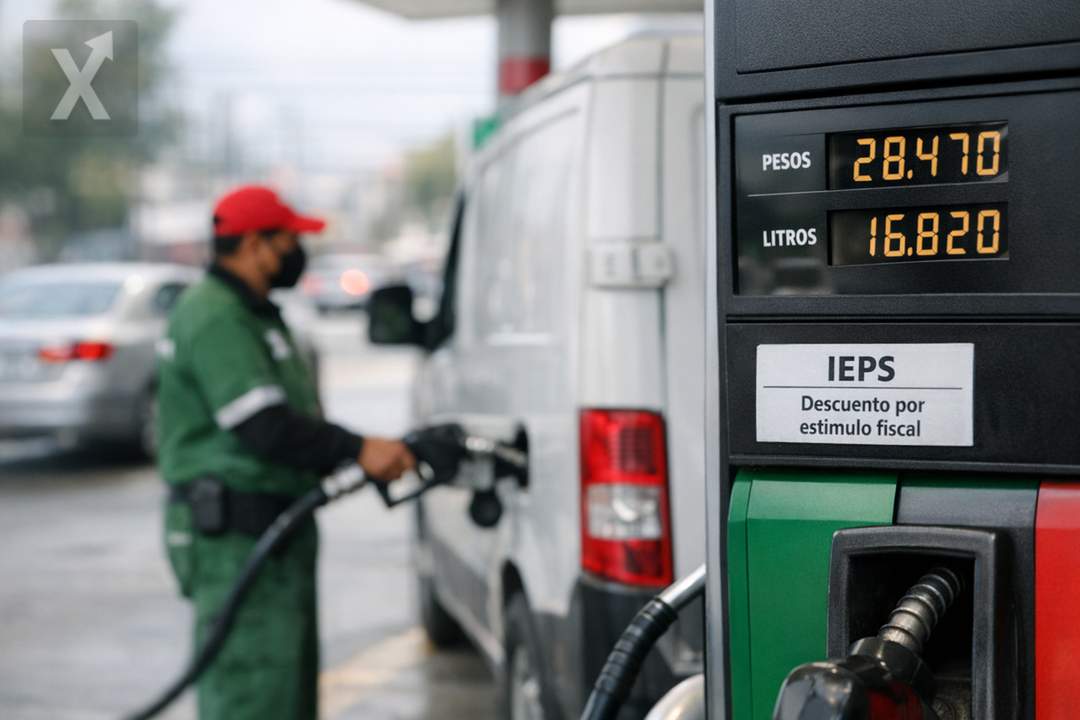
The federal government adjusted the fuel IEPS to soften the impact of higher global oil prices on consumer prices.
Mexico’s Ministry of Finance and Public Credit (SHCP) reinstated tax stimuli (tax breaks) under the Special Tax on Production and Services (IEPS) applied to fuels, aiming to cushion the domestic market from the rebound in international oil prices. The move comes in a more volatile global environment, where geopolitical shocks and expectations about crude supply often translate quickly into the cost of refined products such as gasoline and diesel.
For the week from Saturday, March 21 through Friday, March 27, the Treasury set an incentive for regular gasoline (Magna) equivalent to 24% of the tax rate, representing a discount of 1.61 pesos per liter. With this, the effective IEPS rate for that fuel stands at 5.09 pesos per liter. In parallel, Premium gasoline received a smaller stimulus: 0.42 pesos per liter, about 7.4%, for an effective rate of 5.23 pesos.
The most significant adjustment was seen in diesel. For the second consecutive week, the incentive remained in place, but increased sharply: the stimulus rose to 4.55 pesos per liter, 43% more than the prior week’s 2.60 pesos. At this level of support, the discount equals 62% of the tax rate, leaving an effective burden of 2.81 pesos per liter.
These types of stimuli work as a fiscal “shock absorber”: when oil prices rise, the government temporarily reduces the IEPS to prevent abrupt increases at the pump; when crude falls or stabilizes, the support is withdrawn and tax revenue improves. In practice, the mechanism shifts part of the external shock to the public balance sheet, implying lower tax intake in the short term.
The decision matters because Mexico still imports a significant share of its fuels—especially gasoline—from abroad, mainly from the United States (U.S.). That dependence makes international price swings and logistics costs more likely to show up in the Mexican market, even when domestic crude production remains relatively stable.
Implications for inflation, consumption, and public finances
On the macroeconomic front, containing fuel prices can help moderate inflationary pressures, since energy affects household spending directly and influences transportation and distribution costs for goods indirectly. For the central bank, a more stable energy path can reduce “noise” in headline inflation; however, the impact is neither automatic nor permanent, because the final retail price also depends on factors such as the exchange rate, marketing margins, and regional supply conditions.
On the fiscal side, the cost of these stimuli shows up as lower IEPS revenue, a meaningful component of non-oil tax receipts. In an environment where the government is trying to maintain budget discipline while addressing spending pressures—from infrastructure investment to social programs—fuel subsidies require a delicate balance between price stability and fiscal space. In addition, diesel carries special weight because of its link to freight transport and productive activity; as a result, subsidizing diesel often has broader economic implications than subsidizing gasoline used primarily for private consumption.
Looking ahead, how long the stimuli remain in place will depend on how persistent the rise in crude prices proves to be and on refined-products market dynamics. If international volatility drags on, the Treasury could maintain—or adjust—these supports to prevent erosion in purchasing power and a renewed rise in logistics costs. If, on the other hand, global prices normalize, the incentive would likely be phased out gradually, restoring revenue.
In short, reinstating the IEPS stimulus aims to smooth an external energy shock and protect consumers’ and businesses’ wallets, but it reduces fiscal revenue in the short run. The net effect on the economy will depend on how long the oil rebound lasts and how quickly it filters into domestic prices, especially for diesel given its broad impact on economic activity.






