ABM warns: insecurity makes doing business more expensive and caps growth potential
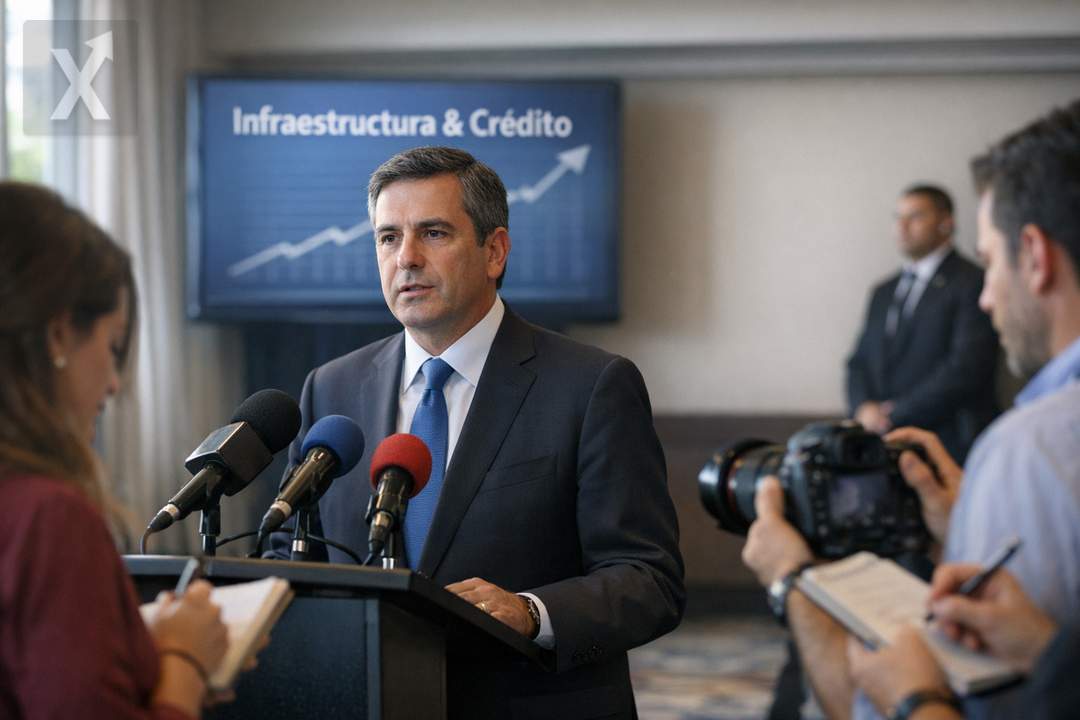
Banks argue that improving security and productivity could lift growth, but warn that investment requires certainty and lower costs.
Mexico continues to post moderate economic performance after several years of growth below its potential—a phenomenon that, according to the Association of Banks of Mexico (ABM), is closely tied to structural lags in productivity, efficiency, and value-added generation. Ahead of the 89th Banking Convention, the group’s president, Emilio Romano, also pointed to insecurity as a factor that not only holds back investment projects, but also raises operating costs and worsens the overall business climate.
The banking industry’s argument starts from a diagnosis widely shared by analysts: when the economy grows slowly, formal job creation slows, tax collection hits limits, and the room to fund infrastructure and public policy narrows. In that context, public safety also becomes an economic variable: it affects the cost of insuring goods, logistics, business continuity, and the decision to expand plants, open branches, or move inventory. For companies, violence and extortion can function like an extra “tax” that reduces profitability and disrupts expansion plans.
The Banking Convention—which brings together bankers, regulators, and government officials—is shaping up to be a venue for nailing down commitments between the financial sector and the government aimed at expanding credit, particularly for infrastructure projects and small and medium-sized businesses. President Claudia Sheinbaum will attend the meeting amid a debate over how to accelerate growth without neglecting financial stability and fiscal sustainability.
Romano said the government has made security a priority and cited a reduction in homicides reported by the administration. ABM’s thesis is that if frictions that deter productive investment—including insecurity—are reduced, Mexico could aim for growth rates of 3% to 4% over the medium term. However, that scenario depends on private and public investment reinforcing each other, the rule of law being strengthened, and projects having clear rules and consistent execution.
Credit and infrastructure: the bet to raise potential growth
In the banking sector’s assessment, infrastructure can become a driver to raise potential growth if it is paired with financing and conditions that reduce risk. The industry has proposed a goal of increasing credit as a share of GDP from about 38% to 45% by 2030—progress that, if achieved, would bring Mexico closer to deeper levels of financial development, though still below comparable economies. To get there, ABM estimates investments on the order of 4.5 trillion pesos would be required and, as a first step, a credit expansion of roughly 1.2 trillion pesos in 2026, with an emphasis on productive projects and supplier chains.
The near-term opportunity ABM highlighted is the push for projects linked to the World Cup, where the economic effect comes not only from the event itself, but from accelerating projects in highways, roads, airports, and urban services. At best, the benefits are amplified if the projects translate into lower logistics costs and better connectivity for domestic trade and exports. Even so, the final impact depends on the quality of spending, transparency in execution, and the ability to avoid cost overruns tied to security risks.
At the same time, banks are seeking to streamline account opening and expand access to digital services. Financial inclusion—beyond improving payment efficiency and reducing cash use—can enhance the traceability of transactions and lower the cost of originating credit, especially for microbusinesses. However, digitization also requires stronger cybersecurity and financial education to contain fraud, a risk that increases as adoption of remote channels grows.
The environment, in any case, is not free of uncertainty. The trajectory of the U.S. economy is often a key determinant for Mexico given its weight in exports, remittances, and investment; in addition, institutional changes—including the debate over reforms—can influence risk perceptions and the cost of financing. Even against that backdrop, ABM’s position is that an agenda focused on regulatory certainty, security, and productivity could improve investment and growth, as long as macroeconomic stability is maintained.
In short, the banking sector’s message is that Mexico is facing not only a cyclical challenge, but a structural one: raising productivity and reducing risks associated with insecurity. The combination of well-executed infrastructure, deeper credit markets, and improvements to the rule of law is presented as a necessary condition to move closer to higher growth rates—though bringing that scenario to life will depend on public-private coordination and verifiable results on security and confidence.






