Fitch Affirms Mexico’s Sovereign Rating at ‘BBB-’ as Debt and Pemex Warnings Mount

Fitch kept Mexico’s rating with a stable outlook, but warned that rising debt and Pemex-related risks are putting pressure on the fiscal profile.
Fitch Ratings reaffirmed Mexico’s credit rating at ‘BBB-’ with a stable outlook—a decision that acknowledges the country’s macroeconomic resilience while also spotlighting a growing concern: deterioration in public finances and the recurring burden of support for Petróleos Mexicanos (Pemex). In its latest assessment, the agency placed government debt at 54.6% of GDP in 2025 and expects it could exceed 58% by 2027, against a backdrop of elevated deficits, moderate growth, and persistent fiscal needs tied to the state oil company.
The affirmation avoids, for now, a downgrade that would raise borrowing costs for the federal government and local issuers, but the message is clear: fiscal room is narrowing. For an economy like Mexico’s—integrated into manufacturing value chains, with a meaningful external sector and a relatively deep financial system—rating stability depends on debt no longer accelerating and on contingent liabilities not materializing abruptly.
Fitch pointed to strengths that have traditionally supported the sovereign profile, including a diversified economy, a credible central bank, and external finances that have generally shown an ability to absorb shocks. However, it cautioned that fiscal consolidation will be more difficult given spending rigidity, pressure from social programs, limited room to cut investment without hurting potential growth, and a tax base that—despite administrative improvements—remains relatively narrow compared with spending needs.
On the macro front, the assessment comes alongside mixed signals: annual inflation rose to 4.59% in March, above the Bank of Mexico target, even as the central bank has already started an easing cycle. For Fitch, the projected 1.7% growth rate in 2026 reflects still-moderate performance, making it harder to reduce debt through activity alone; in that scenario, adjustment typically falls on spending and revenue decisions, which are politically more sensitive.
The Pemex Factor: Recurring Support and Contingent-Liability Risk
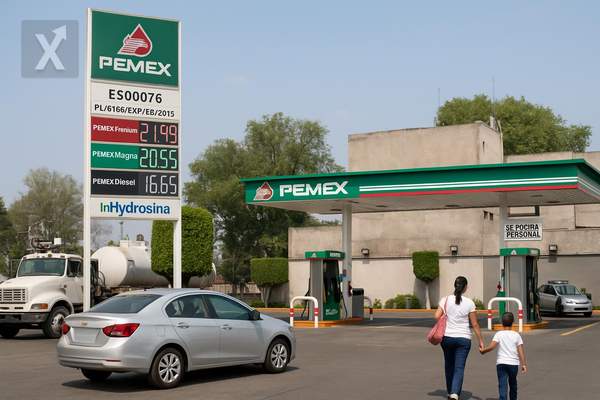
The main structural risk factor Fitch identifies is Pemex. While the company has received relief measures and support that improved its liquidity at different times, and there have been efforts to contain losses in segments such as refining, the ratings agency views it as uncertain whether new projects and the operating strategy will manage to stabilize production within a reasonable time frame. The market’s takeaway is that as long as the government maintains expectations of backing the oil company—whether through transfers, tax support, capital injections, or assuming obligations—Mexico carries a “contingent liability” that can add pressure to public debt if Pemex’s needs grow.
Beyond the headline figure, the debate is fiscal and policy-related: every additional peso used to sustain the company reduces room for public investment, infrastructure, health care, or education—areas that affect potential growth. At the same time, an abrupt withdrawal of support would also carry costs, because it would increase Pemex’s refinancing risk and could trigger financial volatility. The challenge, then, is to design a credible path that gradually reduces reliance on extraordinary support, improves cash-flow generation, and mitigates operational risks, without shifting stress onto the sovereign.
For investors, banks, and companies, Fitch’s signal matters because the sovereign rating often serves as a “ceiling” or benchmark for country risk. A stable outlook suggests no immediate changes, but the list of conditions that could trigger a downgrade—further fiscal deterioration, a faster rise in debt, or the materialization of Pemex-related liabilities—puts the spotlight on indicators markets will closely watch: the fiscal balance, interest costs, refinancing needs, and the oil company’s operating and financial performance.
Looking ahead, Mexico’s challenge will be to balance fiscal discipline with growth. Factors such as trade integration with the United States, the reshoring of manufacturing investment, and the path of global interest rates could be supportive, but they do not replace a medium-term domestic strategy: stronger public revenues, better-quality spending, and clarity on Pemex’s fiscal treatment. In that context, maintaining the rating is not an endpoint, but rather a window to correct course before the cost of adjustment rises.
In short, Fitch recognizes Mexico’s macro stability and economic diversification, but warns that debt and Pemex are the main pressure points; the fiscal path over the next several years will be critical to sustaining confidence and keeping the country’s financing costs under control.