Citi Places Another 24% of Banamex with Private Investors and Fine-Tunes the Path to Its IPO
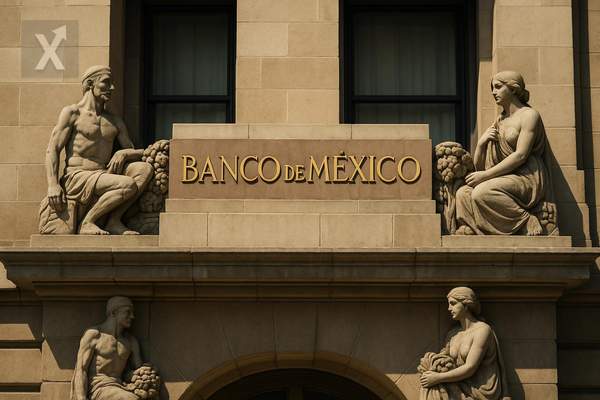
Citi agreed to sell an additional 24% of Banamex to a group of institutional investors, a key step to diversify its shareholder base ahead of a potential stock market listing.
Citibanamex took another step in the process of reshaping Banamex’s ownership structure: Citi announced the sale of an additional 24% stake in the Mexican institution to a group of institutional investors and family offices, including General Atlantic, Afore SURA, Banco BTG Pactual, Chubb, as well as funds managed by Blackstone, Liberty Strategic Capital, and the Qatar Investment Authority. The transaction was valued at around 43 billion pesos (about $2.5 billion, according to the statement), with individual stakes capped at a maximum of 4.9%.
The bank said the transactions are subject to customary closing conditions—including approval from Mexico’s antitrust regulator—and are expected to be completed in 2026. If finalized, 49% of Banamex’s shares would be held by new investors, led by Fernando Chico Pardo, who previously acquired 25% of the bank and now serves as chairman of its board.
In its corporate messaging, Citi frames the placement as a vote of confidence in Banamex’s strategy and as a preparatory step toward an initial public offering (IPO). The institution also emphasized that it does not anticipate additional sales during 2026, a point aimed at providing certainty about the ownership structure and value-creation potential ahead of a potential market listing.
The move comes at a time when banking in Mexico continues to benefit from strong net interest margins driven by still-restrictive rates, though there are signs of slower credit growth in some segments and intensifying competition for deposits. At the same time, the Mexican economy faces a delicate balance: a labor market that has shown resilience, public finances under pressure from higher financing costs and investment needs, and an external backdrop shaped by interest-rate volatility in the United States and bouts of risk aversion that influence appetite for emerging-market assets.
For Banamex, the ownership reshuffle has an additional angle: it strengthens the narrative of a “Mexican institution with international muscle,” but with a more diversified base of partners. That diversity could prove useful to support investment in technology, regulatory compliance, and product expansion, at a time when digitalization—and the operating efficiency it promises—is a key front for the entire financial system.
Implications for Mexico’s Banking System and Capital Markets
The entry of global and regional investors with minority—but meaningful—stakes points to a clear objective: building corporate governance and an ownership structure that can withstand the public scrutiny an IPO requires. In Mexico, where the stock market has struggled to add new issuers and deepen liquidity, a potential Banamex listing would be a significant event both in size and in symbolism, to the extent that it could revive investor interest in Mexican assets beyond the debt market.
From the banking-system perspective, the deal does not immediately change competitive dynamics, but it does suggest a push to reposition Banamex through investment and new lines of business, including adjacent areas such as investment services and brokerage, in a country where financial inclusion is advancing gradually and the use of digital channels is growing rapidly. For regulators, a central priority will be ensuring that the new mosaic of shareholders upholds strong standards in risk management, anti-money-laundering controls, and consumer protection—areas where oversight has become more demanding in recent years.
In the short term, the main catalyst will be the approvals process and how markets interpret valuation, timing, and the conditions for an IPO. In the medium term, the conversation will shift to execution: Banamex’s ability to boost efficiency, retain and grow its customer base in a highly competitive environment, and capture investment flows tied to supply-chain relocation without sacrificing asset quality.
Overall, placing another 24% reinforces Citi’s strategy of moving Banamex into a stage of greater autonomy and an eventual public-market presence, while the market weighs whether the macroeconomic and financial backdrop will allow that intention to translate into a successful IPO with sufficient depth.