USMCA and the idea of “replacing Asia”: Mexico’s real challenge amid supply-chain reshoring
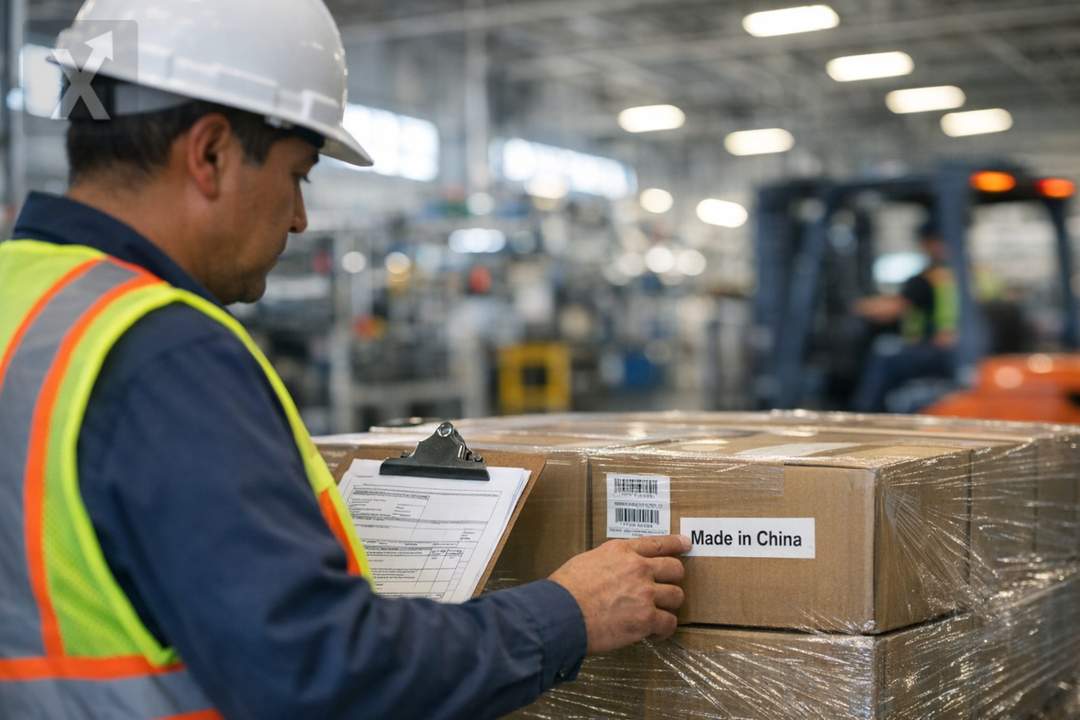
The USMCA review is running up against the limits of a region that still depends on Asian inputs, and Mexico is seeking capital and investment to strengthen its supplier base.
As the USMCA review approaches, one proposal that has gained significant traction in political and business debates is the idea of “replacing Asia” as North America’s supplier of key inputs and manufactured goods. The premise is to reduce logistical, geopolitical, and cost vulnerabilities in the face of shocks like those experienced during the pandemic and amid trade tensions with China. But in day-to-day industrial operations, that goal runs into a less flexible reality: global supply chains take years to reconfigure, and in several sectors the region simply still lacks the productive capacity to replace what it currently buys from Asia.
Foreign-trade figures put the challenge into perspective. Mexico runs a significant deficit with Asia, while the United States posts an even larger imbalance. Beyond the specific number, the message is structural: for decades, North American production has become highly dependent on components, machinery, electronics, and subassemblies coming from Asian economies. Changing that pattern requires investment, technology transfer, certifications—and, above all, time.
The automotive sector is often cited as an example because of its weight in Mexican exports and its regional integration. Developing a supplier that can meet standards for quality, volume, traceability, and just-in-time deliveries isn’t an administrative formality; it involves qualification processes that can take years. Even if there is political will to speed things up, the cost of getting it wrong—line stoppages, failure to meet OEM requirements, lost contracts—makes companies particularly cautious.
At the same time, the debate is unfolding as Mexico tries to capitalize on nearshoring, but with internal bottlenecks that constrain how quickly the opportunity can materialize: electricity availability and transmission capacity, access to water in industrial hubs, logistics congestion at border crossings, and major differences in public security and the rule of law across regions. Replacing Asian imports, therefore, doesn’t depend only on trade rules; it also requires stronger infrastructure and predictability for long-term investment.
From “China+1” to “Asia+N”: a reshuffle that doesn’t break the dependency
A central feature of the current moment is that dependence on Asia doesn’t necessarily disappear—it gets redistributed. In response to tariffs and restrictions, companies that once produced primarily in China have shifted part of their assembly to countries such as Vietnam, India, Indonesia, or Thailand, keeping Asian sourcing but with a different label of origin. For the United States—and by extension for Mexico as an export platform—this means that pressure to “regionalize” competes with a pragmatic business strategy: diversify suppliers within Asia to reduce risk without driving costs up too much.
This reshuffling also affects Mexico indirectly. Mexican industry imports components and intermediate goods that in turn feed exports to the United States under the USMCA umbrella. If “substitution” is interpreted rigidly, with regional-content requirements that are hard to meet on short timelines, the risk is higher costs, delayed investment, or even projects being redirected to other geographies with immediate capacity. By contrast, if a gradual transition is designed, the incentive can become productive: attracting higher value-added stages to Mexico while strengthening the local supplier ecosystem.
Another path, increasingly discussed in business circles, is to attract Asian capital to manufacture within Mexico under clear and transparent rules. In economic terms, the origin of capital does not by itself determine the benefit; what matters is how well it integrates into the local economy, how much formal employment it creates, how much domestic content it incorporates, and whether it drives knowledge transfer. Under a stable regulatory framework, Mexico can turn foreign investment into a lever to produce in-country the inputs it currently imports, raising regional content without sacrificing competitiveness.
This, however, requires a nuanced, sector-by-sector approach. In strategic areas—for example, telecommunications, certain critical equipment, or sensitive technologies—governments typically apply additional screening for security and resilience reasons. Outside those segments, the window is wide in industries where Mexico already has a manufacturing base and proximity to the U.S. market: auto parts, medical devices, home appliances, advanced manufacturing, and increasingly, components tied to electric mobility and clean energy.
At the macroeconomic level, the debate over “replacing Asia” intersects with domestic priorities: boosting productivity, reducing informality, strengthening the rule of law, and improving infrastructure quality. If the USMCA review pushes an agenda of deeper integration, Mexico could capture more investment and move up the value chain in exports. If, on the other hand, the review results in rules that are difficult to implement or creates uncertainty for investment, the region could lose momentum to other industrial hubs.
The issue will remain on the table because it reflects a real concern: exposure to external shocks. But the evidence suggests that total substitution is unlikely in the short term. The most viable scenario for Mexico is smarter regional integration: building local supplier capacity where it can compete, attracting investment to produce in Mexico what currently arrives from Asia, and preserving the export competitiveness that underpins a large share of manufacturing growth.
In short, the USMCA review opens a legitimate conversation about resilience and regional content, but its success will depend less on political targets and more on the ability of Mexico and its partners to invest, coordinate, and execute a realistic industrial transition.






