Oil Above $100: Mexico’s Crude Blend Raises Red Flags on Inflation, Subsidies, and Fiscal Strain
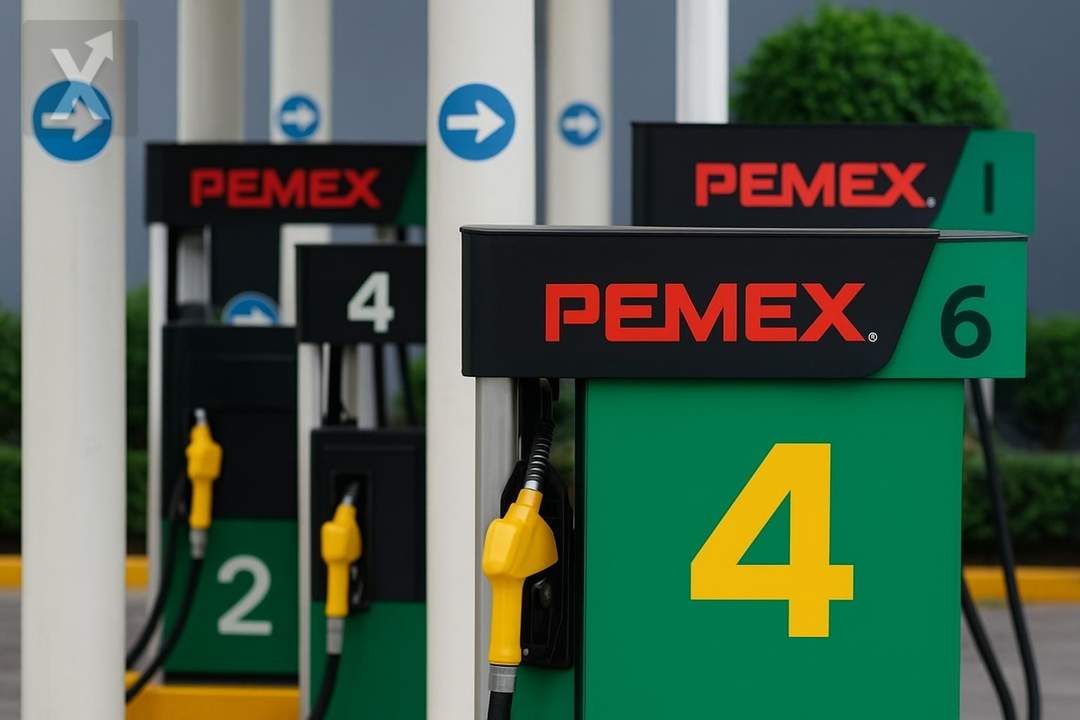
The spike in Mexico’s crude blend fueled by geopolitical tensions is driving up transportation costs and complicating the balance between keeping inflation in check and protecting public finances.
Mexico’s export crude blend surged sharply amid the military escalation between the United States and Iran, jumping from levels near $63 a barrel to prices above $100 before a temporary truce was announced from Washington. The move—around 68%—put oil back at the center of Mexico’s economic conversation: not only because of the effect on oil revenues, but because of the impact an energy shock can have on inflation, logistics costs, and the fiscal balance.
In markets, the price spike is being driven by a higher “risk premium” tied to potential supply disruptions and damage to energy infrastructure in a region critical to global oil flows. While international prices pulled back somewhat after signs of de-escalation, uncertainty remains elevated—and with it, the risk of renewed bouts of extreme volatility. For Mexico, that variability is especially sensitive because oil influences the federal budget, while the country also depends on imported fuels to meet domestic demand.
The first transmission channel is already felt in household budgets: changes in gasoline and diesel prices tend to show up quickly in ground transportation, raising delivery, freight, and mobility costs. When fuel prices rise, pressure filters—on different timelines—into food, retail, and services, even if part of the increase is temporarily absorbed by corporate margins or financial hedges.
Although Mexico produces crude, its energy balance remains complicated. A large share of the oil it exports goes to U.S. refineries, while the domestic market still relies heavily on imports of gasoline, diesel, and natural gas. That mix reduces the “net benefit” of expensive oil: a higher export price can lift certain revenues, but it also raises the cost of critical inputs for consumption and domestic production.
This environment also arrives at a time when economic policy is constrained. With moderate growth and an ongoing debate over fiscal space, oil volatility forces more precise decisions: how much to cushion the blow for consumers and businesses, and how much budget flexibility to preserve in case elevated prices persist.
IEPS, Inflation, and the Finance Ministry’s Dilemma
To contain the impact on consumer prices, the government has relied on stimulus measures that reduce the IEPS excise tax applied to fuels. This strategy can help prevent “second-round effects” in inflation—when an energy increase spills over into broader prices—but it carries an immediate fiscal cost by cutting tax revenue. In a scenario where oil stays persistently above what budget assumptions anticipated, the dilemma becomes more acute: keeping support in place longer can weaken public finances, while withdrawing it quickly can accelerate inflation pressures and disrupt expectations.
The challenge is significant because energy prices tend to be far more volatile than GDP growth, complicating planning. In its pre-criteria for economic policy, the government had already revised up its inflation estimate for 2026 and increased its assumption for the average oil price, though those projections fall short compared with prices above $100. If the shock drags on, the gap between the observed price and the budgeted price can distort revenues and spending, forcing a reshuffling of public-policy priorities.
From a monetary-policy perspective, a sustained oil rally can also complicate the disinflation process. Banxico typically responds cautiously to supply shocks, but it closely watches pass-through into core inflation (the measure that reflects more persistent trends). If energy costs start to spread broadly, the odds increase that the central bank keeps a restrictive stance for longer—affecting credit, consumption, and investment.
Electricity, CFE, and Energy Vulnerability
The sensitivity is not limited to transportation fuels. In Mexico, a significant share of power generation depends on fossil inputs, amplifying the impact of an energy shock. When fuel costs rise, pressure can shift onto the finances of state-owned companies such as CFE, or onto the need for larger subsidies to avoid abrupt increases in final electricity rates. This tends to open a second fiscal front: it’s not only about the IEPS on gasoline, but also the cost of maintaining support schemes and absorbing swings in energy input prices.
In competitiveness terms, the episode also revives the debate over energy resilience: diversifying sources, improving efficiency, investing in infrastructure, and reducing bottlenecks. A global oil market prone to recurring geopolitical tension increases the value of having domestic buffers—from inventories and logistics to contracts and hedges—especially for transport-intensive industries and for supply chains integrated with North America.
In the short run, analysts note that pass-through from higher energy prices may be uneven: transportation and logistics usually adjust first; airlines and some industries can cushion via hedges or inventories; and manufacturing may reflect costs with a longer lag depending on contracts and pricing power. That pattern means part of the impact can be “managed” for weeks, but if tensions persist, the pressure tends to become more widespread.
All told, oil prices will remain a key indicator for anticipating Mexico’s inflation path and economic-policy decisions. If the truce holds and expectations normalize, the adjustment could moderate; but if the conflict flares up again or supply disruptions accumulate, the country will face an uncomfortable combination: more expensive fuels, potential pressure on subsidies, and tighter fiscal room.
In broader perspective, the jump in Mexico’s crude blend above $100 shows how an external shock can reshape domestic priorities: containing the cost of living without undermining public finances while also accelerating an energy-resilience agenda to reduce structural vulnerabilities.






