SAT Tightens Its Cleanup of Authorized Donees, Defends a Technical Standard in Revocations
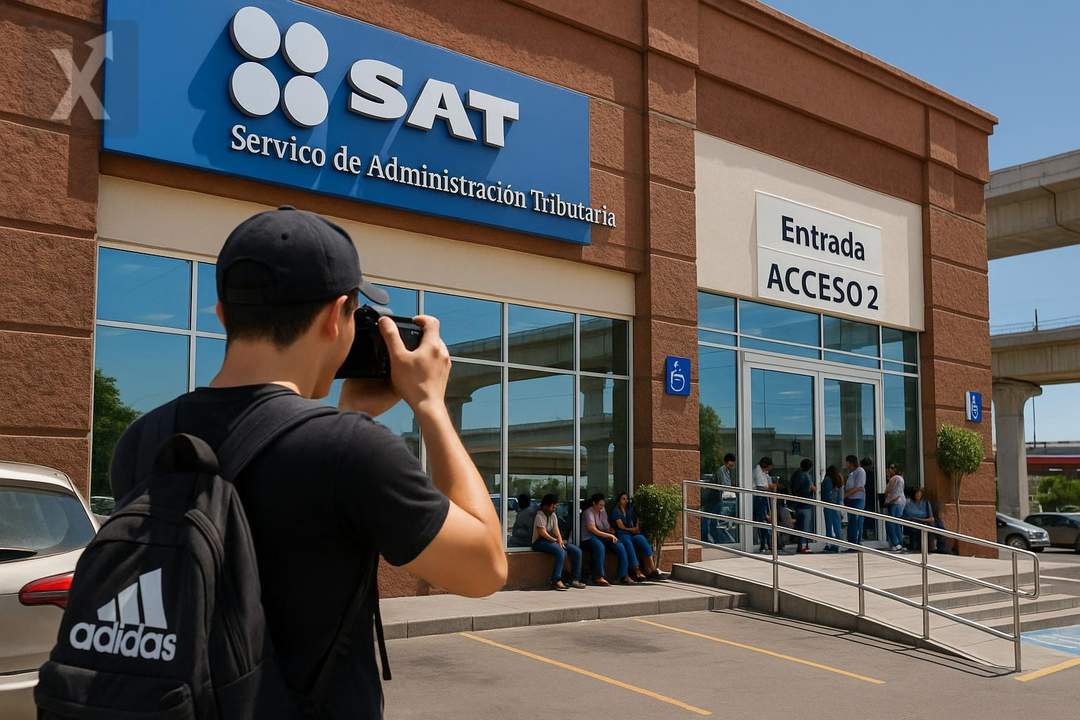
SAT says organizations are being removed from the authorized-donee registry due to legal noncompliance—not because of their legal name or the people involved.
Mexico’s Tax Administration Service (SAT, for its Spanish acronym) said that procedures to revoke or cancel authorizations for organizations registered as “authorized donees” are carried out under technical criteria and based on compliance with tax requirements—without considering factors such as the organization’s legal name, line of business, or the identity of its partners or members. The statement comes amid heightened public scrutiny over the cleanup of the registry of entities allowed to receive tax-deductible donations, a key funding channel for Mexico’s social sector and for charitable, educational, and research-oriented projects.
At a press conference, Gari Flores, SAT’s General Administrator of Revenue Collection, explained that the authority is guided by whether the requirements set out in tax law are met. Under his approach, when a taxpayer—including authorized donees—fails to meet any requirement in the process, the application does not move forward. He said the emphasis is on assisting and serving those who comply, and on applying the rules when there are omissions.
According to figures released by SAT, 270 authorized donees were revoked during 2025 out of a registry of more than 10,000 organizations. Between 2025 and 2026, the agency published a list of more than 300 entities whose authorization was revoked or canceled, including associations with high public visibility. SAT said that in all cases organizations were granted the right to be heard under the procedure established in Article 82-Quater of Mexico’s Income Tax Law (LISR, for its Spanish acronym), and revocations were finalized when noncompliance was not remedied within the legal deadlines.
SAT added that, in some cases cited in the media, revocations were due to the lack of documentation proving that certain research activities were scientific in nature, even though the authorization had been granted under that category. The agency also stressed that under the current framework, if an organization later meets the missing requirement, it can refile and regularize its status in a relatively short period, as long as it satisfies the applicable standards.
Economic impact: deductibility, trust, and third-sector financing
Cleaning up the authorized-donee registry has implications that go beyond administrative matters. In Mexico, authorization to receive tax-deductible donations serves as a mechanism to channel private resources toward public-interest purposes; as a result, regulatory certainty and clear requirements influence how willing businesses and individuals are to donate. Greater oversight can strengthen trust if it reduces the risk of sham operations and improves accountability, but it can also raise compliance costs for organizations with limited administrative capacity—especially in a context of moderate economic growth and budget pressures that increase demand for social services.
From a tax standpoint, the authority is seeking to safeguard the integrity of the deductions system in a country where tax revenue as a share of GDP remains below that of comparable OECD economies. For SAT, closing off avenues for avoidance through entities that cannot substantiate authorized activities aligns with the goal of broadening the tax base and strengthening revenue without creating new taxes. For the social sector, the challenge is to demonstrate documentary compliance and spending traceability in an environment where institutional donors often require higher standards of transparency and evidence of impact.
The episode also fits into a broader discussion about simplifying and digitizing administrative procedures. In recent years, SAT has expanded its use of electronic tools, verification of Digital Tax Receipts (CFDI, for its Spanish acronym), and data cross-checks, which increases its ability to detect inconsistencies—but also makes accounting and legal guidance more important to meet category-specific requirements. In practice, the difference between a fixable omission and a revocation can come down to timing, documentation, and each organization’s operational capacity.
Looking ahead, the net effect on Mexico’s donation ecosystem will depend on procedures remaining predictable and on the authority clearly communicating general compliance criteria without disclosing confidential information. For authorized donees, the priority will be strengthening corporate governance, internal controls, and documentation of activities; for donors, the focus will remain reputational risk and legal certainty around deductibility.
Overall, SAT maintains that it is acting under technical criteria and within the framework of the LISR; the challenge for the social economy is to adapt to tighter oversight without slowing the flow of private resources to public-interest projects.






