The Modernized EU–Mexico Trade Agreement Aims to Strengthen Mexico as an Industrial Bridge Between the European Union and the United States
Updating the agreement with the European Union could accelerate trade and investment and solidify Mexico as an export platform as global supply chains are reshaped.
The imminent signing of the modernization of the Free Trade Agreement between Mexico and the European Union (TLCUEM), expected on May 22, comes at a time when Mexico’s economy is looking to capitalize on the realignment of supply chains and the need to diversify markets. Beyond lowering barriers, the new framework seeks to strengthen Mexico’s role as a hub for assembling, processing, and redistributing goods between Europe and North America—especially toward the United States—thanks to the network of trade agreements the country maintains.
For the export sector, the appeal of modernization goes beyond higher trade flows: it could also translate into investment to expand productive capacity, raise technological content, and improve environmental standards in manufacturing. In practice, the expectation is that the renewed treaty will make it easier to do business in a more uncertain global environment, with companies adjusting their supply chains in response to higher logistics costs, geopolitical tensions, and tighter rules in strategic sectors.
According to estimates shared by Sergio Contreras, president of Mexico’s Business Council for Foreign Trade (COMCE), bilateral trade between Mexico and the European Union could grow by about 35% over a five-year horizon. The starting point is already significant: in 2025, total exchange exceeded $94.5 billion, with Mexican exports at $27.658 billion and imports at $66.94 billion, reflecting a trade deficit for Mexico—though one whose composition, from an industrial standpoint, is linked to purchases of machinery and capital goods.
Historically, the momentum is substantial. Since the original agreement took effect in 2000, trade in goods between the two regions has multiplied, alongside growing supply-chain integration, especially in manufacturing. The challenge, business groups warn, will be for more Mexican companies—particularly mid-sized firms—to develop logistics capabilities, certifications, and commercial channels to take advantage of expanded access across the EU bloc, and not only in traditional destinations.
Timing also matters. The trade portion of the agreement could enter into force between late 2026 and early 2027, once approval processes are completed in the European Parliament and the Mexican Senate. That window overlaps with a cycle in which Mexico will seek to sustain the appeal of “nearshoring” amid local bottlenecks—energy, water, infrastructure, and security—and amid regulatory and industrial-policy changes in other regions.
European Investment, Machinery, and the Technological Leap in Manufacturing
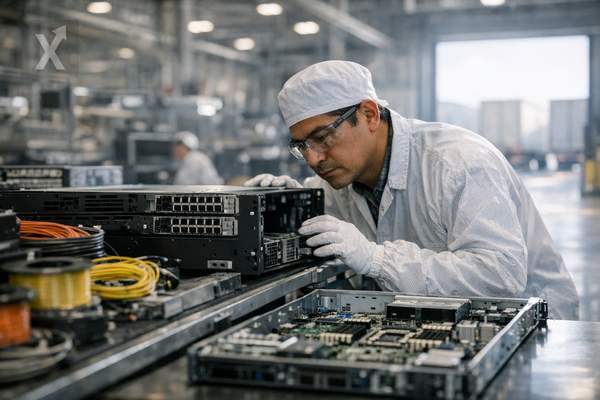
The potential impact of the modernized TLCUEM is best understood by looking at investment. In 2025, the European Union contributed $9.906 billion in foreign direct investment (FDI) to Mexico, equivalent to 24.2% of the national total, with Spain, the Netherlands, and France leading. In manufacturing, Mexico captured $14.821 billion in FDI that year, and more than $4.301 billion came from Europe: one out of every four dollars invested in the manufacturing sector originated in Europe. This mix matters because it typically comes with process transfer, standardization, and adoption of technologies aimed at productivity and energy efficiency.
For Mexico, importing capital goods from Europe—machinery, specialized equipment, and industrial technologies—tends to reflect a pattern of productive integration: technology is purchased to produce locally and supply both the domestic and regional markets. In a context where the United States is Mexico’s main export destination, the country can function as a platform for European companies seeking a foothold in North America, provided they meet rules-of-origin requirements and the technical criteria applicable to regional trade.
Europe’s emphasis on a green economy also becomes a competitiveness factor. Pressure for traceability, emissions reduction, and environmental standards in supply chains is growing worldwide, and Mexican companies that adopt better practices—from energy efficiency to process modernization—could integrate more easily into global supplier networks. However, that adjustment also requires additional investment, training, and certifications, making access to financing and regulatory certainty especially important.
On the agribusiness front, modernizing the agreement creates room for stronger export momentum. Products such as avocados, berries, beer, grains, and other food and agricultural goods appear among the likely beneficiaries, with the expectation of expanding sales and partially narrowing the trade gap. At the same time, Mexico’s market will face more competition in European categories: the agreement would broaden access for different types of cheese, which could pressure local producers to differentiate through quality, origin, or value-added.
Geography is another factor to watch. The main European destinations for Mexican exports include Spain, Italy, France, the Netherlands, and Germany, but the updated agreement opens opportunities to diversify into other markets within the bloc. For Mexican businesses, that leap often requires market intelligence, adaptation to labeling and standards, and logistics strategies to reduce costs along a route that is typically longer than North American integration.
In the short term, external-sector performance will remain tied to the U.S. industrial cycle and the pace of investment in Mexico, while in the medium term the modernized TLCUEM could become an anchor for projects in automotive, logistics, advanced manufacturing, and energy—sectors where Europe has a strong presence. The scale of the impact will depend on how quickly approvals materialize, how well companies can comply with new provisions, and how Mexico responds to its own infrastructure and competitiveness challenges.
Overall, modernizing the TLCUEM shapes up as an opportunity for Mexico to deepen its integration with the European Union without losing sight of its central role in North America. The upside lies in combining investment, technology, and market access—provided the country strengthens productive capabilities and the certainty needed to sustain long-term interest.