Stagflation risk in the United States increases pressure on Mexico through energy, trade, and the exchange rate
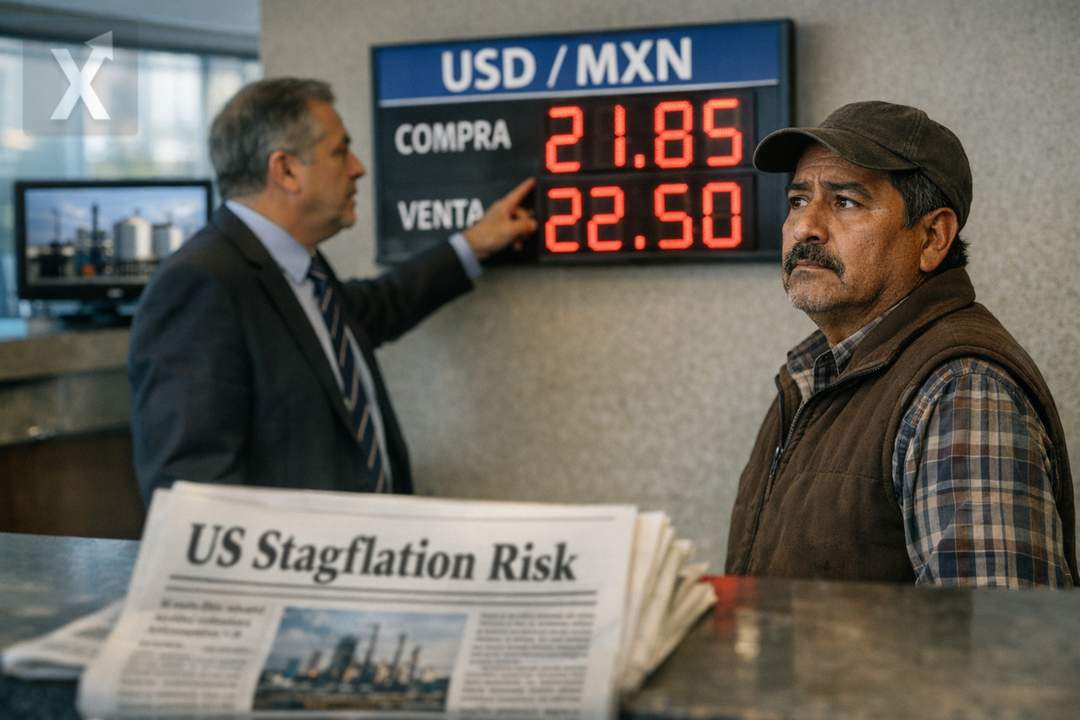
An oil shock and greater uncertainty in the United States could complicate Mexico’s growth and inflation outlook in the coming months.
Warnings from Nobel laureate Joseph Stiglitz about a higher risk of stagflation in the United States—an environment of high inflation paired with weakening economic activity—have renewed red flags in international markets at a time when the conflict in the Middle East has tightened energy prices. For Mexico, whose economy is tightly linked to the U.S. cycle through trade, investment, and financial flows, slower growth in its main partner and more expensive energy typically translate into greater volatility and a more challenging trade-off for monetary policy.
The starting point is not trivial: Mexico’s economy had already been moving through a gradual slowdown after the post-pandemic boost, with consumption more sensitive to borrowing costs and investment advancing unevenly. Even so, the country has shown resilience thanks to strong export momentum and supply-chain relocation (nearshoring), though persistent bottlenecks remain in infrastructure, energy, and regulatory certainty. In that context, a global oil price surge and a U.S. cooling could affect both external demand and the path of domestic prices.
Stiglitz noted that the war-related inflation uptick adds to greater uncertainty for households and businesses, making decision-making more difficult. That kind of uncertainty tends to show up in sharp moves in the U.S. dollar against emerging-market currencies and in bouts of risk aversion. In Mexico, that typically affects hedging costs, asset valuations, and—at the margin—the pass-through to prices of imported goods and industrial components embedded in regional supply chains.
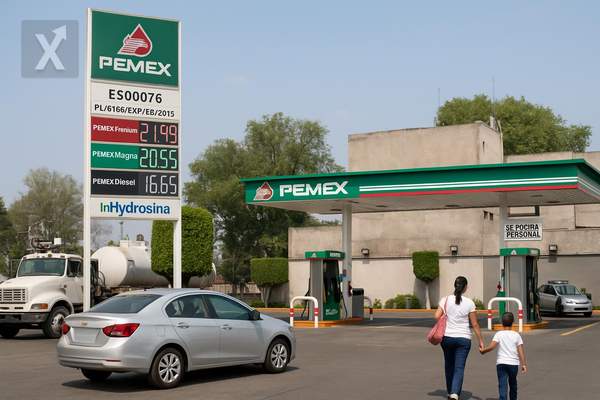
In addition, higher crude prices—driven, according to the cited analysis, by significant disruptions along a strategic route for global supply—pose a двой shock. On the one hand, they raise fuel and transportation costs, pressuring logistics expenses and corporate margins. On the other, they complicate the anchoring of inflation expectations, especially if the increase lasts long enough to seep into core prices. Although Mexico is an oil producer, its refining system and its reliance on fuel imports have meant that the benefits of high prices do not translate in a straightforward way into lower domestic pressures.
Banxico faces a dilemma: fragile disinflation and external volatility
For the Bank of Mexico, a global episode of expensive energy combined with signs of weakening in the United States can narrow room to maneuver. If inflation re-accelerates from the cost side, cutting rates quickly could become riskier; but if growth cools more than expected, keeping monetary policy too restrictive could deepen the slowdown. In practice, the balance will depend on the size of the oil shock, exchange-rate behavior, and whether price pass-through remains contained. Recent experience suggests that central bank credibility and firm communication help keep expectations in check, but also that external shocks can dominate in the short run.
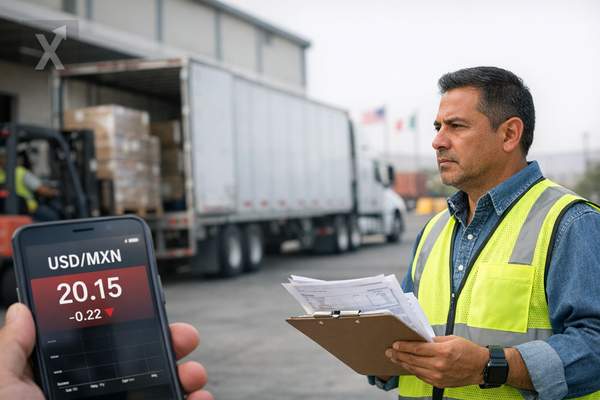
The exchange-rate channel will be key. In periods of global stress, the U.S. dollar typically strengthens and investors tend to reduce exposure to emerging markets, even when local fundamentals are relatively solid. For Mexico, this can mean rapid moves in the peso that, if prolonged, affect import costs—especially for intermediate goods used by export manufacturing. At the same time, companies with foreign-currency liabilities often increase their demand for hedges, raising the market’s sensitivity.
On the real side of the economy, the main transmission would come through exports. If the United States enters a slower-growth phase, demand for manufactured goods—particularly autos, electronics, and durables—could moderate. This happens even when productive integration favors Mexico over more distant suppliers: nearshoring helps, but it does not eliminate dependence on the U.S. cycle. At the same time, an environment of higher energy costs can affect investment decisions in energy-intensive industries and put pressure on companies operating with thin margins.
Looking ahead, Mexico’s baseline scenario will depend on how long the oil shock lasts and on the response from the Federal Reserve and other central banks. A prolonged period of elevated inflation in the United States alongside weak growth could keep rates higher for longer, raising global financing costs and affecting the availability of capital. In Mexico, this would translate into tighter credit conditions for businesses and households, even if the country maintains a relatively prudent macroeconomic framework and a well-capitalized financial system.
In sum, warnings about stagflation in the United States amid global energy tensions put Mexico in a more volatile environment: the trade-off among inflation, growth, and the exchange rate could become more complicated, and Banxico’s response and the trajectory of the U.S. dollar will be decisive for near-term performance.