Welfare Pension: Lower Coverage in the South, Bigger Share of Household Income, Banxico Says
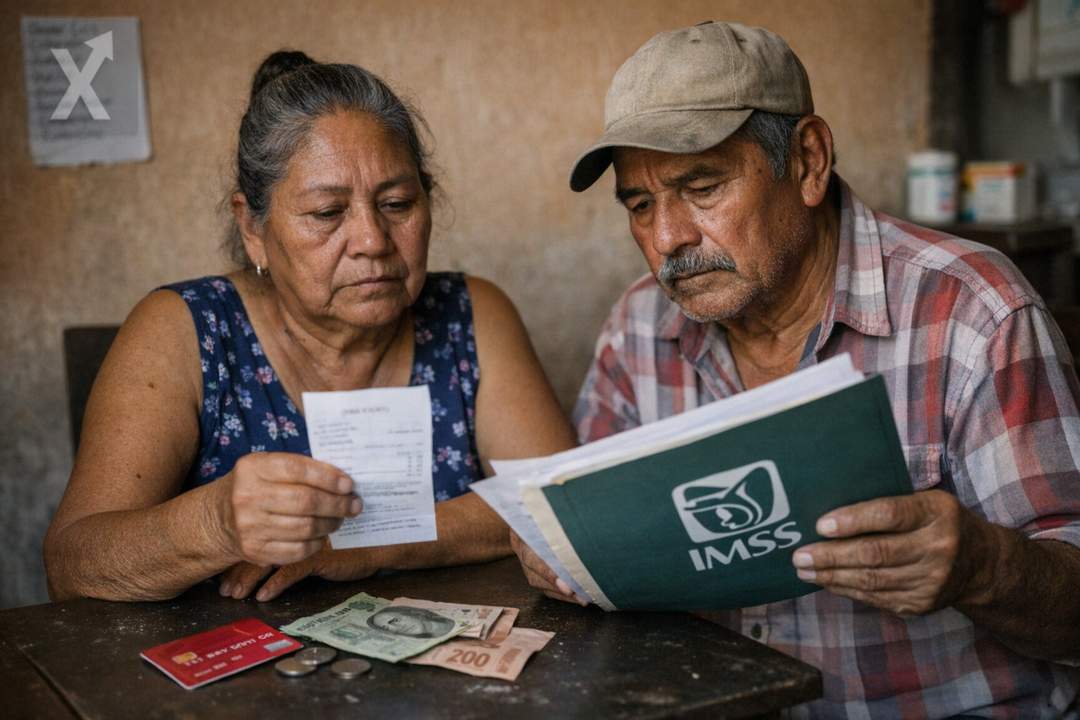
Banxico estimates the pension reaches fewer seniors in the South, but there it contributes more to household income and could reduce formal job search.
The Welfare Pension for Older Adults— a federal benefit for people age 65 and up—shows significant regional differences: in the South of the country it has lower relative coverage, but its contribution to household income is larger than in other areas. That’s according to an analysis by the Bank of Mexico (Banxico), which also identified effects on labor-force participation and on employment registered with the IMSS.
According to the report “Regional heterogeneity in non-contributory pension transfers, and effects on IMSS-registered employment,” the Northern region has the highest share of eligible people receiving the bimonthly deposit of 6,400 pesos: 95.2%. By contrast, in the South the share drops to 82.4%. In the Center-North region, the figure was 92.5%, and in the Central region 87.6%, with estimates based on regional averages of the population age 65 or older captured by the ENOE in 2025.
For Banxico, these gaps suggest that under the current operating design there is still room to expand the program’s reach among older adults, especially in states with larger administrative or financial backlogs, or limited access to banking infrastructure. In a country with high territorial heterogeneity, coverage depends not only on demographic eligibility but also on registration capacity, geographic dispersion, and service connectivity.
The economic takeaway is twofold: where the program reaches more people, its marginal effect may be smaller; and where it reaches fewer, it can be decisive for household well-being. With a gradually aging population and growing pressure on social spending, the geographic distribution of the benefit becomes a key public-policy variable.
More weight in the South: the transfer as an income “anchor”
Banxico’s study estimates that once received, the pension represents 7.3% of household income in the South, versus 4.1% in the North. In the Center-North it contributes 5.4%, and in the Central region 5.1%, based on ENIGH 2024 calculations. The gap suggests that in regions with lower average labor income and higher informality, the public transfer plays a proportionally larger role in covering basic consumption, medical expenses, and family support.
This contrast aligns with the regional economic structure: the North tends to show greater manufacturing and export integration, along with a higher wage base; while in much of the South, lower productivity levels persist, with greater rural dispersion and labor markets marked by high informality. In that context, a non-contributory transfer works as a buffer against shocks—for example, jumps in food or medicine prices—and can smooth income volatility in multigenerational households.
Impact on work: less job searching among beneficiaries
Beyond income, Banxico notes that the program can change labor decisions. In its analysis, beneficiaries are more likely not to look for work compared with similar people who do not receive the benefit. In aggregate terms, transfers tend to increase employment among non-beneficiary age groups, but reduce it among those who do receive the pension—suggesting a moderate effect on both labor supply and labor demand.
The interpretation is not necessarily negative: for households facing health or caregiving constraints, guaranteed income can allow older adults to reduce their workload, especially in low-paid informal jobs. However, it also raises questions about how it interacts with formal employment registered with the IMSS, and about how to design incentives so that social protection does not translate into unwanted disincentives—particularly in an environment where informality remains high.
Fiscal and operational implications in an aging country
The federal government has said around 13.6 million people receive the program, making it one of the pillars of social spending. In the short run, its size makes it relevant for domestic consumption, especially in localities where the inflow of transfers boosts demand for basic goods. In the medium term, the challenge centers on sustainability and spending effectiveness: expanding coverage in lagging areas requires improving beneficiary rolls, payment mechanisms, and financial access; while population aging puts upward pressure on the program’s cost growth.
In a macroeconomic environment where the balance between fiscal discipline and social priorities is a recurring topic, evaluations of targeting, effective coverage, and spillover effects—such as the impact on labor-force participation—tend to carry more weight in budget discussions. It is also likely the debate will intersect with the need to strengthen formal employment and tax collection to sustain transfer programs without undermining stability.
Overall, Banxico’s evidence portrays a program with clear distributional effects: coverage is higher in the North, but its relative importance in household income is magnified in the South, where living standards depend more on public support. Going forward, the discussion will focus on how to close access gaps, improve operations, and assess labor impacts without losing sight of the goal of protecting people in old age.






