Customs revenue slips despite a rebound in trade: added pressure on the Finance Ministry at the start of 2026
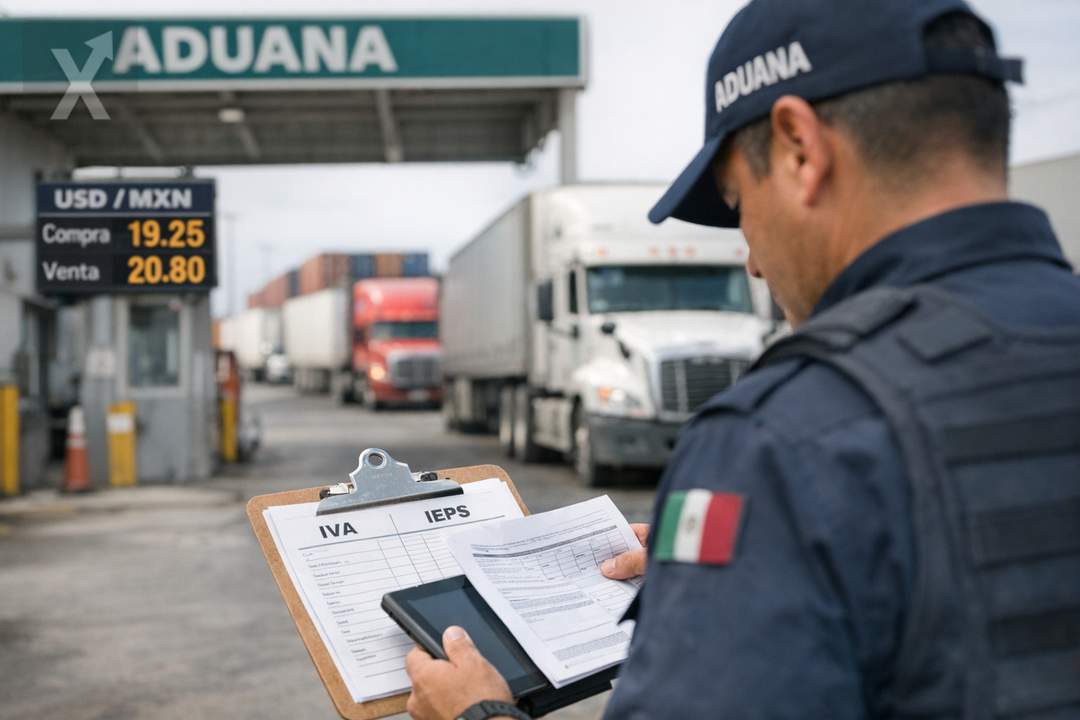
The rise in exports and imports did not translate into customs revenue, amid operational adjustments, the exchange rate, and tighter enforcement.
Customs tax collection started 2026 with a cooling signal: in the first two months of the year, revenue tied to foreign trade fell in real terms, even as the flow of goods posted double-digit growth. This divergence—more trade activity but less tax intake—puts the spotlight back on the efficiency of Mexico’s customs system and on how sensitive these revenues are to variables such as the exchange rate, the mix of imports, and regulatory changes.
According to official figures, between January and February customs collected 207.591 billion pesos, down from 229.717 billion pesos in the same period a year earlier. At the same time, trade remained dynamic: exports and imports grew year over year in the first two months of the year. In a country where export manufacturing and integrated supply chains with the United States often set the pace of activity, the data suggest the issue is not the number of transactions, but what is actually taxed, appraised, and collected.
The adjustment was concentrated in the main revenue components: VAT collected at customs posted a significant real decline, and the excise tax (IEPS) tied to imported goods fell even more sharply. This pattern is usually linked to several factors: changes in international prices for energy products and certain taxed goods; shifts in volumes and composition (more intermediate inputs with specific treatments and fewer taxed final goods); and enforcement strategies that, in the short run, can delay clearance or trigger reviews that push back the timing of payment.
The weakening was also broad geographically. A majority of customs offices reported lower revenue, including some of the most important nodes in the country’s logistics network. This points to a more widespread phenomenon than an isolated issue in a single region or port, and raises questions about operational capacity and inter-agency coordination in an environment with a heavier administrative load.
For public finances, the figure carries particular weight: a significant share of Mexico’s overall tax revenue is tied to customs operations. In a context where the government is trying to sustain social programs, public investment, and infrastructure, any slippage in this revenue source can translate into greater pressure on the fiscal balance—especially if the slowdown coincides with weaker domestic tax collection or higher financing costs while interest rates remain restrictive.
In addition, early 2026 coincides with a leadership transition at the customs authority, amid allegations and efforts to curb evasion practices such as undervaluation, triangulation, and so-called “fiscal fuel theft” (“huachicol fiscal”). Leadership changes at an operational institution are often accompanied by reshuffling, new priorities, and adjustment periods that can affect process speed and, therefore, the timeliness of collections.
The challenge becomes even more demanding when looking at the ambition laid out in the 2026 revenue plans, which contemplate a notable increase in collections from concepts linked to imports. With an economy that depends on imported inputs to produce export goods, raising revenue without slowing trade requires a delicate balance: more effective controls against evasion, but procedures that are agile enough not to raise costs or delay logistics.
Exchange rate, valuation, and the “mix” of imports: why collections can fall even with more transactions
A recurring explanation for falling customs revenue despite higher trade is the interaction between the exchange rate, merchandise valuation, and the composition of what is imported. If the peso strengthens against the U.S. dollar, the peso value of goods priced in dollars can decline, shrinking the VAT base and other taxes even when the physical volume of imports rises. On top of that, an increase in imports of intermediate goods or machinery for manufacturing supply chains—often subject to different treatments, credits, or tax dynamics—can generate less immediate revenue than an equivalent increase in final consumer goods with a heavier tax burden. Finally, when authorities tighten reviews of customs value, tariff classification, or origin, collections can be deferred while corrections, guarantees, or litigation are resolved, affecting revenue flow for the period even if activity remains high.
Operationally, stricter oversight and recent reforms to digitize and strengthen traceability are aimed at closing evasion loopholes. However, international experience shows that the shift to stricter models often creates friction at the outset: more documentation requirements, more inspections, and more potential penalties raise compliance costs for importers and logistics providers. If this is compounded by limited capacity to process reviews—for example, due to a lack of specialized staff or fewer licensed customs brokers—the system can become less efficient in the short term.
For the private sector, the takeaway is mixed. On the one hand, greater certainty and a crackdown on illegal practices can level the playing field. On the other, if bottlenecks persist, the risk is longer clearance times, higher logistics costs, and, consequently, higher final prices or a loss of competitiveness in integrated supply chains. At a time when Mexico is looking to lock in nearshoring-related investment and strengthen its role in North American manufacturing, customs performance becomes a competitiveness factor—not just a revenue issue.
Looking ahead, attention will focus on whether collections normalize as processes stabilize, coordination among authorities improves, and tighter controls translate into effective collections without disrupting trade flows. It will also be key to watch whether the exchange rate and international prices—especially energy—change the taxable base in the coming months, and whether the authority manages to reduce evasion without passing excessive costs on to production chains.
In short, the start of 2026 shows that more trade does not guarantee more customs revenue: operational efficiency, the mix of imports, enforcement, and the exchange rate can all move collections. For the Finance Ministry, the challenge is to sustain a critical source of resources without slowing the export momentum that underpins the country’s economic growth.






