BBVA Sees Room to Finance Mexico’s “Plan México,” but Warns: Without Execution and Clear Rules, There Won’t Be Sustained Momentum
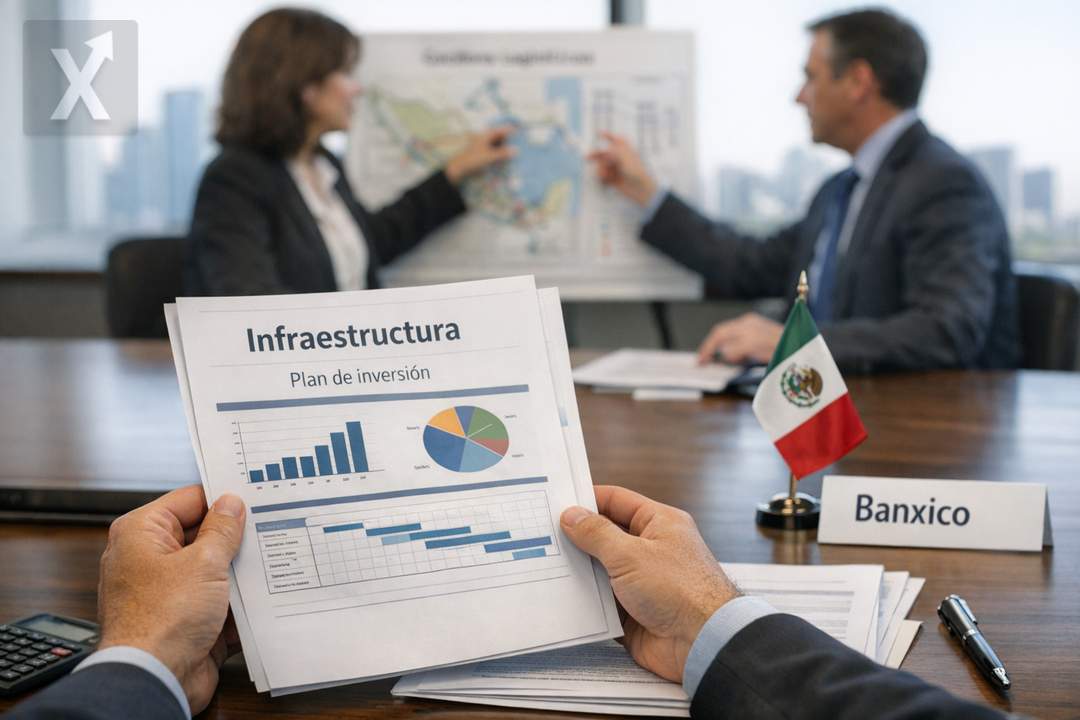
Banks expect appetite for infrastructure—as long as projects arrive fully packaged, with permits and defined payment sources.
BBVA México believes the infrastructure projects tied to “Plan México” can be successful and profitable—but only to the extent that execution is consistent and projects reach the market complete: permits in order, a clear risk allocation, strong contracts, and identifiable sources of repayment. Speaking at the 89th Banking Convention, the bank’s CEO, Eduardo Osuna, said the financial sector is interested, but the key is turning announcements into timelines, bid processes, and verifiable construction starts.
In BBVA’s diagnosis, financing is not the main bottleneck. Commercial banks are operating with high deposit levels and access to capital markets, so the challenge is typically on the structuring side: making projects “bankable,” meaning their design allows lenders to assess returns, responsibilities, and risk mitigants. This view lines up with a recurring reality in Mexico: private capital mobilizes when there is legal and operational certainty, and it pulls back when permits are delayed, regulation is ambiguous, or the rules change midstream.
Plan México has been presented as a roadmap of priorities covering, among other areas, energy, logistics, and water—three fields where infrastructure gaps have limited productivity, raised supply-chain costs, and increased risks for industries with heavy electricity and water use. From a macro perspective, a better-coordinated cycle of public and private investment could support potential growth, especially if it aligns with the reshoring/nearshoring of manufacturing to North America and with the need to modernize ports, highways, border crossings, and transmission grids.
Still, the bank’s read includes a note of caution: long-term investment is particularly sensitive to episodes of institutional uncertainty and to clarity in how rules are applied. In practice, that means the projects best positioned to obtain credit are usually those that have already proven technical and environmental viability, have credible payment schemes (tariffs, concession payments, availability payments, multi-year budgets), and set out dispute-resolution mechanisms and penalties for noncompliance.
Infrastructure, Interest Rates, and USMCA: the Triangle That Will Shape Investment Appetite
The infrastructure conversation is happening at a moment when three variables converge that directly influence credit appetite: the interest-rate cycle at Banco de México (Banxico), the USMCA review, and the need for regulatory certainty to unlock projects with 10- to 20-year horizons. With inflation more contained than at the 2022–2023 peak, Banxico has begun a phase of gradual cuts from restrictive levels; that process can reduce financing costs, though the impact is neither immediate nor uniform, since it depends on tenor, borrower risk, and project structure. For infrastructure—where returns materialize over the long run—a downward rate path generally improves financial viability, as long as it doesn’t come with shocks that push risk premiums higher.
In parallel, the USMCA path matters because it defines the framework for productive integration with the United States and Canada, especially around rules of origin, labor provisions, regulation, and energy. For banks and companies, the central issue is not only the formal outcome of the review, but also the signal it sends about the stability of the rules and the existence of effective dispute-resolution mechanisms. If the agreement remains functional, Mexico would retain a structural advantage in attracting export-linked investment, which could translate into higher demand for corporate credit, supplier financing, and logistics projects. If, on the other hand, frictions or compliance costs increase, some of the momentum could dissipate.
BBVA also underscores the role of financial digitization as a credit enabler, especially for small businesses. Shifting payments and collections to digital channels creates traceability and data to assess risk, which can expand access to financing in traditionally underserved segments. In a country where MSMEs account for a large share of employment but face credit constraints, this factor can be an important complement so the infrastructure push spills over into supply chains and regional economies.
Looking ahead, the challenge for Plan México will be turning priorities into project pipelines with fully packaged, ready-to-bid or ready-to-finance deals, and with effective coordination among federal agencies, regulators, and subnational governments. In the near term, investors will watch for signals on permitting speed, contract quality, and process transparency, along with fiscal consistency to sustain payment commitments under long-term schemes.
In short, BBVA México’s position is that the money is there—but profitability and banks’ willingness to lend will depend on the government turning the plan into executable projects, with clear rules and certainty compatible with long-horizon investments.






